

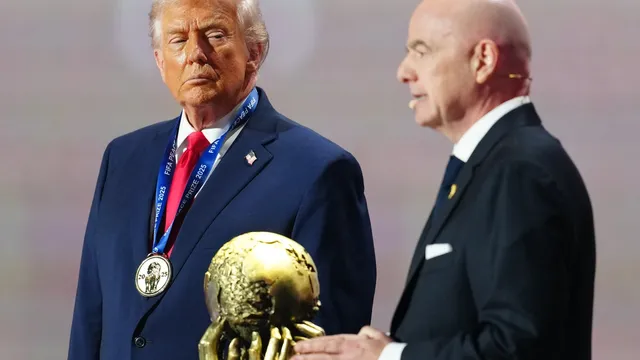
Iran seeks to relocate World Cup matches amid safety concerns
Iran seeks to relocate World Cup matches amid safety concerns
- Iran's Embassy has indicated ongoing negotiations with FIFA to move World Cup matches to Mexico for better security.
- U.S. President Donald Trump has raised concerns over the safety of the Iranian football team due to escalating conflicts.
- The situation has led to uncertainty around Iran's participation, with FIFA clarifying their commitment to the current schedule.
Story
Iran has engaged in discussions with FIFA to potentially shift its scheduled World Cup matches from the United States to Mexico. This move is primarily in response to safety concerns voiced by U.S. President Donald Trump, who stated he could not guarantee the security of the Iranian national team amidst ongoing military conflict in the Middle East, which has intensified recently. Scheduled to play in Los Angeles against New Zealand and Belgium, as well as in Seattle against Egypt, Iranian officials have expressed doubts about their ability to participate safely in the event. As of March 16, 2026, Iranian soccer federation president Mehdi Taj confirmed the ongoing negotiations while emphasizing the nation's worries about player safety during the tournament. Trump's earlier comments suggested that while the Iranian team was welcome to the World Cup, he raised questions about the appropriateness of their participation given the current geopolitical climate. The diplomatic tensions have significantly influenced Iran's stance, as their government reflects a mix of denial about their withdrawal and continued aspiration to partake in the tournament, should the matches be relocated. FIFA, for its part, has maintained that it remains committed to the current match schedule, indicating no intent to reschedule or relocate games. This uncertainty has also sparked reactions from other teams, such as New Zealand, who have stated they will continue to prepare for the match until notified otherwise. The situation is further complicated by the historical ties in sportsmanship and emotional connections with soccer among the Iranian populace, who view participation in the World Cup as a critical symbol of national pride. The organizing authority's firm standing and Iran's fearful outlook create a complex dynamic as the tournament draws closer, now under three months away.
Context
The 2026 FIFA World Cup is set to be a monumental sporting event, with matches scheduled to take place across multiple countries, including the United States, Canada, and Mexico. However, Iran's potential involvement raises a number of security concerns due to its geopolitical situation and the history of tensions in the region. As Iran aims to qualify for the tournament, it is crucial to evaluate the implications of its participation not only for the country's athletes but also for the safety and security of fans, officials, and other stakeholders involved in the event. Several factors contribute to the security landscape surrounding Iran and its World Cup aspirations, including the nation's international relations, domestic unrest, and the overarching threat posed by extremist groups in the region. The World Cup is a global showcase, and any disruptions or incidents during the event could resonate far beyond the borders of the host countries, drawing international attention and potentially escalating tensions. Iran's qualification for the World Cup will be observed closely, especially given the likelihood of heightened national pride and nationalism. The government will want to project strength and cohesion; however, this could also provoke opposition groups, both domestically and abroad. The potential for protests or public unrest in response to political dissatisfaction is a significant factor that must be addressed in the security planning process. Additionally, the international community watches Iran's actions regarding human rights and freedom of expression, which might also affect how the event is received and managed. Security measures must be prepared to handle any scale of dissent that may arise during the games, as a balancing act between ensuring safety and avoiding suppression of civil liberties will be critical. Furthermore, the Iranian players' experience and perceptions of the event will play a pivotal role in the overall security narrative. The athletes may face scrutiny and pressure both from the government and from the citizens, as their performance can be seen as a representation of national pride. Although sports can foster unity, the geopolitical backdrop of Iran can transform a sporting event into a stage for greater political and social issues. Thus, comprehensive planning and an adaptable security framework could prove essential to mitigate risks and respond promptly to any incidents, while ensuring the athletes and fans can participate safely and without fear. The increase in international media coverage of such events also means that any incidents will be magnified, necessitating ongoing vigilance. In summary, the potential participation of Iran in the 2026 FIFA World Cup carries inherent security risks shaped by international relations, domestic politics, and social sentiment. A strategic approach is essential to address these concerns effectively, incorporating collaboration among local and international law enforcement agencies, as well as leveraging intelligence-sharing platforms. In recognizing that the World Cup transcends mere sports, stakeholders must acknowledge the delicate interplay between security, diplomacy, and public sentiment to ensure a successful event that celebrates unity and the spirit of competition.


