

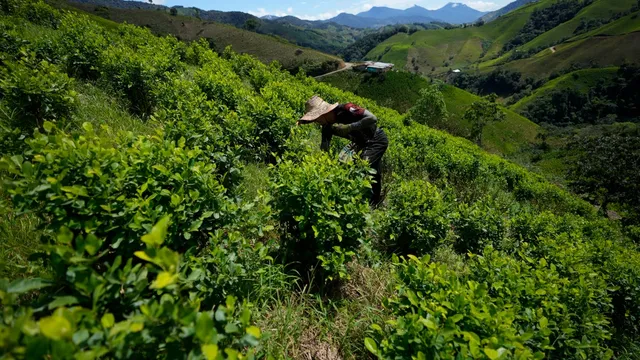
Colombia plans to use drones for coca crop spraying amid record cocaine production
Colombia plans to use drones for coca crop spraying amid record cocaine production
- Colombian authorities will use drones for cocaine crop eradication starting Thursday.
- The decision follows a surge in coca cultivation, which has doubled since 2016.
- The use of drones aims to enhance safety and reduce environmental risks in eradication efforts.
Story
Colombia, grappling with record cocaine production, has announced its plans to resume spraying coca crops using drones. The government, led by Justice Minister Andrés Idárraga, is set to implement this approach starting Thursday. Aerial fumigation had been banned since 2015 due to health concerns associated with glyphosate, the recommended herbicide. Authorities believe that using drones will enhance safety for security forces while targeting areas where gangs force peasants to cultivate coca. The cultivation of coca has reportedly surged, with estimates suggesting that nearly 261,000 hectares, nearly double what was planted in 2016, will be cultivated in 2024. After the ban on aerial fumigation, Colombia shifted to manual eradication campaigns employing military personnel, but faced significant challenges in targeting remote areas defended by drug gangs. The drones are expected to perform targeted eradications, ensuring that they only operate within 1.5 meters of their intended targets to minimize environmental risks. While the idea of using drones for this purpose was first proposed in 2018 during the administration of right-wing President Ivan Duque, implementation was stalled due to the need for consensus among different government branches. In previous years, President Gustavo Petro's administration initially favored not forcing farmers to eradicate coca cultivation, citing the lack of legal alternatives for impoverished peasants. However, the growing influence of rebel groups tied to drug trafficking has compelled the government to adopt a firmer stance against coca cultivation and those gangs that have refused peace agreements. Tensions have escalated between Colombia and the Trump administration, which criticized Petro's government for its handling of the troubling drug trade. In September, the U.S. labeled Colombia as uncooperative in the war on drugs for the first time in 30 years, which led to financial repercussions in terms of military and economic assistance. The U.S. government has accused Petro of allowing drug cartels to thrive, enforcing sanctions and threatening land strikes against drug traffickers. Meanwhile, despite increased cocaine production, Petro claims that Colombian security forces are intercepting record amounts of cocaine shipments, indicating ongoing efforts to combat the drug problem.
Context
Colombia is at a critical juncture in its approach to drug policy under the leadership of President Gustavo Petro. Since taking office, Petro has advocated for a paradigm shift in addressing the country's long-standing issues with drug trafficking and its associated violence, which has plagued Colombian society for decades. Instead of relying heavily on militarization and eradication of coca crops, his administration emphasizes a public health approach to drug use and aims to foster socioeconomic development as a means to combat the production and trade of illicit substances. This shift reflects a broader recognition that punitive measures alone have not effectively curbed drug-related violence or consumption, leading to calls for a more humane and pragmatic strategy. One significant aspect of Petro's policy initiatives is the proposal to legalize marijuana for both medical and recreational use, aiming to reduce the power of illegal drug cartels and generate tax revenue for public services. Additionally, Petro has demonstrated a commitment to addressing the root causes of coca production, which often stem from poverty, lack of education, and limited economic opportunities in rural areas. His government is advocating for alternative development programs that would provide farmers with viable sources of income, thus incentivizing them to abandon coca cultivation. By prioritizing social investment and economic empowerment, his administration hopes to create a sustainable environment that decreases reliance on drug trafficking. Furthermore, Colombia's changing drug policy under Petro has implications beyond its borders. The country has historically been a significant player in international drug production, and its new policy direction could inspire other nations grappling with similar issues. By proposing a shift away from purely enforcement-based strategies, Petro aligns Colombia with emerging global trends that advocate for decriminalization and regulation of certain drugs. The international response to these changes remains to be seen, but Colombia's burgeoning stance may contribute to an evolving discourse on drug policy at a global level. However, the steps taken by President Petro and his administration are not without challenges. Advocates of traditional drug war strategies argue that any form of legalization or reduced enforcement could exacerbate violence, as criminal organizations may retaliate against perceived threats to their operations. Moreover, navigating the political landscape poses its own difficulties, as public sentiment is often mixed regarding drug legalization and reform. Balancing the expectations of various stakeholders, including the military, law enforcement, and affected communities, remains a significant hurdle. As Petro moves forward with his ambitious plans, the world will be watching to see if Colombia can successfully transform its drug policy into an approach that prioritizes human rights and long-term stability.


