

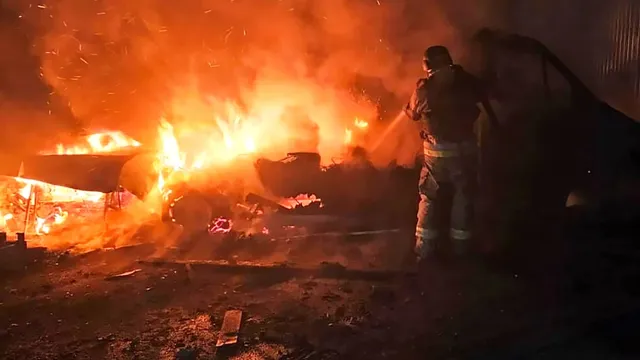
Russia escalates attacks on Ukraine's military sites and energy facilities
Russia escalates attacks on Ukraine's military sites and energy facilities
- Russia conducted extensive air strikes on December 23, targeting Ukraine's military and energy infrastructure.
- Damaging attacks resulted in blackouts across several regions, affecting daily life and emergency responsiveness.
- The escalated violence illustrates the ongoing tensions and complex dynamics between Russia and Ukraine amid the conflict.
Story
On December 23, 2025, Russia launched a series of aggressive air strikes targeting both military and energy infrastructure across Ukraine, which has been under persistent conflict since February 2022. The assaults were part of Russia's retaliation against claims of terrorist activities attributed to Ukraine affecting Russian civilians. The Russian Defense Ministry confirmed that the military deployed long-range kamikaze drones and Kinzhal hypersonic missiles, aiming specifically at Ukrainian military-industrial complexes and power facilities. Reports from Ukrainian authorities indicated that the strikes resulted in power outages across several regions, leading to emergency measures being implemented to manage blackouts. In Kyiv and regions such as Rovno, Ternopol, and Khmelnytsky, authorities reported almost complete blackouts, severely disrupting daily life and energy supply. The Ukrainian air defense identified over 650 drones and more than 30 missiles involved in the air raid, emphasizing the scale and intensity of the attack. Local sources indicated that fatalities occurred, with one confirmed death and numerous injuries, including children, as Russian strikes hit residential areas. The situation escalated tensions that have been ongoing and prompted President Volodymyr Zelenskyy to warn citizens about the potential for further attacks during the Christmas holidays. Zelenskyy’s remarks also highlighted Ukraine’s recent shift in Christmas observance to align with Western practices, occurring on December 25, while traditional celebrations continue in some Orthodox communities on January 7. This change has been noted amidst a backdrop of aggressive military actions and the stark contrast of festive expectations, revealing the deep seated conflict in Ukraine and the Russian government's ongoing hostility. With the Russian Defense Ministry claiming their actions were a response to Ukrainian attacks on Russian civilian targets, this situation illustrates the complex dynamics at play between the two nations. The ramifications of these attacks extend beyond military targets, affecting energy security and the civilian population. As power plants and military infrastructures are damaged, the impact on winter energy needs intensifies during a critical season. International dialogue surrounding the conflict continues, with potential discussions for future guarantees on security for Ukraine being crucial. However, the Kremlin's stance on U.S. talks indicates a reluctance to shift from their current operational strategies while Kyiv remains staunch in its resolve, asserting that reforms and partnerships with the West are pivotal for Ukraine’s future security and stability.
Context
The historical context of the Russia-Ukraine conflict, particularly during the holiday seasons, provides profound insights into the complex dynamics that define the relationship between the two nations. The origins of this conflict can be traced back to deep-rooted historical ties between Russia and Ukraine, as well as the shifting political landscape following the dissolution of the Soviet Union in 1991. The struggle for national identity, sovereignty, and political allegiance has often intensified during significant cultural moments, such as the winter holidays, which are traditionally a time for reflection and unity but have also become events of heightened tension and political discourse. Holidays are crucial periods that evoke strong sentiments related to national pride and collective memory. In Ukraine, the holidays serve as an opportunity for the population to reaffirm their independence and cultural identity, especially amidst the ongoing conflict with Russia. Conversely, Russia may leverage these significant times to reinforce its narrative of cultural kinship and historical claims over Ukrainian territories. Key events, such as the Christmas and New Year celebrations, often coincide with renewed calls for unity among Ukrainians and public demonstrations advocating for sovereignty, becoming focal points for national sentiment against perceived Russian aggression. Moreover, the Russian-Ukrainian conflict has seen various escalations around holidays, intensifying military operations or political actions that disrupt the festive atmosphere. For example, in recent years, acts of aggression or political maneuvers have coincided with the Orthodox Christmas celebrations, serving both political ends and stirring public emotions. Additionally, the control of information during these periods plays a significant role, as propaganda efforts may surge, aiming to shape public perception and influence community cohesion around these culturally significant dates. As we look to the future, the ongoing conflict continues to evolve, particularly with regard to how holiday times will be navigated by both nations. The challenges of political conflict amid deep-rooted cultural traditions will likely remain a central aspect of the Russian-Ukrainian narrative. The importance of maintaining cultural dialogues and understanding across national lines during these times may play a critical role in the potential for resolution and reconciliation. Thus, the holiday seasons stand not only as periods of celebration but also as pivotal benchmarks in the continuing struggle between Russia and Ukraine, where history, culture, and politics intersect.


