

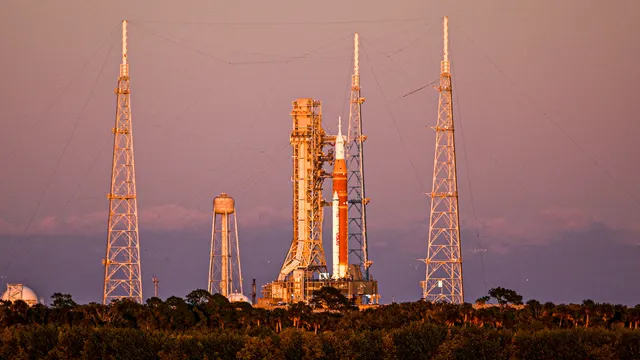
NASA targets March 6 to launch astronauts around the moon
NASA targets March 6 to launch astronauts around the moon
- NASA is targeting March 6 for the Artemis II mission launch, carrying four astronauts around the moon.
- A successful wet dress rehearsal was completed, allowing NASA to set a potential launch date after repairing hydrogen leaks discovered in February.
- Assuming all prelaunch protocols are successfully completed, the mission will mark the first time humans will travel further from Earth in over 50 years.
Story
In the United States, NASA has announced that it is targeting March 6 for the launch of the Artemis II mission, which will carry four astronauts on a groundbreaking journey around the moon, marking humanity's return to lunar exploration after over 50 years. This announcement came following a successful dry run and fueling test that involved filling the Space Launch System rocket with over 700,000 gallons of cryogenic propellant, simulating the countdown to liftoff. The rehearsal was important because it followed a previous attempt on February 2, which was aborted due to hydrogen fuel leaks discovered at the tail end of the rocket. NASA’s acting associate administrator for Exploration Systems Development, Lori Glaze, indicated that the March 6 launch date hinges on the successful completion of necessary work at the launch pad, which is critical for preparing the rocket for flight. Additionally, a flight readiness review will take place late next week where mission managers, along with top NASA officials, will formally certify the rocket and the Orion spacecraft for the mission. Glaze expressed optimism about the upcoming launch date, provided all prelaunch activities proceed as planned. The Artemis II mission aims to place astronauts further from Earth than any humans have traveled previously and is the first time NASA's Space Launch System and Orion capsule will carry crew members. The crew includes NASA astronauts Reid Wiseman, Christina Koch, and Victor Glover, alongside Canadian astronaut Jeremy Hansen. Although they did not participate in the wet dress rehearsal, some crew members were present at Kennedy Space Center during the test, expressing excitement for the upcoming mission. In an effort to minimize exposure to germs prior to the launch, the astronauts are set to enter quarantine in Houston, Texas, prior to heading to Kennedy Space Center for their preflight quarantine. Overall, the Artemis II mission is a significant milestone for NASA, representing a pivotal step in the agency's efforts to resume human exploration of the moon. If successful, this mission is expected to demonstrate the capabilities of NASA's new rocket and spacecraft, laying the groundwork for future missions to the lunar surface and eventually to Mars. The anticipation surrounding this mission reflects not only the technical achievements it represents but also the continuation of human space exploration.


