

Landslide kills eight and leaves dozens missing in Indonesia
Landslide kills eight and leaves dozens missing in Indonesia
- A landslide caused by heavy rains struck West Bandung district in Indonesia's West Java province, resulting in multiple casualties and many missing individuals.
- Rescue operations are ongoing, with officials urging residents in nearby areas to evacuate due to unstable soil and the threat of further slides.
- The community faces significant challenges as it deals with the aftermath of the disaster while seeking to improve response strategies for future events.
Story
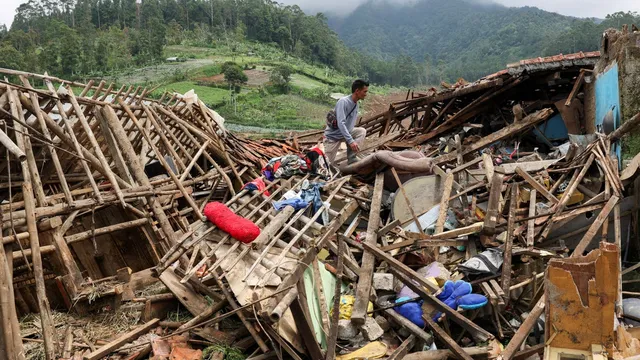
On Saturday, January 24, 2026, a devastating landslide occurred in Pasir Langu village, located in West Bandung district of West Java province, Indonesia. Triggered by continuous torrential rains, the landslide struck predominantly during the early hours of the morning, devastating the region and leaving behind a landscape of destruction. Rescue teams immediately mobilized to search for the 82 residents reported missing, with officials acknowledging that the conditions were extremely challenging due to the mud, debris, and the risk of additional landslides. Despite the difficult circumstances, some 24 villagers managed to escape the disaster. Reports indicate that around 34 homes suffered damage or were completely buried under mud and debris, substantially impacting the local community. The national disaster mitigation agency's spokesperson, Abdul Muhari, informed media outlets that eight bodies had already been recovered from the site, highlighting the tragic consequences of the landslide. Residents were urged to maintain vigilance as unstable soil continued to complicate search and rescue efforts, with the ongoing possibility of further slope failures. In response to the disaster, officials from the Meteorology, Climatology, and Geophysical Agency had issued warnings regarding extreme weather conditions expected to persist for an entire week. The warning emphasizes the potential for floods and landslides, urging locals to evacuate if they observe soil movement or hear unusual rumbling sounds. Throughout Indonesia, natural disasters including landslides and floods frequently occur between the months of October and April, aligning with the wet season when heavy rainfall is common. The situation faced by the rescue teams was dire, as they contended with mounds of soft soil and debris that hindered the use of heavy machinery. Local authorities on the ground rapidly responded to the emergency, directing families living within 100 meters of the landslide zone to evacuate for their safety. Terrifyingly, reports emerge from earlier devastations in the region, emphasizing Indonesia's vulnerability to such disasters, reiterating the need for improved safety measures and community preparedness plans.
Context
Indonesia is a nation that faces significant natural disaster risks due to its geographical location along the Pacific Ring of Fire. This region is characterized by high volcanic and seismic activity, leading to frequent earthquakes, tsunamis, and volcanic eruptions. These hazards necessitate comprehensive evacuation measures to safeguard the population. The Indonesian government has implemented various strategies and policies, focusing on preparedness, response, recovery, and mitigation, ensuring that communities are equipped to deal with imminent threats effectively. One critical aspect of Indonesia's evacuation measures includes the establishment of early warning systems. These systems are designed to detect seismic activity and potential tsunamis, providing crucial alerts to citizens in affected areas. Communities are trained to respond quickly to these alerts, often resulting in organized evacuations to designated safe zones. Regular drills, education campaigns, and community engagement are vital components that strengthen public awareness and readiness. Local governments play a key role in facilitating these initiatives, promoting resilience among communities. Furthermore, the infrastructure supporting evacuation processes is paramount. This includes well-defined evacuation routes, clearly marked signs, and community centers designated as emergency shelters. The government collaborates with NGOs and international organizations to enhance these facilities, ensuring that they can accommodate displaced populations efficiently. Adequate supplies, including food, water, and medical care, are pre-positioned in these centers to provide immediate support for evacuees. Coordination among various agencies is critical to streamline evacuation efforts during a disaster, minimizing confusion and maximizing efficiency. Lastly, community involvement is essential in refining evacuation strategies. Engaging local populations in the planning process helps tailor interventions to specific community needs and cultural contexts, enhancing the overall effectiveness of evacuation measures. Lessons learned from past disasters inform ongoing improvements, allowing Indonesia to adopt adaptive measures that consider the evolving nature of disaster risks. The balance between governmental frameworks, community participation, and advanced technologies forms a robust foundation for Indonesia's approach to disaster evacuation, aiming to protect lives and minimize the impact of natural calamities.


