

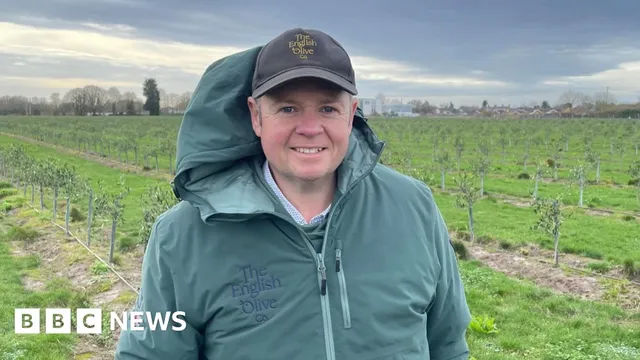
English farmer successfully grows olives in Lincolnshire
English farmer successfully grows olives in Lincolnshire
- David Hoyles has grown what is believed to be Lincolnshire's first commercial olive crop.
- He planted over 18,000 olive trees in response to changing climate conditions.
- Hoyles' innovative farming reflects the potential for diversification in agriculture amid climate change.
Story
In a groundbreaking agricultural endeavor, David Hoyles, a farmer from Long Sutton, Lincolnshire, has established what is believed to be the first commercial harvest of olives in the region. This innovative farming venture, which began several years ago, is a direct response to changing climate conditions that have altered the viability of conventional crops in the area. Hoyles, whose family has a longstanding farming history of over 200 years in the Fens, noticed a shift in climate patterns characterized by warmer and drier summers, which presented new opportunities for crop diversification and experimentation. Initially, Hoyles explored grape farming but found that the soil in Lincolnshire was not conducive to this type of crop. After extensive research and fact-finding missions to Italy, he decided to take a chance on olive cultivation. Encouraged by Italian farmers who provided knowledge and support, he planted over 18,000 olive trees over 25 acres. Hoyles refers to himself as the “crazy Englishman”, a moniker given by the Italian olive growers, reflecting the unconventional nature of this endeavor. The olive trees have been cultivated with a unique approach tailored to the local climate and soil conditions. The hand-harvesting process has already yielded fruit, which has been processed into oil for sale. Hoyles shared that he has had to adapt traditional olive farming techniques to suit the specific challenges posed by the UK climate. This has included adjusting the timings of various farming practices, as the growing season in England differs significantly from that in traditional olive-producing countries like Italy. In addition to olive cultivation, Hoyles continues to grow other conventional crops such as wheat, sugar beet, potatoes, and peas. His farm has also integrated modern energy solutions, including wind turbines and solar panels, to improve sustainability and self-sufficiency. The establishment of reservoirs has further enhanced water management on the farm, enabling consistent crop irrigation during dry spells. With climate predictions indicating that conditions may continue to shift towards those favorable for olive growing, Hoyles expresses optimism and commitment to further farming innovations in the region.
Context
Climate change poses significant challenges to agriculture in the UK, affecting crop yields, livestock, and farming practices. As average temperatures rise due to climate change, the growing seasons are likely to extend, which may initially seem beneficial. However, the realities include increased frequency of extreme weather events such as droughts, floods, and storms that can obliterate crops or disrupt planting and harvesting schedules. Additionally, shifts in climatic conditions can lead to altered pest and disease patterns, creating further stress on agricultural systems as farmers contend with both new threats and the need for integrated pest management strategies. Water availability is another critical factor impacted by climate change, particularly concerning the UK’s reliance on rainfall to irrigate crops. Changes in precipitation patterns are predicted, leading to periods of both drought and excessive rainfall. This variability not only affects crop viability but also puts pressure on existing water management systems. Farmers may need to adopt more sustainable practices, including water conservation techniques and the use of drought-resistant crop varieties, to minimize risks associated with water scarcity and maximize resilience against fluctuating weather patterns. The economic implications of these changes are profound. Farmers may find themselves facing increased costs associated with crop failure, the need for new equipment or technologies, and changes in land management practices. The shift in agricultural productivity could also impact food prices, food security, and the overall economy. Additionally, the transition towards more sustainable farming practices to cope with climate change can necessitate significant investment and training, which may be a barrier for many farmers without adequate support from the government or agricultural bodies. Lastly, policy responses are crucial in mitigating the adverse effects of climate change on agriculture in the UK. It is imperative for policymakers to provide guidance and support to help farmers adapt to changing conditions. Initiatives could include research funding for climate-resilient agricultural technologies, implementation of sustainable farming incentives, and robust climate adaptation strategies. By prioritizing agricultural resilience, the UK can safeguard its agricultural sector, ensuring food security while addressing the challenges posed by climate change.


