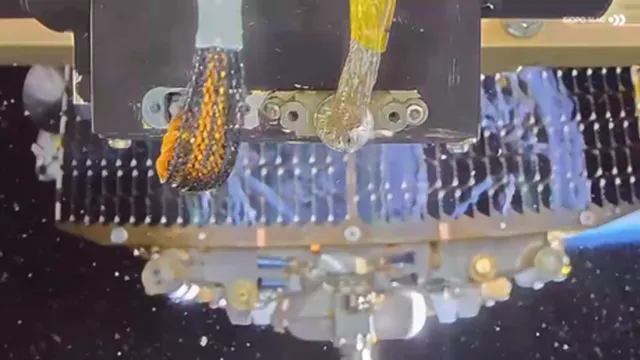
Russia is actively developing its homegrown satellite network, Rassvet, to enhance its digital sovereignty and military capabilities. The initiative is part of a broader strategy to establish a sovereign space infrastructure that can support national interests amid increasing Western sanctions. The Rassvet satellites are designed to function as 5G base stations, utilizing laser communication to transmit data at speeds of up to 1 Gbit/s with a latency of 70 ms. The first batch of Rassvet-3 satellites was launched in March 2026, and a second batch is scheduled for launch in June 2026 from the Plesetsk Cosmodrome. By the end of 2026, Russia aims to have 156 satellites in orbit, with plans to expand this number to around 900 by 2035. This ambitious project is estimated to cost approximately 515 billion rubles, or about $7 billion. The Rassvet network is expected to play a crucial role in enhancing Russia's drone warfare capabilities and providing reliable communication across its vast territory, particularly in remote areas where traditional infrastructure is lacking. The development of this satellite network is seen as a significant step towards reducing reliance on foreign-controlled satellite systems and improving national security. Additionally, the Russian Central Election Commission has proposed the potential use of these satellites for remote voting, indicating the broader implications of the Rassvet project for various sectors within the country.