

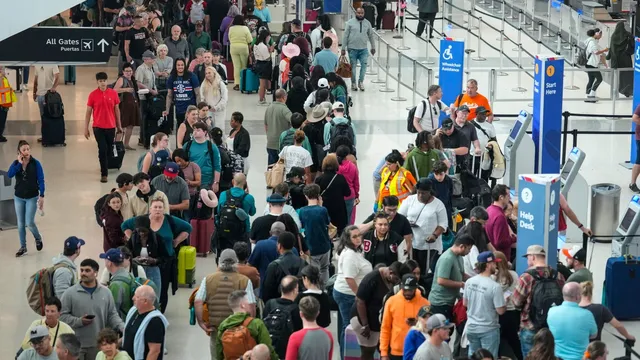
TSA officers face zero paychecks amid shutdown turmoil
TSA officers face zero paychecks amid shutdown turmoil
- TSA is facing significant increases in wait times due to ongoing operational challenges.
- Officers are working without pay, resulting in a rise in assaults on TSA personnel.
- The video message aims to ensure travelers understand the situation while highlighting the need for respect towards TSA officers.
Story
In the United States, the Transportation Security Administration is experiencing significant operational challenges due to a government shutdown that began on February 14, 2026. The agency created a video message at airports nationwide to inform travelers about potential extended wait times and staffing shortages, attributing these issues to the 'Democrat shutdown' of TSA and the Department of Homeland Security. The video emphasizes the importance of showing respect and gratitude to TSA officers who are working without pay during this crisis, which has seen an alarming rise in assaults against them since the shutdown started. Acting Deputy Administrator Adam Stahl notes that despite the increase in employee absences, there are currently no safety concerns regarding operations, although wait times are expected to remain problematic for travelers. This shutdown also reflects broader political disputes in Congress, particularly relating to funding and reforms for agencies under DHS oversight, with Senate Democrats blocking proposed funding and Republicans criticizing them for holding essential services hostage. Concurrently, in the wake of deadly tornadoes in March, FEMA workers have also been impacted by the shutdown, as they lost access to critical storm-tracking tools. A contract for this tool was allowed to expire, leaving emergency responders without vital data to aid their operations effectively. The situation has led to frustration among officials and a lack of resources, emphasizing a concerning perception of government dysfunction amid natural disasters as well as political strife. As FEMA's budget approval remains stalled in Congress, issues like this highlight the urgent need for solutions in emergency management operations and overall government services during shutdown periods.
Context
The impacts of a government shutdown on transportation security are multifaceted and significant. During a shutdown, federal agencies responsible for transportation security, particularly the Transportation Security Administration (TSA), face operational disruptions that can lead to a decline in overall security measures. Funding is often halted, which means that TSA may have to operate with limited resources and staffing, leading to longer wait times at airports and decreased oversight at various transportation hubs. The reduction in personnel can result in a less vigilant screening process for passengers and cargo, making the transportation system more vulnerable to security threats. Furthermore, budgetary constraints may hinder regular maintenance and upgrades to security technologies, further compromising safety measures that protect the public and critical infrastructure. Moreover, the lapse in pay during a shutdown may also demoralize staff, which can affect their performance and commitment to upholding rigorous security standards. The loss of focus and heightened stress levels among employees might jeopardize the effectiveness of security protocols, ultimately impacting travelers' safety and confidence in the transportation system. With a critical workforce strapped for resources, the TSA's capacity to defend against evolving threats becomes but a shadow of its potential. Consequently, public sensitivity to perceived safety risks tends to increase during these periods, as travelers grapple with uncertainty regarding the effectiveness of security protocols in place, ultimately affecting air travel and broader transportation sectors. These factors intertwine and create a dynamic where transportation security is severely challenged, leading to broader implications for economic growth and public trust in governmental operations.


