

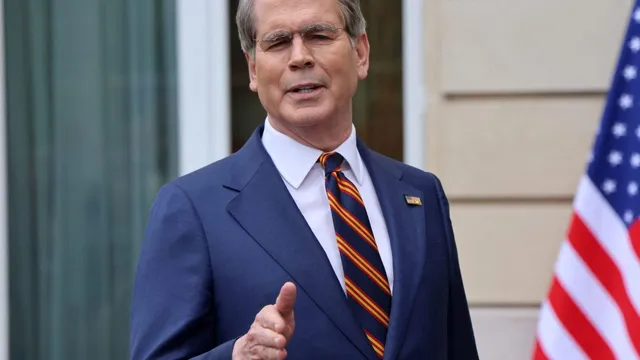
Scott Bessent abruptly exits live interview for urgent Situation Room meeting
Scott Bessent abruptly exits live interview for urgent Situation Room meeting
- Scott Bessent was called to the Situation Room by President Trump during an interview about Iran.
- Bessent assured viewers that the president was in good spirits and the Iranian military operation was proceeding well.
- This unusual event highlights the urgency of U.S. decision-making regarding the escalating conflict with Iran.
Story
On February 28, 2026, in the United States, Treasury Secretary Scott Bessent was abruptly called to the White House Situation Room during a live interview with Wilfred Frost of Sky News. The interruption came as tensions escalated regarding the ongoing U.S. military operations in Iran and the implications for global energy markets, particularly concerning the Strait of Hormuz, a critical shipping lane for oil. After approximately two hours, Bessent returned to the interview and reassured viewers about President Trump's spirits and the ongoing military mission, stating that the situation was proceeding well ahead of schedule. Bessent emphasized his trust in both President Trump and Secretary of Defense Pete Hegseth, even mentioning that he would entrust his child's life to them in the current geopolitical context. Following his return, Frost noted the uncommon occurrence of a Cabinet secretary being pulled from a live interview for such an urgent matter. Bessent indicated that the meeting involved various topics, expressing confidence in the U.S. Navy's and an international coalition's ability to escort vessels through the Strait of Hormuz when deemed militarily feasible. Amid reports of unrest and military action in the region, there were concerns regarding Iranian forces reportedly placing mines in the strait, although Bessent stated he believed these reports to be unsubstantiated. The situation was further compounded by the ongoing conflict that had already cost the U.S. approximately $11 billion by this time. This situation reflects the heightened urgency in U.S. decision-making regarding Iran, as many observers noted that such perturbations in interviews could signify critical developments that may affect national security and global energy policies. Overall, the sudden summons to the Situation Room underscored the seriousness of diplomatic and military considerations that U.S. officials are currently navigating in the face of an evolving crisis. Bessent's unwavering confidence does provide some reassurance, but the circumstances leading to his quick departure highlight the unpredictability of international relations and the complexities involved in navigating conflicts in a volatile region like the Middle East.
Context
Current tensions between the United States and Iran have escalated due to a combination of geopolitical factors, military engagements, and economic sanctions. The 2015 nuclear agreement, formally known as the Joint Comprehensive Plan of Action (JCPOA), initially aimed to curb Iran's nuclear ambitions in exchange for sanction relief. However, in 2018, the Trump administration withdrew from the agreement and subsequently reimposed stringent economic sanctions on Iran, which significantly impacted its economy. In response, Iran began to gradually reduce its compliance with the terms of the JCPOA, further raising concerns in the US and among its allies regarding Iran's nuclear capabilities and intentions. This sequence of events has created a complex scenario where diplomatic efforts have struggled to find common ground amid rising rhetoric and military posturing from both sides. In recent years, incidents in the Gulf have heightened tensions. The US has carried out military exercises in the region and has deployed additional troops and equipment to counter threats perceived from Iranian activities. Iran, on the other hand, has conducted various military drills and has threatened to close the Strait of Hormuz, a critical maritime chokepoint through which a substantial percentage of the world's oil passes. These actions have fueled fears of potential conflict, leading to significant international concern about the stability of the region. Additionally, Iran's support for proxy groups in Iraq, Syria, Yemen, and Lebanon as well as its ballistic missile program has been a focal point for US and allied criticism, further complicating diplomatic relations. The Biden administration, which took office in January 2021, emphasized a return to diplomacy, seeking to re-enter the JCPOA while addressing a broader range of issues, including human rights concerns and regional security threats posed by Iran. However, negotiations have been challenging, with both sides holding firm on key demands, complicating any potential resolution. Meanwhile, Iran continues to face severe economic challenges due to sanctions, leading to domestic unrest and further complicating the political landscape. As Iran approaches critical presidential elections, the outcome may influence its foreign policy direction and affect the nature of US-Iran negotiations. The relationship remains fraught with mutual distrust and concern over nuclear proliferation, regional destabilization, and military conflict. While there have been attempts at dialogue, the fundamental disagreements between the two nations persist. It remains essential for both the US and Iran to find pathways for de-escalation and constructive engagement to avoid miscalculations that could lead to open conflict. Without significant diplomatic breakthroughs, the potential for lingering tensions will remain a significant threat to both regional and global stability.


