

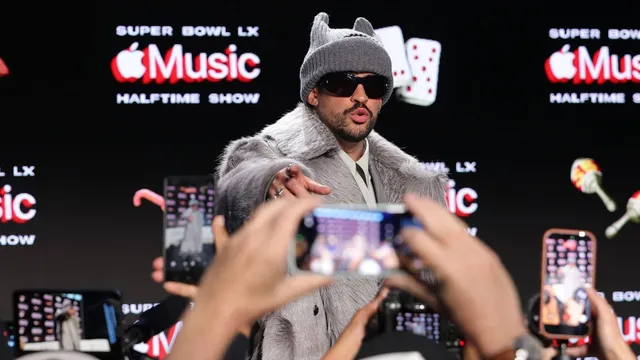
Roger Goodell defends Bad Bunny amid political controversy over Super Bowl performance
Roger Goodell defends Bad Bunny amid political controversy over Super Bowl performance
- Roger Goodell addressed concerns about Bad Bunny's political statements during Super Bowl LX.
- Bad Bunny's performance has polarized opinions, especially among right-wing critics.
- The NFL remains resolute in choosing Bad Bunny, aiming to foster unity through diverse artistic expression.
Story
In the lead-up to the Super Bowl LX, scheduled for February 8, 2026, NFL Commissioner Roger Goodell faced inquiries regarding Puerto Rican rapper Bad Bunny's outspoken criticism of U.S. Immigration and Customs Enforcement (ICE) during his recent Grammy speech. Despite significant backlash from right-wing figures and concerns about potential political statements during his halftime show, Goodell emphasized Bad Bunny's artistic brilliance and his understanding of the platform's purpose to unite people through creativity and talent. This moment adds to the ongoing conversation about the intersection of entertainment and political commentary, as the NFL seeks to broaden its audience. Bad Bunny, known for his musical impact and cultural significance, was selected as the Super Bowl halftime show headliner, a choice that has sparked both excitement and controversy. His prior Grammy remarks criticizing the Trump administration's immigration policies have made him a polarizing figure, particularly among conservative commentators. Goodell's comments highlighted the NFL's commitment to providing a vibrant and relevant entertainment experience, even amidst potential dissent from portions of their audience. This illustrates the increasing trend of utilizing major platforms like the Super Bowl for artistic expression and social commentary. The Super Bowl, historically a highly viewed and unifying event in American culture, may now be viewed through a lens of political tension due to the inclusion of artists like Bad Bunny who carry strong political messages. The NFL's choice reflects an alignment with cultural shifts and the necessity to appeal to a diverse audience, especially as the league expands its international reach. Critics, particularly from conservative backgrounds, have raised alarms over Bad Bunny's perceived anti-American sentiment, with some even organizing a counter-event to coincide with the Super Bowl. As Bad Bunny prepares to take the stage, the spotlight will be on how he balances his artistic expression with the expectations surrounding the high-stakes performance. The NFL's endorsement of such a figure amidst controversy could reshape the league's branding and resonance with newer demographics, suggesting that the organization is willing to embrace risk for potential rewards in fan engagement and cultural relevance.
Context
The impact of celebrity activism on sports events has garnered considerable attention in recent years, as high-profile figures leverage their platforms to advocate for social, political, and environmental causes. Celebrities, particularly athletes, effectively utilize their public visibility and influence to bring awareness to critical issues, which has led to both positive and negative consequences on sporting events. This activism often manifests through gestures, statements, and organized campaigns that encourage fans, teams, and sponsors to engage with various social justice initiatives. For instance, some athletes have taken a stand against racial injustice, climate change, and mental health awareness, among other topics, ultimately stimulating broader dialogues within the sporting community and beyond. The intersection of celebrity activism and sports is increasingly evident in the way fans and organizations respond to these movements. Sports events serve as platforms for activism, where athletes can showcase their commitments to various causes and influence societal change. This can enhance the culture of sports, fostering a sense of responsibility among fans and participants alike. However, it can also create tension, as not all individuals perceive these actions positively. When celebrity activists take controversial stances, it can lead to polarizing opinions among fans, resulting in divisions that may impact ticket sales, viewership, and sponsorship revenues. Additionally, the unintended consequence of celebrity activism disrupting the traditional neutrality of sports raises questions about the role of athletes in advocacy. Moreover, the effectiveness of celebrity activism can vary significantly based on the chosen medium and the perceived authenticity of the individual involved. Social media has become a powerful tool for athletes, giving them an avenue to broadcast their beliefs directly to their audience without intermediaries. Through platforms like Twitter and Instagram, they can quickly mobilize support for various initiatives. However, the fleeting nature of social media attention can dilute the impact of their efforts, as consumers may become desensitized to the plethora of messages and causes that flood their feeds. In contrast, well-executed activism—such as the organized kneeling during the national anthem by several NFL players—has sparked substantial conversations and often reflects widespread community sentiments, thereby reinforcing the potency of celebrity influence. In conclusion, celebrity activism in sports events serves as a double-edged sword, promoting positive societal changes while simultaneously introducing potential backlash. The increasing visibility of athletes as advocates necessitates a careful navigation of their influence, as fans demand a balance between performance and political expression. As the landscape of sports continues to evolve, the relationship between celebrity activism and sports events will likely evolve as well, requiring stakeholders to adapt strategies that embrace advocacy while maintaining the enjoyment and spirit of sports.


