

Palestinians vote in landmark local elections amid ongoing division
Palestinians vote in landmark local elections amid ongoing division
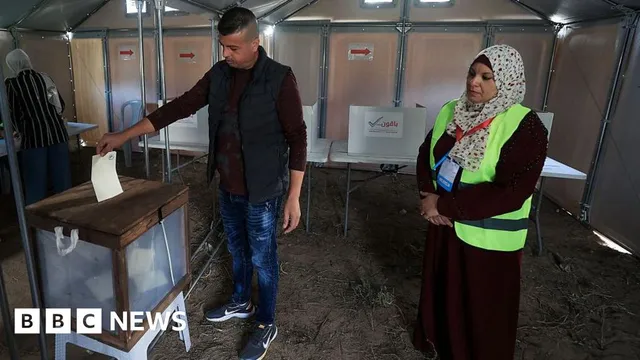
- Local elections were held in Deir al-Balah and throughout the occupied West Bank, marking a significant return to voting in Gaza after two decades.
- Voters expressed a desire for improved governance despite low turnout and a lack of opposition due to the absence of major factions like Hamas.
- The elections underline ongoing divisions in Palestinian politics, with many citizens remaining skeptical about the effectiveness of the Palestinian Authority.
Story
In the Palestinian territories, local elections took place on April 25, 2026, amidst a backdrop of political divisions and public disillusionment. These elections were significant as they marked the first such polls in Gaza since 2006, specifically in the city of Deir al-Balah, while elections were also conducted across various regions in the occupied West Bank. The turnout in Deir al-Balah was relatively modest, with election officials reporting about 15% participation by mid-morning. Voters sought a greater say in local governance, particularly in managing resources like water and electricity. The elections were characterized by the absence of Hamas, which was prohibited from participating, and other factions that boycotted the process due to requirements for candidates to acknowledge the Palestinian Liberation Organization (PLO) as the legitimate representative of the Palestinian people. Despite several factions opting out, Fatah, the dominant party led by President Mahmoud Abbas, remained on the ballot and was expected to secure victories in several areas. Public sentiments varied, with many expressing skepticism about the potential for genuine change amid ongoing challenges posed by Israeli occupation and internal political strife. Following two decades of political friction following Hamas's rise in Gaza, these local elections were seen as a step toward reconnecting Gaza and the West Bank politically. They reflected international and local calls for greater democratic participation among Palestinians at a time when many feel marginalized by their leadership. The elections were described by observers as a crucial opportunity for Palestinians to exercise their rights in a challenging environment characterized by war and occupation. However, Palestinian Authority officials faced criticism for perceived inadequacies in governance and the prevailing corruption in leadership, fostering doubts about the elections' ability to spark significant reforms. Observers noted this event was somewhat symbolic, portraying the desire of the Palestinian people to voice their preferences despite the absence of more substantial electoral opportunities such as presidential or legislative elections since the last conducted in 2006. Many voters were disappointed at the lack of competition and the dominance of Fatah in the elections, viewing it more as a public relations effort by the PA rather than a genuine attempt at reforming the political landscape.


