

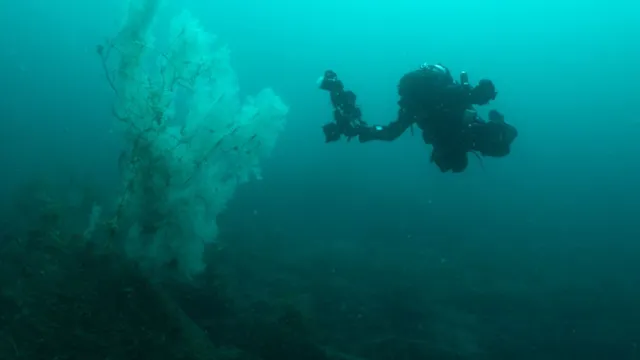
Largest black coral discovered in New Zealand's Fiordland
Largest black coral discovered in New Zealand's Fiordland
- Marine biologists discovered an unusual black coral specimen in Fiordland, New Zealand, during deep-water explorations.
- The specimen is thought to be 300-400 years old and measures over 13 feet tall, which is significantly larger than typical specimens.
- This discovery highlights the importance of protecting vulnerable coral ecosystems and encourages public reporting of large coral sightings.
Story
In recent explorations of New Zealand's deep waters in Fiordland, marine biologists made a remarkable discovery of the largest black coral specimen ever recorded. Measuring more than 13 feet tall and nearly 15 feet wide, this specimen is believed to be between 300 to 400 years old. The discovery, made during a dive by a team from Te Herenga Waka–Victoria University of Wellington, comes amid growing concerns over the protection of vulnerable coral species in marine ecosystems. Professor James Bell, leading the research, highlighted how this find, much larger than typical samples, indicates the importance of preserving such rare natural formations. Richard Kinsey, a senior biodiversity ranger with the New Zealand Department of Conservation, shared his excitement about witnessing what he called the biggest coral he has encountered in nearly 20 years of work in Fiordland. This finding is invaluable not only for scientific research but also for biodiversity conservation efforts as older corals are crucial breeding stocks for the slow-growing species. To protect these endangered colonies, researchers are keen on mapping locations where larger coral specimens are found and advising boaters and divers on how to avoid damaging them. The slow growth and long lifespan of black corals render them particularly vulnerable to disturbances from human activities, such as fishing and anchoring. Efforts are increasingly being made to map and protect coral habitats in Fiordland, which supports a variety of deep-sea wildlife and is valuable for both ecological and cultural reasons. This landmark discovery emphasizes the need for informing the public on identifying large black corals and encouraging reporting of sightings to better understand their distribution. Despite being called black coral, this species appears white due to the living tissue enveloping its skeleton, which contributes to its ecological significance. Under New Zealand's Wildlife Act, it is illegal to intentionally collect or damage black corals, and their role as habitat for numerous marine species highlights the delicate balance within marine ecosystems. The collaboration between Victoria University researchers, the Department of Conservation, and local marine guardians signifies a comprehensive approach towards enhancing the protection of vital marine resources.
Context
Coral reefs are among the most diverse and productive ecosystems on the planet, providing vital habitat for numerous marine organisms and delivering essential services such as coastal protection, tourism, and fisheries. However, human activities pose significant threats to the health and sustainability of these ecosystems. The primary drivers of coral reef degradation include climate change, pollution, overfishing, and coastal development. These factors have been increasingly recognized for their role in coral bleaching, habitat loss, and the decline of fish populations that depend on coral reefs for survival. Addressing these threats is imperative not only for the preservation of coral reefs but also for the socioeconomic wellbeing of communities that rely on their resources. Climate change, primarily driven by greenhouse gas emissions, has resulted in rising sea temperatures and ocean acidification, which have dire consequences for coral health. Elevated temperatures can lead to coral bleaching, a phenomenon where corals expel the symbiotic algae that provide essential nutrients, ultimately leading to increased mortality rates among coral populations. Moreover, acidification impairs the ability of corals to calcify, reducing the structural integrity of the reef and its capacity to support marine biodiversity. The impacts of climate change are compounded by localized stressors such as runoff from agricultural activities and urban areas, which introduce excess nutrients and sediments into marine environments. This pollution can lead to harmful algal blooms, smothering corals and disrupting their natural functions. Overfishing further exacerbates the decline of coral reefs by disrupting the delicate balance of reef ecosystems. Targeting key species, particularly herbivores, removes important biological controls that keep algal populations in check. Without these herbivores, algae can proliferate and outcompete corals for space and resources. Additionally, destructive fishing practices such as blast fishing and cyanide fishing inflict direct physical damage to coral structures, significantly impairing their recovery potential. Simultaneously, coastal development driven by population growth and tourism results in habitat destruction, as mangroves and seagrass beds are cleared to make way for buildings and other infrastructure. These habitats serve as critical nurseries for many fish species, and their loss ultimately affects the health of coral reef ecosystems. To mitigate the impact of human activities on coral reefs, a multifaceted approach is required, encompassing sustainable management practices, effective policy implementation, and community engagement. Establishing marine protected areas (MPAs) can provide refuge for reef ecosystems, allowing them to recover and maintain their ecological functions. Implementing regulations on fishing practices, promoting sustainable tourism, and increasing public awareness about the importance of coral reefs are essential steps in fostering a culture of conservation. Furthermore, efforts to reduce carbon emissions and combat climate change are crucial for the long-term survival of coral reefs. Collaborative initiatives involving governments, NGOs, and local communities can lead to the development of integrated strategies that address both local and global threats, ultimately ensuring the resilience and longevity of these vital ecosystems for future generations.


