

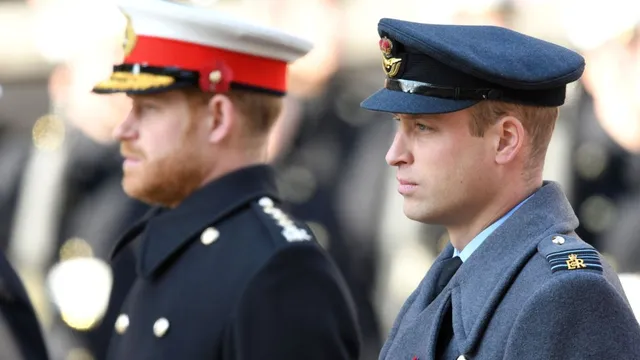
Prince Harry and William feud over military opportunities
Prince Harry and William feud over military opportunities
- Tensions between Prince Harry and Prince William trace back before 2016, fueled by competing military interests and royal responsibilities.
- William's position as future king clashed with Harry's desire for involvement in military initiatives.
- Their rivalry increasingly impacted their joint efforts in conservation, highlighting the complexities of royal family dynamics.
Story
In the context of the British royal family, the ongoing rift between Prince Harry and Prince William appears to have deep roots predating Harry's marriage to Meghan Markle in 2016. According to insights from a new book by Russel Myers, tensions primarily arose from their differing aspirations regarding military involvement. While Harry had served on the front lines in Afghanistan and sought to build strong ties with the military community, William, as the future king and commander-in-chief, believed he should take precedence in this area. This created significant friction, as Harry felt undermined and sidelined, wishing to assert his position alongside his brother. The strain extended to other areas of shared interest, particularly their ambitions in conservation efforts in Africa. Both princes were passionate about this continent, but their competitive natures often clashed. Myers highlighted how William's dedication to the environment connected deeply with his role as a future monarch, making him protective of his initiatives and pursuits regarding wildlife conservation. Harry's assertion of his own interests in Africa was met with resentment, reflecting a sense of rivalry that pervaded their relationship. In Harry's memoir, 'Spare,' he expressed feelings of irritation over the lack of cooperation between the brothers, suggesting that discussions about their respective roles often turned heated. Suggestions to mediate these tensions were made, indicating that the brothers needed to recognize the importance of collaboration and working towards common goals rather than allowing rivalry to disrupt their relationship. Within the royal family, the dynamics showcased the struggle between duty and personal ambition while illustrating how deeply ingrained family ties can foster both love and conflict. This ongoing narrative presents a unique glimpse into the trials faced by the younger generation of royals as they navigate their identities and responsibilities in the public eye. As the saga unfolds, it raises questions about the nature of sibling relationships within the public sphere, particularly when pitted against the weight of tradition and expectation. Harry and William's ongoing discord not only reflects personal issues but also highlights broader themes of competition, responsibility, and the evolution of royal duties. The landscape of the British monarchy continues to evolve, influenced by the personal choices and conflicts of its members.
Context
The impact of military service on royal family relationships has been a subject of interest and analysis, particularly in the context of how such experiences shape personal dynamics and public perceptions. Members of royal families often have military backgrounds, which can influence their roles, responsibilities, and relationships with one another. Military service is not only a means of serving one's country, but it also provides a unique setting for developing leadership skills, camaraderie, and a sense of duty, which can have profound effects on interpersonal relationships within the royal family structure. This shared experience can foster deeper bonds between family members, particularly when they serve together, as it cultivates a mutual understanding of the challenges and responsibilities associated with military life. The historical precedence of military service within royal families, especially in the British monarchy, showcases a tradition that weaves military involvement into the fabric of royal identity. For instance, Prince Charles, Prince William, and Prince Harry all have distinguished military records, which have shaped their public personas and internal family dynamics. The varying degrees of their military experiences, with Prince Harry serving in active combat while the others held different roles, have implications on their relationships. Such experiences can lead to differences in perspectives on duty and service, creating both unity and tension depending on individual roles and achievements within the armed forces. Military service can also impact how royal family members are perceived by the public, with many viewing their service as a testament to their commitment to national values. This public perception can influence relationships within the family, as members may feel the need to uphold a certain image that aligns with their service record. For example, the support and admiration garnered by their military service can lead to positive reinforcement among family members, yet it can also create competitive dynamics as individuals strive to differentiate themselves in terms of service and public contribution. The ramifications of this dynamic are profound, given that such differentiation can affect their roles in public engagements and their ability to connect with the citizenry, further complicating intra-family relationships. In recent years, the topic of military service among royal family members has taken on new dimensions, particularly with the rise of discussions surrounding mental health and the challenges faced by veterans. These conversations can influence family dynamics, as members who have shared experiences may provide support to one another, paving the way for open discussions about the psychological impacts of military service. Alternatively, differing levels of public engagement in these discussions may lead to feelings of isolation or misunderstanding among family members. Ultimately, the intersection of military service and royal family relationships is complex, characterized by a blend of shared experiences, individual triumphs and struggles, and the ramifications on both personal bonds and public perceptions.


