

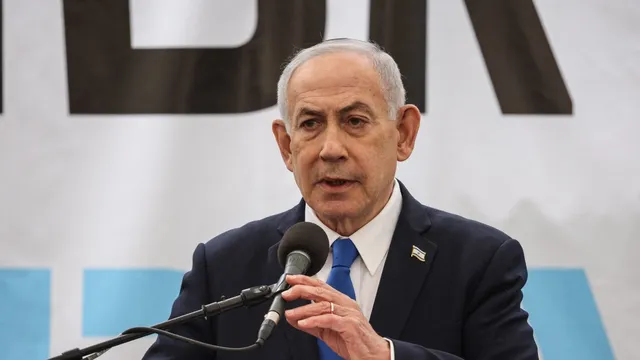
Netanyahu seeks support against Iran's nuclear ambitions
Netanyahu seeks support against Iran's nuclear ambitions
- Indirect nuclear talks between Iranian and US officials occurred in Muscat, Oman on February 6.
- Netanyahu plans to meet Trump on February 11 to discuss strategies regarding Iran negotiations.
- The outcome of these talks will likely influence regional security dynamics and diplomatic relations.
Story
On February 6, 2026, indirect nuclear talks between Iranian and US officials took place in Muscat, Oman. During these discussions, which occurred amid increasing tensions between the US and Iran, both sides expressed the expectation of further negotiations soon after. Iranian representatives communicated a strong insistence on their right to enrich uranium, a contentious point that has been central to ongoing international debates about Iran's nuclear capabilities. However, the issue of Iran's missile capabilities was not addressed in these talks. Israeli Prime Minister Benjamin Netanyahu announced his upcoming meeting with US President Donald Trump on February 11, 2026, aimed at focusing on negotiations involving Iran. Netanyahu's office highlighted that any negotiations moving forward should incorporate restrictions on ballistic missiles and should resolve ongoing support for the Iranian axis. This underscores Israel's ongoing concern regarding Iran's military capabilities and the potential threats they pose to regional stability and security. The backdrop of these discussions is further complicated by a significant US naval presence near Iran, described as an "armada" by President Trump. This military build-up has heightened fears of potential military action in response to Iran's internal unrest and its handling of recent protests. Trump has publicly threatened to consider military action if diplomatic negotiations do not yield satisfactory results. The challenging dynamics of the situation reflect the high stakes involved in US-Iran relations and the potential implications for broader Middle Eastern geopolitics. Overall, the context of the talks and the upcoming meetings emphasizes ongoing tensions, with Iran firmly holding its ground regarding its nuclear program and military prowess, while Israel and the US seek to reshape these negotiations to ensure greater regional security and ultimately, a firmer stance on Iran's military actions and capabilities.
Context
The US-Iran nuclear negotiations have been a defining aspect of Middle Eastern geopolitics, influencing international relations and global security dynamics. These discussions primarily revolve around Iran's nuclear ambitions, which have raised concerns about the potential for nuclear weapon development. The negotiations gained prominence after the revelation in 2002 of Iran’s clandestine nuclear facilities. The international community, spearheaded by the United States and its allies, responded by imposing economic sanctions on Iran, aiming to curtail its nuclear program while encouraging diplomatic dialogue. The discussions reached a pivotal moment in 2015 with the Joint Comprehensive Plan of Action (JCPOA), a landmark agreement intended to limit Iran's nuclear capabilities in exchange for sanction relief. Under the JCPOA, Iran agreed to reduce its uranium enrichment and allow extensive monitoring by the International Atomic Energy Agency (IAEA). This agreement was hailed as a significant diplomatic achievement, reflecting a shift from punitive measures towards negotiation and engagement. However, the JCPOA faced significant challenges following the US withdrawal from the agreement in May 2018 under the Trump administration. The reimposition of sanctions led to increased tensions between the US and Iran, prompting Iran to gradually breach the agreement's terms, including scaling up uranium enrichment activities. The aftermath of the US withdrawal saw a deterioration of trust, making the resumption of negotiations increasingly complex. Despite numerous attempts to revive the JCPOA under the Biden administration, including indirect discussions mediated by European and other international partners, a definitive resolution has remained elusive. Key sticking points have included the extent of sanctions relief, verification mechanisms, and Iran's broader regional activities, including its support for proxy groups within the Middle East. A significant aspect of the negotiations has also been the involvement of other global powers, namely Russia and China, who have sought to maintain the framework of the JCPOA and oppose unilateral American sanctions. These nations view the nuclear deal not only as a critical non-proliferation measure but also as a means to uphold the principles of multilateralism and resolve international disputes through diplomatic avenues. The geopolitical landscape is further complicated by ongoing regional conflicts and Iran's aggressive posture towards Israel and Gulf Arab states. As a result, the negotiations extend beyond nuclear constraints to encompass wider security concerns, reflecting the intricacies of Middle Eastern politics. Looking ahead, the future of US-Iran nuclear negotiations remains uncertain, as both parties face domestic pressures that influence their negotiating stances. Continued diplomatic engagement is essential to prevent further escalation and to work towards a comprehensive agreement that addresses not only nuclear issues but also regional security concerns. International cooperation and sustained pressure on all sides for constructive dialogue will be critical in navigating this complex arena. The stakes remain high, as the implications of a nuclear-armed Iran would profoundly impact regional stability and global security, necessitating a balanced approach that prioritizes both deterrence and diplomacy.


