

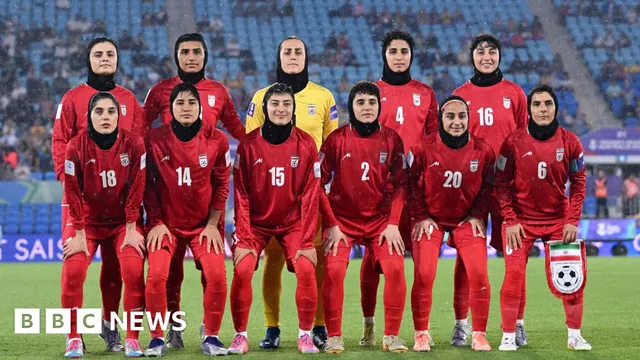
Iranian footballer risks safety by returning home after asylum offer
Iranian footballer risks safety by returning home after asylum offer
- One member of the Iranian women's football team returned to Iran after initially agreeing to asylum in Australia.
- The team faced protests regarding their safety due to their actions related to the national anthem.
- The situation highlights the difficult choices the athletes faced amid the ongoing war in Iran.
Story
In the context of the ongoing conflict in Iran, a member of the Iranian women's soccer team has chosen to return to Iran after accepting an asylum offer from Australia. The team was in Australia for the Asian Cup when the Iran war broke out, prompting several players to seek refuge amid fears for their safety due to their decision not to sing the national anthem prior to a match. The team's flight left Australia without seven of its members while other players were granted humanitarian visas. Iranian Australian groups protested against the team's departure, indicating concerns for the safety of the returning players. Despite the offers of asylum from Australian officials, the return decision highlighted the immense pressure faced by these athletes, especially considering the reactions from the Iranian government regarding their actions. The team's silence during the anthem was interpreted in various ways, representing both an act of resistance and mourning. Protests at the airport by Iranian Australians raised awareness about potential threats the women could face upon return to Iran, especially for those who reportedly had connections to the regime's security forces. These choices of asylum and return were complicated by the possible repercussions for the players' families back home, driving the emotional nature of their decisions. As the team members prepared to board their flight, each athlete was taken separately to discuss their options, leading to one player's change of heart and decision to return. The situation undoubtedly reflects broader issues of safety and freedom for athletes under authoritarian regimes. The ongoing plight of these soccer players has drawn international attention, ringing alarm bells regarding their rights and safety. The Australian government's proactive approach toward offering asylum faced stark realities as some players chose to prioritize familial ties and personal safety over the potential risks associated with their return. With the backdrop of war affecting their homeland, the players' choices underline a complex interplay of sports, rights, and national identity, raising questions about the responsibilities of sports organizations and governments in protecting athletes' welfare.
Context
The ongoing conflict in Iran has profound implications for civil rights within the country and the broader region. Since the escalation of hostilities, the government has increasingly implemented restrictive measures aimed at suppressing dissent and curtailing freedoms. These actions include heightened censorship, arbitrary detentions, and the use of force against peaceful protestors. The war has created an atmosphere of fear among citizens, which discourages public expression of opinions, particularly those that oppose the government or the war effort. Reports indicate that individuals and groups advocating for human rights have faced severe repercussions, including imprisonment and violence, reflecting the government's intolerance for any form of opposition. Moreover, the war has exacerbated existing inequalities and has disproportionately affected marginalized groups, including women and ethnic minorities. In times of conflict, these groups often experience heightened vulnerability as resources become scarcer and governmental focus shifts towards military priorities. Human rights organizations have documented instances of increased violence against women, including domestic abuse and sexual violence, as societal norms deteriorate amidst chaos. Ethnic minorities have reported systematic discrimination, being targeted as scapegoats for the country's woes, resulting in further intimidation and exclusion from civil processes. The international response to Iran's civil rights violations has been mixed, with some countries imposing sanctions in an effort to pressure the government to respect human rights. However, such measures often have limited impact on the ground, as they can lead to further entrenchment of hardline policies rather than meaningful change. Additionally, the lack of effective mechanisms for accountability means that violations typically go unpunished, perpetuating a cycle of abuse. Non-governmental organizations continue to struggle to gather accurate information from the ground due to restricted access and heightened risks, complicating efforts to advocate for change. Looking ahead, the resolution of the conflict may lead to an environment where civil rights can either be reinstated or further eroded, depending on the domestic and international responses to the situation. The necessity for a robust, inclusive dialogue that prioritizes human rights in any peace negotiation is evident. Without a commitment to uphold civil liberties and address the injustices exacerbated by the war, the potential for lasting peace and democracy in Iran remains bleak. Comprehensive strategies that involve local voices and address systemic issues are essential to transition from a conflict-driven paradigm to one that genuinely respects and promotes civil rights for all citizens.


