

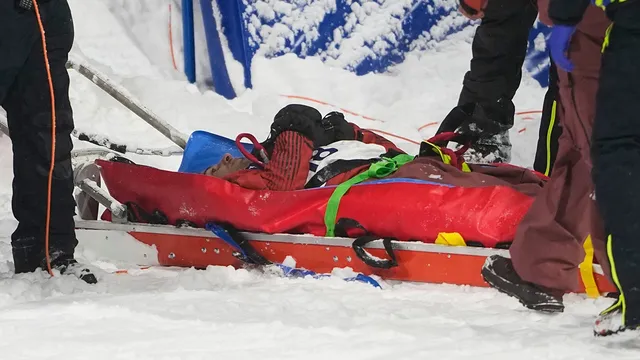
Mark McMorris recovers after heavy crash in training run
Mark McMorris recovers after heavy crash in training run
- Mark McMorris experienced a heavy crash during a training session in Livigno, Italy, on February 4, 2026.
- He was taken off the mountain on a stretcher and transported to a hospital for precautionary measures.
- By February 5, he reported feeling good and hoped to participate in the upcoming big air event.
Story
On February 4, 2026, Canadian snowboarder Mark McMorris, a well-known athlete with three Olympic bronze medals, experienced a serious accident during a training session in Livigno, Italy. The accident occurred while he was preparing for the men's big air competition, which was set to start shortly after. Initial reports indicated that McMorris was taken off the mountain on a stretcher, raising concerns about his condition. According to the Canadian Olympic Committee's statement, he was promptly transported to a hospital for precautionary measures. Media outlets reported that following the crash, he received medical attention, but specific details about his injuries were not disclosed at that time. By February 5, 2026, information regarding McMorris's condition had improved. He was reported to be in good spirits and feeling optimistic post-crash, which was a positive development for his fans and supporters. His immediate recovery was monitored carefully, and officials announced that a decision regarding his participation in the upcoming big air qualifying rounds would be made later that same day. McMorris expressed appreciation for the well-wishes he received from his fans, demonstrating his connection to the public who closely follows his athletic career. Mark McMorris has been known for his resilience throughout his career, having previously sustained multiple serious injuries in 2017 that included a broken jaw, left arm, ruptured spleen, and other severe ailments. Despite such challenges, McMorris made a successful return to competitive snowboarding and has been looking forward to the Milano Cortina Winter Games. As he prepared for this competition, he noted that he felt fit and was enjoying his riding. With the upcoming events offering significant opportunities for him to showcase his skills, the importance of his health status became increasingly crucial to his chance at another Olympic medal. The immediate aftermath of his crash involved collaboration between the Canadian Olympic Committee and Canada Snowboard staff to ensure that he received the necessary medical attention. The context of the incident lies not only in the physical toll that professional snowboarding takes on athletes but also in the solidarity and support from the snowboarding community during such trying times. This incident exemplifies the high-stakes environment of elite sports, where competitors must balance their passion for the sport with the realities of injury and recovery.
Context
Snowboarding is an exhilarating sport that combines elements of surfing, skateboarding, and skiing, enabling participants to carve their way down snow-covered slopes in a dynamic and fluid manner. However, like many high-adrenaline activities, it also carries a risk of injuries, which can significantly impact overall performance. Injuries in snowboarding often arise from falls, collisions, and overuse, particularly affecting the wrists, shoulders, knees, and ankles. These injuries can lead to various complications, including limited mobility, pain, and in severe cases, long-term disabilities, which can not only hinder an individual’s ability to participate but can also diminish their skillset and confidence on the slopes. Performance in snowboarding relies heavily on a combination of physical fitness, technical skills, and mental readiness. When an athlete sustains an injury, their physical capacity is compromised, which directly influences their ability to perform at their peak. For instance, a knee injury can severely affect a snowboarder's balance, agility, and control, which are essential for executing tricks and maneuvers, while wrist injuries can inhibit the use of poles or the proper stance during riding. Furthermore, psychological factors play a role; fear of re-injury can lead to hesitation, thus affecting performance quality and overall enjoyment of the sport. Recovery from injuries varies widely based on the type and severity of the injury, as well as the individual’s adherence to rehabilitation protocols. Proper rehabilitation is vital for restoring strength, flexibility, and overall functional ability. Athletes who engage in rehabilitation programs typically experience a more successful return to the sport. These programs can include physical therapy focusing on strength training, flexibility exercises, and balance training, tailored to address specific areas affected by the injury. Such comprehensive rehabilitation not only aids in recovery but also helps build resilience, allowing athletes to return to snowboarding with enhanced skills and confidence. Preventative measures are critical in minimizing the risk of injuries in snowboarding. These measures can include wearing appropriate safety gear, such as helmets and wrist guards, and engaging in pre-boarding warm-up routines that prepare the body for the demands of the sport. Additionally, education on proper technique, gradual skill progression, and an understanding of one’s limits in a snowboarding context can significantly reduce injury incidence. By prioritizing injury prevention and recovery, snowboarders can maintain their performance levels and continue to enjoy the sport safely.


