

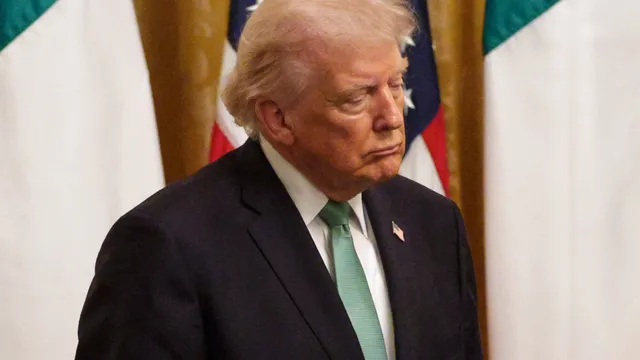
Trump's approval rating plummets to historic low amid war with Iran
Trump's approval rating plummets to historic low amid war with Iran
- Recent polls indicate that Trump’s approval rating in March 2026 has fallen to a low of 35% with 55% disapproving.
- The decline in approval is particularly pronounced among independent voters and women.
- Trump's waning support could complicate the Republican Party's strategies as the midterm elections approach.
Story
In the United States, President Donald Trump's approval ratings have significantly declined as he approaches the midterm elections in 2026. Various polls conducted in early to mid-March 2026 show that Trump's approval rating has reached a troubling low, with significant dissatisfaction among voters. One poll by research firm Leger found his approval at 35% against a disapproval rating of 55%, highlighting a 10% net negative rating among Americans. This decrease in support is particularly marked among independent voters, with only 27% approving of his handling of the presidency, while 55% disapprove. Additionally, females showed lower approval ratings, reflecting a growing sentiment of disapproval among critical voter demographics. Amid the backdrop of the ongoing conflict with Iran, which has polarized public opinion further, Trump’s previous support from the GOP base is also showing signs of fracture as some of his supporters express mixed reactions to his foreign policy decisions. Polling data reveals a consistent pattern of diminishing approval ratings for Trump; a poll conducted from February 27 to March 2, 2026, found his approval at 38%, also reflecting a concerning trend for the president as his administration faces issues on both domestic and international fronts. CNN's analysis indicates this marks the lowest approval ratings for a sitting president in their second term, underscoring Trump's significant challenges and the potential impacts on Republican strategies heading into the midterms. Trump has publicly dismissed these unfavorable polling results, stating that he does not care about polling outcomes, and consistently emphasizing his previous successes in office. He argues that despite the figures, he remains a dominant figure in the political landscape of the country, highlighting a stark disconnect between his perceptions of support and the polling data available. As the midterms approach, the implications of Trump’s current standing with voters will be a critical factor for both his campaign and the Republican Party's overall strategy.
Context
The impact of a potential war with Iran on U.S. politics is profound and multifaceted, influencing public opinion, party dynamics, and policy-making. Historically, military conflicts have often led to a surge in nationalistic sentiment, which can temporarily unify a divided populace. However, the long-term effects can exacerbate partisan divides, particularly if the conflict is prolonged or results in significant casualties. In the context of Iran, tensions have been escalating due to nuclear ambitions and regional activities, which could prompt military engagement. The reactions from the public and elected officials would likely vary significantly depending on the perceived legitimacy of the military action and the outcomes that follow. If the war is viewed as necessary for national security, it may bolster support for the incumbent administration. Conversely, if the war is seen as unwarranted or disastrous, it could lead to accountability measures in upcoming elections, especially for those in favor of the war. Legislatively, a war with Iran could lead to calls for new authorizations for military force, affecting the balance of power between Congress and the executive branch. Historically, presidents have sought to expand their military authority under the guise of national security, which can create friction with legislators who are wary of unilateral action. Moreover, this could ignite debates about the War Powers Resolution and the extent of presidential power in conducting military operations without Congressional approval. This process raises questions regarding checks and balances and may lead to larger discussions about the role of the U.S. in global conflicts, especially in the Middle East, which has seen significant military involvement over the past two decades. Public opinion regarding military engagement often shifts based on immediate consequences and media portrayal of the conflict. Should a conflict with Iran ensue, emotions surrounding issues such as the safety of American troops, civilian casualties, and economic consequences may dominate discourse. The media plays a crucial role in shaping these perceptions, as pro-war sentiments could be amplified during a military campaign while anti-war movements may gain traction if the situation deteriorates. This shift in public scrutiny can influence voters, often leading to mobilized movements that question U.S. foreign policy decisions, potentially resulting in increased activism or participation in the democratic process. In summary, the potential for war with Iran represents a significant turning point in U.S. politics, impacting the trajectory of public opinion, party relations, legislative authority, and media narratives. As these elements intertwine, the outcome of such a conflict could reshape domestic political landscapes, influencing not only the immediate political environment but also the long-term views on U.S. foreign policy. An engagement in war with Iran would therefore be critical, warranting careful consideration of the implications for both national security and the domestic political arena.


