

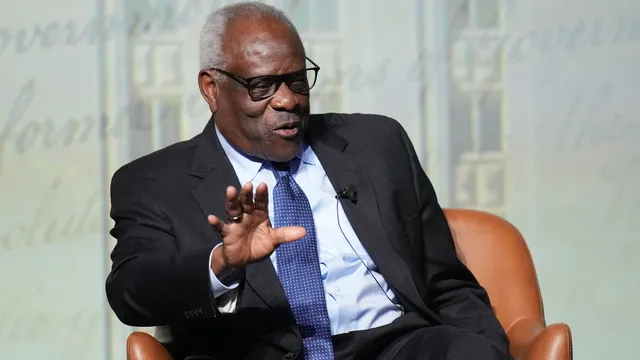
Justice Clarence Thomas warns Supreme Court unprepared for AI challenges
Justice Clarence Thomas warns Supreme Court unprepared for AI challenges
- Justice Clarence Thomas expressed concerns about the Supreme Court's ability to tackle issues related to artificial intelligence during a speech in Austin.
- He noted that important aspects like defamation and intellectual property regarding AI have not been adequately addressed by current laws.
- The discussions highlight the need for a reevaluation of how the legal system interacts with evolving technological challenges.
Story
In recent months, Justice Clarence Thomas addressed concerns regarding the Supreme Court's readiness to deal with cases related to artificial intelligence during a visit to the University of Texas at Austin. He acknowledged that there are significant issues on the horizon, particularly concerning defamation and intellectual property connected to AI technology. Thomas expressed uncertainty about whether the court is equipped to adjudicate these matters or whether current laws adequately provide a framework for such legal battles. Despite this, he maintained a belief in the court's ability to adapt and handle modern issues. His comments reflect growing apprehension within the legal community about the rapid advancement of AI and the implications it has for law and policy. In the same context, Justice Sonia Sotomayor previously raised alarms about the uncritical adoption of AI, highlighting the risks of poor data leading to harmful outcomes. She emphasized that the decisions made based on AI systems could perpetuate societal biases, marking a significant concern for the judiciary as it navigates modern technological dilemmas. Meanwhile, Justice Ketanji Brown Jackson criticized her conservative colleagues for their use of emergency orders, describing them as lacking sufficient reasoning and potentially misaligned with real-world consequences. This criticism underscores the ideological divide within the court, particularly as it relates to the handling of urgent legal matters and the pace at which they are decided. These developments come at a time when members of Congress are advocating for more oversight and regulation of AI technologies, indicating a broader recognition of the need for clear legal guidelines. The Supreme Court, as the nation's highest judicial body, will inevitably encounter cases that challenge existing legal frameworks created before the rise of these technologies. Therefore, the justices' ability to adapt to these emerging challenges will be crucial as the court is tested with unprecedented legal questions in the realm of artificial intelligence. Overall, the judiciary's capacity to respond effectively to the challenges posed by AI will have profound implications not only for the legal system but also for individuals and entities potentially affected by such technologies. The ongoing discussions and critiques within the Supreme Court signal a critical moment for reassessing how the law addresses the rapid evolution of technology in society and its potential consequences.


