

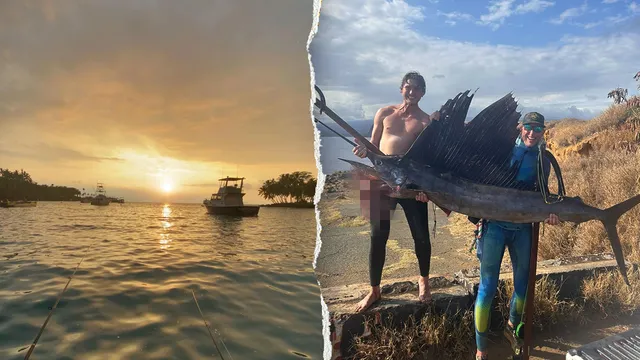
Fisherman survives shark attack through quick thinking and self-care
Fisherman survives shark attack through quick thinking and self-care
- Josiah Kaimani Ventura, a 22-year-old commercial fisherman, survived a shark attack in Hawaii.
- After being bitten, he swam to shore and applied a tourniquet to his leg to control the bleeding.
- Ventura's experience emphasizes the unpredictability of shark encounters and the need for caution and respect for marine life.
Story
In Hawaii, a shocking encounter in the water occurred when 22-year-old Josiah Kaimani Ventura found himself in a fight for survival after a shark attack. The incident began during a routine day of fishing when Ventura, while diving inside a cave for a rare fish species, accidentally surfaced and noticed a shark tangled in a fishing net. The shark, reacting unexpectedly, became aggressive, leading to a near-fatal bite on Ventura's leg. In that critical moment, he instinctively swam approximately 40 yards to the shore, despite the water being filled with blood from his injuries. This valorous act demonstrated his determination to survive, even as the severity of the injury threatened his life. Once on the beach, Ventura battled through shock and pain to administer lifesaving measures, including a makeshift tourniquet to stem the bleeding. He opted to call his mother for help instead of reaching out to emergency services first, although she became understandably frantic upon hearing the news. After returning to the phone and calming down, she was able to provide emotional support during his crisis. Eventually, paramedics arrived, upgraded his tourniquet, and rushed him to Kona Community Hospital. Here, surgeons performed a complex operation to treat his extensive wounds, ultimately closing the massive bite with 70 staples and 90 stitches. In the aftermath of this traumatic event, Ventura reflected on his experience, sharing a message of respect for marine life while emphasizing the importance of reporting injured animals rather than attempting to intervene personally. He described how grateful he felt to walk away with just a scar, underscoring his deep respect for the ocean, which remains unchanged despite the attack. Furthermore, in a separate event occurring around the same time, a swimmer in California was reported missing after potentially encountering a shark attack, emphasizing the ongoing dangers that exist in ocean waters. This incident prompted widespread concern among local officials and beachgoers and drew parallels to Ventura's case, highlighting that shark attacks, while rare, continue to be a significant risk for those engaging in water activities.
Context
Shark attacks in Hawaii have long captured public interest, often leading to misconceptions about their frequency and danger. Hawaii is renowned for its beautiful beaches and rich marine life, which also attract sharks. This dual nature of the ocean environment is crucial for understanding the statistics surrounding shark attacks. The annual reports and statistics show that while shark attacks do occur, they are relatively rare compared to overall beachgoer numbers and ocean recreational activities. Most encounters between humans and sharks do not result in injury, and when they do, they are often non-fatal and can be treated effectively. Analysis of the data from the past few decades indicates that the number of unprovoked shark attacks in Hawaii has remained relatively stable, with occasional peaks corresponding to changes in environmental conditions and human activity in the ocean. On average, there are about five to 10 reported unprovoked shark attacks annually in the state. This frequency positions Hawaii as one of the top locations for shark attacks globally, but it is essential to contextualize these figures against the millions of people who swim, surf, and dive in Hawaiian waters each year. The primary species involved in shark attacks in Hawaii include the tiger sharks, great white sharks, and bull sharks. Tiger sharks are especially prevalent in Hawaiian waters and are known for their opportunistic feeding behavior. Most incidents involve surfers and swimmers who may inadvertently provoke sharks, especially in murky waters or near fishing activities. Injuries tend to happen in areas where fish are being caught, as the presence of blood can attract sharks. Conversely, preventative measures, such as public education on ocean safety, have been implemented, and responses to shark encounters have improved significantly. Efforts to promote shark conservation and management are essential in the context of these statistics. Advocacy for the protection of sharks is vital, as many species face threats from overfishing and habitat loss. Understanding and balancing human interests with shark populations can help ensure that both coexist in harmony, minimizing the risks of attacks while maintaining Hawaii's ecological integrity. Overall, while shark attacks in Hawaii present a risk, the likelihood of an attack remains minimal for the vast number of ocean users. Fostering awareness and respect for marine life is crucial for individuals enjoying the beauty of Hawaii's beaches.


