

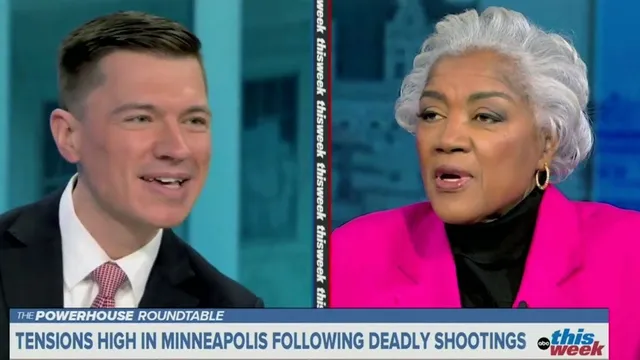
Border Patrol agents shoot and kill ICU nurse during immigration raid
Border Patrol agents shoot and kill ICU nurse during immigration raid
- Violence erupted in Minneapolis due to a federal immigration enforcement operation targeting illegal immigrants.
- Alex Jeffrey Pretti, an ICU nurse, was fatally shot by a Border Patrol agent during the operation, leading to public outrage.
- The tragic incident intensified ongoing debates about immigration enforcement and the role of local authorities in such operations.
Story
In recent weeks, tensions escalated in Minneapolis, Minnesota, after federal immigration enforcement operations led to violent confrontations. Most notably, a Border Patrol agent fatally shot Alex Jeffrey Pretti, a 37-year-old ICU nurse, during an enforcement operation targeting an illegal immigrant with a criminal history. Pretti had been filming the federal agents when he allegedly approached them armed with a handgun. This incident set off a series of protests against the ICE operations, with protesters accusing agents of excessive force and calling for accountability from local and federal authorities. Following Pretti's death, unrest erupted in Minneapolis, leading to public outcry and political backlash from local leaders, including both the state's governor and city mayor. Law enforcement officials and supporters of the Trump administration blamed this chaos on political decisions that obstructed federal agents' operations. Politicians argued that non-cooperation was endangering public safety, while crowds of protesters asserted that local law enforcement was complicit in these aggressive actions. As unrest continued, an ICE agent suffered severe injuries during a confrontation when a protester bit off part of the agent's finger. This incident highlighted the rising violence against federal officials trying to enforce immigration laws, which has been a contentious issue in the state. Law enforcement leaders expressed concerns over the breakdown of public order in Minneapolis, attributing it to a combination of mob mentality and lack of cooperation from local officials. Amidst the unrest, pro-Trump commentators and right-wing activists criticized protesters using high-pitched whistles, claiming that such tactics were designed to disrupt ICE operations. Critics argued that protests were escalating the situation and making it more dangerous for law enforcement while activists defended their right to demonstrate against aggressive immigration policies. The situation in Minneapolis remains volatile, demanding urgent reconsideration of strategies used by federal agents in conducting immigration raids and the local authorities' engagement with these operations.
Context
The history of immigration enforcement in the United States is a complex and evolving narrative that reflects the country’s changing attitudes towards immigration and national security. From the early days of the republic, federal immigration policies have emerged in response to various social, economic, and political factors. Initially, immigration enforcement was minimal and focused mainly on regulating entry through ports. However, as the nation grew and became more industrialized, the need for a more structured approach to immigration enforcement became evident. The first major federal immigration law, the Immigration Act of 1882, established the groundwork for future enforcement by introducing a system of inspection at ports of entry and prohibiting certain classes of individuals from entering the country, including criminals and those likely to become public charges. This Act signified the beginning of federal oversight of immigration, setting the stage for more stringent enforcement in the years to come. Throughout the late 19th and early 20th centuries, waves of immigrants arrived in the United States, prompting an increase in enforcement measures. The Immigration Act of 1924 marked a pivotal moment in immigration enforcement; it established quotas that severely limited immigration from certain countries, reflecting racial and ethnic prejudices prevalent at the time. The enforcement of these quotas was facilitated by the expansion of the federal government's role, leading to the creation of the Bureau of Immigration within the Department of Labor. However, it was not until the establishment of the Immigration and Naturalization Service (INS) in 1933 that immigration enforcement saw a significant institutional framework, allowing for more systematic regulation and enforcement of immigration laws. The immigration landscape shifted dramatically during the 20th century due to various geopolitical factors, including World War II and the Cold War, which influenced U.S. immigration policies and enforcement tactics. The Bracero Program, initiated in 1942, allowed temporary labor by Mexican workers but simultaneously highlighted the challenges of enforcement, as many undocumented workers remained after their contracts ended. In the 1980s, the Immigration Reform and Control Act (IRCA) represented a significant change in immigration policy, making it illegal for employers to knowingly hire undocumented immigrants and providing a pathway to legalization for millions. This era also saw an increase in deportations and heightened enforcement measures at the southern border, as public sentiment began to shift towards a more restrictive approach to immigration. Entering the 21st century, immigration enforcement in the United States has become increasingly militarized and technology-driven, with the introduction of various initiatives and policies aimed at detaining and deporting undocumented immigrants. Following the events of September 11, 2001, national security concerns significantly reshaped immigration enforcement, leading to the creation of the Department of Homeland Security (DHS) and increased funding for border security and interior enforcement operations. The enforcement strategy has evolved to emphasize not just border control but also workplace enforcement through the use of sophisticated tracking and data systems. The discourse surrounding immigration enforcement continues to evolve, informed by a complex interplay of economic needs, human rights considerations, and national security, making it a contentious topic in U.S. politics. As enforcement practices adapt to changing societal needs, the legacy of immigration policy and enforcement continues to impact millions of lives, shaping the fabric of American society.


