

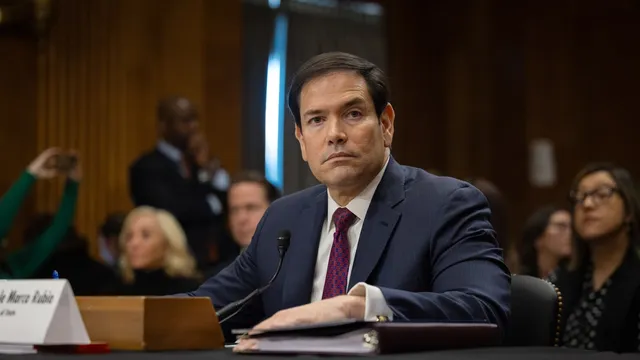
Marco Rubio revokes US travel privileges for Iranian officials amid protests
Marco Rubio revokes US travel privileges for Iranian officials amid protests
- The US Secretary of State Marco Rubio has taken steps to revoke travel privileges for Iranian officials and their families due to the regime's oppressive actions.
- Thousands have reportedly died during protests against the Iranian government, with high-profile sanctions targeting key leaders.
- This response highlights the international community's commitment to supporting human rights and addressing state-sponsored violence in Iran.
Story
Recent anti-government protests in Iran have led to thousands of fatalities and massive arrests, as the regime's crackdown intensifies. Since December 28, over 6,200 protesters have been reportedly killed, with 17,100 additional arrests documented by the Human Rights Activists News Agency. In response to these human rights violations, US Secretary of State Marco Rubio has revoked travel privileges for senior Iranian officials and their families, indicating that those profiting from the regime's oppression are unwelcome in the United States. This move is part of a broader strategy to pressure Iran amidst ongoing tensions related to the nuclear deal negotiations. The US Treasury Department has also announced sanctions against Iran's Interior Minister Eskandar Momeni and several high-ranking officers from the Islamic Revolutionary Guard Corps (IRGC), underscoring the US's commitment to addressing the repressive actions of the Iranian government. The sanctions aim to hold accountable those responsible for the violence against protesters and highlight the complicity of various Iranian officials in perpetuating the regime's oppressive policies. Additionally, the European Union has taken steps to confront Iran's aggressive actions by designating the IRGC as a terrorist organization, implementing visa bans and asset freezes against certain Iranian state entities. This coordinated effort between the US and EU aims to apply pressure on Iran regarding its human rights abuses and its nuclear ambitions. Iranian officials, while acknowledging some fatalities during the protests, claim that the majority of deaths were among security forces or bystanders struck by
Context
The imposition of sanctions by the United States and the European Union on Iran has profoundly impacted the Iranian economy, affecting various sectors and leading to significant economic challenges since their introduction. The sanctions, primarily aimed at curbing Iran's nuclear program and addressing regional security concerns, have restricted Iran's access to international financial systems and trade, particularly in oil, which is the backbone of its economy. The removal of Iran from the global oil market has resulted in substantial revenue losses, crippling the national treasury and leading to increased inflation and a devaluation of the Iranian rial. The sanctions have also limited Iran's ability to import essential goods, including medicine and food, exacerbating humanitarian concerns within the country. As a result, everyday Iranians face rising costs of living, coupled with decreased purchasing power due to the currency's decline and limitations on available commodities. Moreover, employment opportunities have dwindled, leading to higher unemployment rates, particularly among the youth, which fuels social discontent and unrest. These economic pressures have also prompted the Iranian government to adopt various strategies to mitigate the impacts of sanctions, including efforts to pivot towards non-Western economies and enhance domestic production capacities. While Iran has sought to strengthen ties with countries such as China and Russia to bolster its economic position, these strategies have yet to fully compensate for the losses incurred through sanctions. The economic isolation has led Iran to re-evaluate its foreign policy, often aligning more closely with nations sharing similar geopolitical interests. Furthermore, the long-term sustainability of Iran's economy remains in question due to the potential for continued sanctions and the global shift towards renewable energy sources, posing a threat to its oil-dependent revenue model. The situation is further complicated by internal political dynamics and public frustration over economic mismanagement, which could influence future governance and policy directions. In conclusion, the impact of US and EU sanctions on Iran's economy is profound and multifaceted, leading to economic hardship, societal unrest, and significant shifts in foreign relations. The effectiveness of current strategies to counteract these sanctions remains uncertain, and the overall stability of the Iranian economy hangs in the balance as the geopolitical landscape evolves.


