

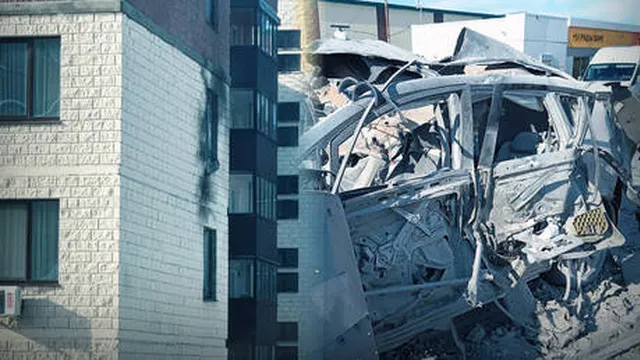
Russia retaliates against Ukraine’s drone attacks with major military strikes
Russia retaliates against Ukraine’s drone attacks with major military strikes
- Russian military bombarded 147 Ukrainian military sites on February 12, 2026.
- Ukrainian forces launched a major drone attack the previous day, targeting Russian civilian infrastructure.
- The continuous cycle of retaliatory strikes has escalated tensions and worsened the humanitarian situation.
Story
In the aftermath of escalating tensions, the Russian military executed a significant series of strikes targeting Ukraine. This military offensive took place on February 12, 2026, and focused on a total of 147 locations within Ukraine, including military facilities and energy infrastructures pivotal to the nation's defense operations. The attack was described by the Russian defense ministry as a direct response to a prior large-scale assault by Ukrainian forces, which utilized numerous drones and advanced weaponry against civilian infrastructure in various Russian regions, including the Belgorod Region. In the lead-up to the strikes, Ukrainian forces had engaged in extensive military activities that reportedly resulted in injuries to civilians in Russia. The assaults involved hundreds of drones, HIMARS missiles, and glide bombs, which targeted civilian structures, prompting a sharp reaction from Moscow. While Russian officials claimed most incoming projectiles were intercepted, the aftermath led to the injury of at least six civilians in Belgorod due to debris from the explosions. The scale of the Russian counter-attack revealed a comprehensive military strategy, leveraging both air-based and ground-based long-range weapon systems, along with unmanned aerial vehicles. Russian efforts targeted key sites such as drone production plants, military storage facilities, and infrastructure crucial for maintaining Ukraine's military readiness. This influx of strikes not only affected military assets but also extended to the lives of ordinary civilians, as the assaults impacted major cities across Ukraine, including the capital Kyiv, Dnepropetrovsk, and the port city of Odessa. As winter poses severe challenges, Kyiv's Mayor Vitaly Klitschko pointed to these attacks as exacerbating the ongoing energy crisis in the capital, with many buildings lacking necessary heating. This energy crisis comes on the heels of what Ukrainian President Volodymyr Zelensky characterized as insufficient preparations for emergencies like these. He indicated that the mayor must accept responsibility for the lack of readiness. The broader context remains essential as the conflict continues, with patterns of escalating violence prompting international concern and highlighting the deeply rooted tensions that fuel this cycle of retaliatory strikes.


