
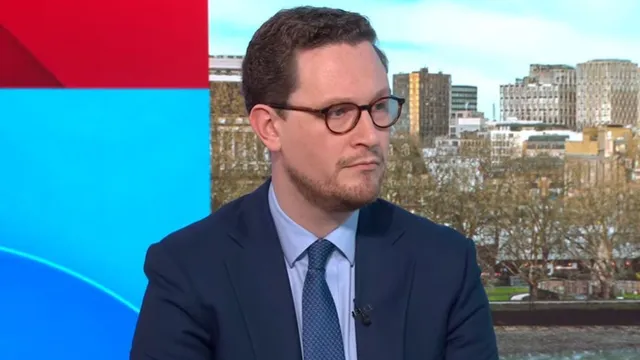
UK confirms no involvement in US military action in Venezuela
- Sir Keir Starmer confirmed the UK had no involvement in the US military action against Venezuela.
- He has expressed a desire to speak with President Trump to clarify facts surrounding the operation.
- The UK government maintains its commitment to uphold international law while addressing the Venezuelan crisis.
Story
On January 4, 2026, Sir Keir Starmer, the Prime Minister of the United Kingdom, addressed the military operation conducted by the United States against Venezuela, particularly in Caracas. Following a series of explosions and low-flying aircraft activity, he reiterated that the UK had no part in the US strike that aimed to capture Venezuelan President Nicolas Maduro and his wife, Cilia Flores. Starmer expressed his need to collect more facts about the situation before forming a judgment on international law implications related to the military action. He has not yet had direct communication with US President Donald Trump about the events, but he is eager to establish the facts by discussing with Trump and US allies. Despite the absence of UK involvement, Starmer emphasized the UK government's condemnation of Maduro's regime, labeling it as illegitimate and brutal. He highlighted the importance of ensuring a transition to a government that reflects the will of the Venezuelan people amidst a volatile international landscape. This situation brings to light significant concerns over international military interventions, sovereignty, and adherence to international law, demonstrating the complexities of international relations and the UK's position in foreign conflicts.
Context
International law concerning military interventions is a complex field that addresses the legality, legitimacy, and ethical implications of the use of armed force by states. The primary legal framework governing military interventions is rooted in the United Nations Charter, specifically Articles 2(4) and 51. Article 2(4) prohibits the use of force against the territorial integrity or political independence of any state, providing a significant limitation on unilateral military action. Meanwhile, Article 51 acknowledges the right of self-defense, allowing states to respond to armed attacks in a manner that is proportional and necessary. The interplay between these articles forms the bedrock of contemporary international law regarding military force, emphasizing the necessity for multilateral consensus and respect for state sovereignty, while also allowing for necessary defensive measures under certain conditions. Over the years, the interpretation of these articles has evolved, particularly in light of humanitarian crises and the need for protecting human rights. The doctrine of Responsibility to Protect (R2P) has emerged as a significant development in justifying military intervention on humanitarian grounds. R2P posits that the international community has an obligation to intervene when a state is either unwilling or unable to prevent mass atrocities, such as genocide, war crimes, ethnic cleansing, and crimes against humanity. This concept, which gained traction following the crises in Rwanda and the Balkans, has sparked debates surrounding the legality and moral responsibility of intervening states. Critics argue that R2P could be abused to justify military actions that infringe upon state sovereignty; meanwhile, proponents maintain it is essential for preventing humanitarian disasters. Moreover, regional organizations such as the North Atlantic Treaty Organization (NATO) and the African Union (AU) have developed their own frameworks for approving military interventions within their jurisdictions. NATO’s intervention in Kosovo (1999) is often cited as a controversial example, where military action was taken without explicit UN Security Council approval, raising questions about the respect for international law and processes. Similarly, the AU has committed to a principle of non-indifference to mass atrocities, sometimes allowing for interventions that may bypass traditional UN protocols. These examples underscore the tension between the need for timely responses to crises and the adherence to established international legal norms. The advent of non-state actors, the rise of terrorism, and conflicts involving proxy wars have further complicated the landscape of military intervention. As states navigate these challenges, there is an ongoing need for dialogue and consensus-building within the international community to clarify the parameters of lawful military action. The continuing evolution of international law regarding military interventions reflects the dynamic nature of global politics, where conflicting interests and humanitarian considerations must be balanced. Going forward, the challenge remains for global governance structures to adapt to emerging threats while maintaining a commitment to the principles of the UN Charter and the rule of law.
