

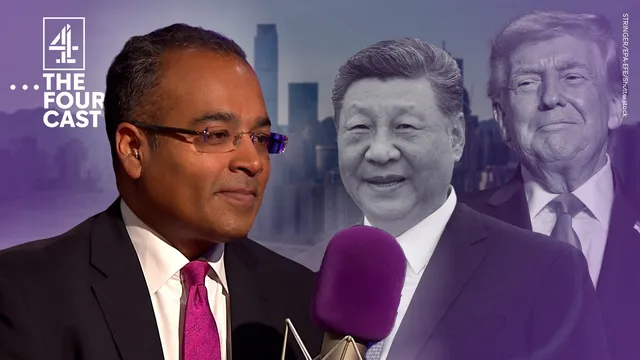
Xi Jinping condemns power politics during meeting with UK Prime Minister
Xi Jinping condemns power politics during meeting with UK Prime Minister
- Xi Jinping expressed concerns about unilateralism and power politics during a meeting with UK Prime Minister Keir Starmer.
- The meeting aimed to reset UK-China relations amidst current global tensions.
- Both nations are navigating a complex geopolitical landscape that involves trade, security, and diplomatic interests.
Story
During a recent official meeting in Beijing, Chinese President Xi Jinping engaged with UK Prime Minister Keir Starmer as part of efforts to reset UK-China relations amidst evolving global landscapes. Starmer's visit aimed to establish a more sophisticated partnership between the two nations amidst the backdrop of tensions related to the U.S. foreign policy under President Donald Trump. Xi's remarks emphasized the dangers of unilateralism and protectionism, warning that such approaches undermine the international order and can lead to chaos if not checked by adherence to international law. Starmer, who was actively seeking to deepen economic and diplomatic ties with China, was met with a message that echoed China's broader concerns regarding the current global environment. In the midst of economic uncertainty, Xi pointed to the need for major powers to set an example through multilateral engagement and respect for international norms. His statements included veiled criticisms of the U.S. trajectory under Trump, specifically the pullback from multilateral agreements and reliance on aggressive tactics to achieve foreign policy goals. The context of this visit is crucial, given the shifting allegiances and partnerships that nations are pursuing in light of perceived uncertainties with the U.S. Traditional allies are beginning to look for opportunities in forging relations with China, which continues to hold a significant place as a global economic powerhouse. This trend is evidenced by visits from other leaders like those from Canada and France as they seek to engage China to mitigate strategic risks concerning Russia and potential conflicts involving Taiwan. However, concerns regarding China's authoritarian practices, including alleged human rights abuses and unfair trade practices, complicate these relationships. Critics warn that deepening ties with China could lead to an increase in espionage activities and the potential for similar economic manipulations seen in the past. While both China and the UK express a desire for free trade and multilateralism, the inherent tensions in their relationship stemming from China's governance model present obstacles to fully realizing these goals.
Context
China's position in international law and multilateralism is multifaceted, reflecting its rising global influence and strategic interests. As a permanent member of the United Nations Security Council and a signatory of numerous international treaties, China actively participates in shaping international norms and rules. Its engagement in multilateral forums such as the World Trade Organization (WTO), the Asia-Pacific Economic Cooperation (APEC), and the BRICS summit underscores its commitment to multilateralism as a means to foster development and cooperation among nations. China's approach often emphasizes sovereignty and non-interference, which it views as essential components of international relations and a counterbalance to perceived Western hegemony. This has shaped its actions in areas like the South China Sea, where it asserts territorial claims that have sparked tensions with neighboring countries and the United States, leading to a complex interplay between national interests and international law. In recent years, China's Belt and Road Initiative (BRI) has further illustrated its multilateral approach, aiming to enhance economic connectivity and infrastructure investment across Asia, Europe, and Africa. This initiative has attracted various countries to engage with China, aligning their economic strategies with its vision for shared development. However, it has also raised concerns regarding debt dependence and environmental impacts, prompting calls for a reevaluation of governance standards and compliance with international legal frameworks. Critics argue that while China promotes multilateralism, its selective adherence to international law can undermine the very principles it aims to uphold, leading to questions about its long-term sustainability as a global leader. China's position on international law is characterized by a blend of cooperation and contestation. On one hand, China actively supports the development of international laws that align with its interests, including trade rules and climate change agreements. On the other hand, it often challenges interpretations of international law that conflict with its national policies, particularly around issues of human rights and territorial integrity. For instance, the Chinese government's stance on Tibet and Xinjiang is framed within its narrative of internal affairs, resisting outside scrutiny by asserting sovereignty. This duality highlights a tension between China's aspirations for a leading role in global governance and its adherence to established international legal norms, which remains a critical area of international diplomacy. As global challenges such as climate change, public health, and cybersecurity increasingly call for collective action, China's role in multilateralism is more crucial than ever. Engaging constructively in international dialogues and upholding global commitments can enhance China's soft power and credibility on the world stage. Simultaneously, it will require a balancing act between national interests and a collaborative spirit in addressing transnational issues. The outcome of this balance will significantly influence not only regional dynamics but also the overall architecture of international law and multilateral cooperation in the coming decades.


