

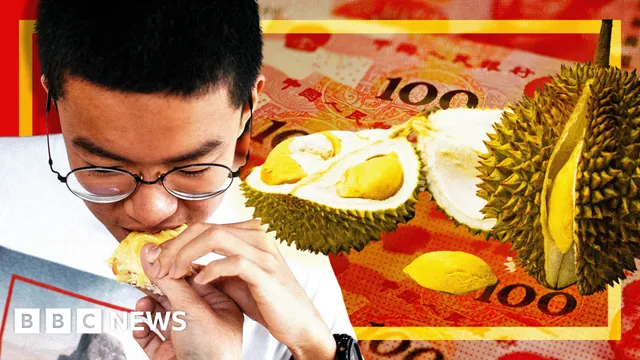
China's demand reshapes Malaysia's durian market and economy
China's demand reshapes Malaysia's durian market and economy
- Malaysia's durian exports predominantly target the growing Chinese market.
- Local farmers in Malaysia, such as Uncle Thing, are witnessing economic growth driven by the durian trade.
- The increasing competition from Chinese durian production could negatively affect Malaysia's market.
Story
Malaysia, renowned for its durian production, is experiencing a surge in demand driven by China’s growing appetite for this unique fruit. This country has positioned itself as a major player in the global durian trade, with a significant portion of its exports, over 90%, directed towards the Chinese market. As seen in Raub, a former gold mining town that has embraced durians, local farmers like Uncle Thing have expressed pride in witnessing their thriving businesses. The shift in consumer preferences has emphasized the importance of premium varieties like the Musang King, which are increasingly sought after by a global audience, further solidifying Malaysia's reputation in the fruit market. The introduction of the China-Laos Railway has facilitated this thriving exchange, allowing more than 2,000 tonnes of fruit to be transported daily, primarily enhancing the supply of Thai durians. However, challenges arise as regional competition grows. If China develops its own durian supply, Malaysia's market may face significant challenges, potentially undermining the local economy reliant on this lucrative fruit under pressure from rising domestic production elsewhere. As Uncle Thing poignantly points out, the country's recognition of the Musang King as a premium variety could be threatened if Hainan succeeds in its durian cultivation efforts, marking a crucial moment in the ongoing dynamics of durian diplomacy.


