

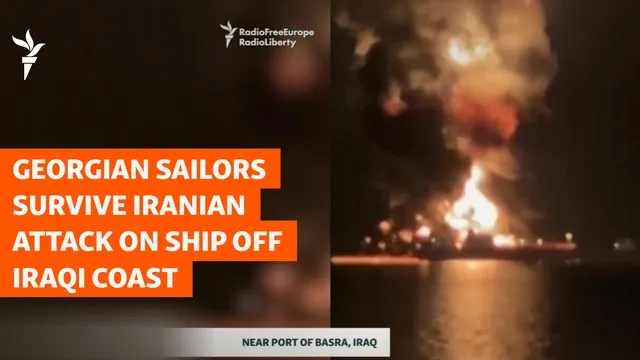
Georgian sailors rescued after deadly Iranian attack on tankers
Georgian sailors rescued after deadly Iranian attack on tankers
- On March 12, two oil tankers were attacked in Iraqi territorial waters by Iranian forces, involving drones and explosive devices.
- Most crew members from the Malta-flagged tanker ZEFYROS, including all 23 Georgian sailors, were rescued despite significant damage and one reported death.
- This incident illustrates a broader trend of increasing threats to maritime and civilian infrastructure amidst heightened regional conflicts.
Story
On March 12, a coordinated attack by Iranian forces targeted two oil tankers in Iraqi territorial waters in the Persian Gulf. The first vessel, the Malta-flagged tanker ZEFYROS, had 23 Georgian crew members on board who were ultimately rescued. The Iranian state television confirmed the use of unmanned vehicles and drones in this operation, leading to significant damage to the tankers and triggering a fire on the ZEFYROS. Reports indicate that 38 sailors were rescued from both tankers, but at least one sailor was killed during the attack. The details surrounding the deceased sailor's identity and nationality are currently unknown. The incident stems from escalating tensions between Iran and other nations, particularly the U.S. and Israel. The attacks seem to be part of a broader strategy by Iran to disrupt global energy markets and signal a warning to shipping routes in the Gulf, which are essential for the oil and gas industry. This sophisticated maritime strike appears designed to damage tankers while minimizing direct confrontations. Some analysts believe that this incident is indicative of a larger trend where strategic targets are becoming vulnerable amidst military conflicts, creating an elevated risk for commercial shipping in the region. In addition to the maritime incidents, the ongoing war in Iran has raised significant concerns over the region's water supply systems. Two vital desalination plants were reported as damaged during military operations, which serve millions in the Persian Gulf. These facilities are critical as they provide more than 50 percent of the fresh water to countries such as Qatar and Bahrain. Damaging such infrastructure not only affects water supply but also poses a grave threat to civilian populations, with experts suggesting that such attacks could constitute war crimes. As regions grapple with these challenges, it becomes evident that military operations are increasingly impacting civilian infrastructure. The international community is now faced with the pressing need to address and mitigate the repercussions of these strategic conflicts on essential resources like water and safe navigation routes. With key shipping routes under threat and the water supply systems at risk, the outcomes of these escalations will require ongoing surveillance and international engagement to safeguard civilians and maintain stability in the Middle East.
Context
The impact of military conflict on water supply in the Middle East is a critical issue that has profound ramifications for regional stability and human survival. In a region characterized by arid conditions and limited freshwater resources, militarized conflicts exacerbate existing vulnerabilities related to water access and distribution. Conflicts often result in the destruction of critical water infrastructure, including dams, treatment plants, and distribution networks, making it difficult for affected populations to access potable water. Additionally, military activities can lead to pollution of water sources, further diminishing the quality and availability of water supplies necessary for drinking and sanitation. Furthermore, military conflicts create increased competition for water resources among various entities, including state actors, non-state groups, and civilian populations. This competition often leads to intensified grievances and hostilities, exacerbating tensions between communities. For instance, in regions such as Gaza and the West Bank, water scarcity has historically been a point of contention between different groups, leading to escalated conflicts. The militarization of water access, where control over water supplies becomes a tactic of warfare, further isolates communities and undermines peace-building efforts. Moreover, the repercussions of water shortages extend beyond immediate human health concerns. The disruption of water supplies adversely affects agricultural production, food security, and economic stability. Countries in the Middle East that experience military conflict often witness a decline in agricultural output due to lack of irrigation and water access, leading to food shortages and increased reliance on food imports. This situation can create a cycle of poverty and instability that perpetuates conflict. Furthermore, as populations are displaced due to violence, they often migrate to urban areas where competition for limited water resources is intensified, further straining the already fragile urban water systems. In conclusion, addressing the intersection of military conflict and water supply in the Middle East is paramount for ensuring long-term peace and security in the region. Comprehensive strategies are needed to protect water infrastructure from damage during conflicts, promote equitable access to water resources, and facilitate dialogue among affected parties. International organizations and governments must prioritize water security initiatives in post-conflict recovery efforts to build resilience against future crises. By addressing the underlying issues of water scarcity in the context of military conflict, the region can move towards sustainable development and an improved quality of life for its inhabitants.


