

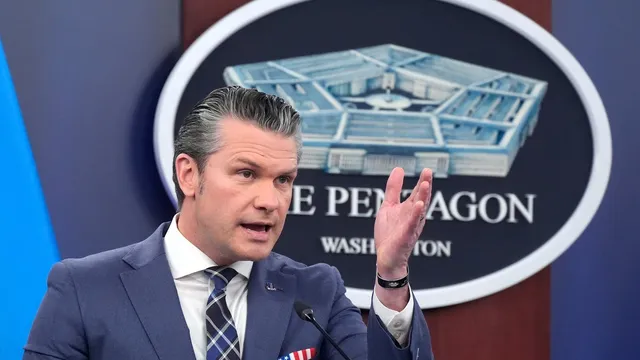
Pete Hegseth lashes out at media amid Iran war setbacks
Pete Hegseth lashes out at media amid Iran war setbacks
- Pete Hegseth expressed frustration with media portrayal of the Iran military campaign.
- Hegseth urged Americans to rely on state-approved communications instead of the press.
- The press conference highlighted the administration's struggle with public perception of the war.
Story
On March 19, 2026, following a challenging day for the American military campaign against Iran, Secretary of War Pete Hegseth held a press briefing that showed his growing frustration with the media's portrayal of the situation. The press conference was marked by Hegseth’s defensive rhetoric, where he claimed that the media was unpatriotic and wished for President Donald Trump's failure amidst military setbacks. Hegseth chose to focus not on strategic military objectives but rather on attacking journalists, suggesting that Americans should rely solely on state-sanctioned communications. This narrative reflects a broader trend within the administration, aiming to delegitimize independent reporting by characterizing it as detrimental to national interests. During the briefing, Hegseth’s rhetoric included an emotional anecdote involving his teenage son. The story, while attempting to evoke a sense of patriotic duty regarding the sacrifices of fallen soldiers, seemed contrived and added to the overall sense of desperation that permeated the conference. He stated that U.S. military actions were taken not for democracy promotion but rather to eliminate threats to America. Hegseth also hinted at a significant potential increase in military spending, stating the budget could rise by as much as $200 billion. Furthermore, recent actions had strained relationships with U.S. allies, notably when Trump rebuked Israel over its military actions, complicating the situation in the region during a critical time. The ongoing conflict has highlighted the discord between the United States and its European allies, who are hesitant to engage in military escalation against Iran. Overall, Hegseth's press conference not only showcased a struggle to explain the complexities of the military campaign but also an attempt to control the narrative surrounding it. This was underscored by the tangible frustrations within the administration as they grappled with the realities of warfare and the unpredictable nature of international relations.
Context
The impact of military spending increases on the U.S. economy is a multifaceted issue that influences several sectors, both directly and indirectly. Military spending, often viewed as a component of fiscal policy, affects the economy through various channels including job creation, technological advances, and government contracts. When the government increases military expenditure, it injects funds into defense contractors and associated industries, generating direct employment opportunities. This infusion of capital can provide stability to regions heavily reliant on defense manufacturing, boosting local economies and, by extension, the national economy. However, the broader implications of sustained military spending can lead to resource allocation debates, particularly regarding its effect on domestic programs and public services such as education and healthcare, which could also drive economic growth if funded adequately. Moreover, the technological advancements spurred by military research and development often have spillover effects into civilian sectors. Innovations that arise from military funding have historically contributed to advancements in technology, healthcare, and infrastructure. For instance, projects initially developed for military purposes, such as the Internet and GPS, have since found expansive applications in the civilian market, creating new economic opportunities and fostering competitiveness in various industries. Consequently, military spending can indeed stimulate growth, primarily through innovation and boost in productivity in both military and civilian fields. However, the economic impact of military spending is not without its criticisms. Critics argue that an increase in military expenditure could crowd out other vital investments. When a significant portion of the federal budget is allocated to defense, it may limit funding available for other critical public services, potentially undermining long-term economic growth prospects. The opportunity cost of military spending can manifest in underinvestment in areas like education, infrastructure, and social programs, which are essential drivers of sustainable economic growth. Additionally, heightened military spending can provoke geopolitical tensions and conflict, which can lead to economic instability and increased risks for businesses. In summary, while increases in military spending can stimulate short-term economic growth through job creation and technological innovation, it is essential to weigh these benefits against the potential downsides, including opportunity costs and resource allocation challenges. Policymakers must consider the long-term implications of military spending on the economy and find a balanced approach that fosters growth while ensuring that necessary investments in other critical areas of public service and infrastructure are not neglected. The debate surrounding military spending ultimately reflects a broader dialogue about national priorities and the paths toward sustained economic prosperity.


