

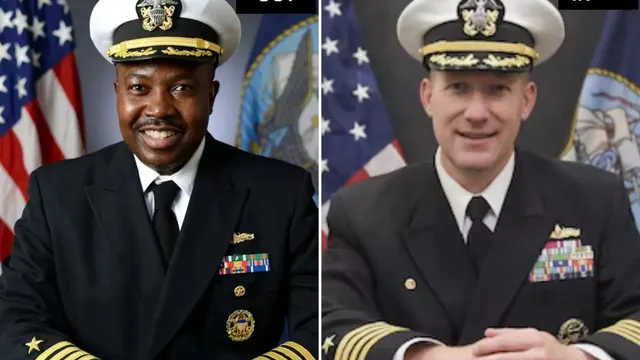
USS Mason commander fired amid strike preparations over lost confidence
USS Mason commander fired amid strike preparations over lost confidence
- Captain Chavius G. Lewis was relieved of his command due to a loss of confidence.
- The USS Mason is currently participating in crucial training exercises for potential deployment.
- Leadership transitions often impact crew morale and accountability, highlighting the Navy's standards for commanders.
Story
The United States Navy has recently dismissed Captain Chavius G. Lewis from his position as commanding officer of the USS Mason, a guided-missile destroyer. The decision was made by Rear Admiral Alexis T. Walker, Commander of Carrier Strike Group 10, on February 13, 2026, attributing the dismissal to a 'loss of confidence' in Lewis’s ability to command. However, specific details about the situation that caused this loss of confidence were not disclosed in the Navy's announcement. The timing of this dismissal is significant, as the USS Mason is currently engaged in training exercises, part of the Composite Training Unit Exercise (COMPTUEX), in the U.S. 2nd Fleet area of operations. The Navy reassured that this leadership change would not hinder the ship’s mission or operational schedule, which is crucial as the vessel gears up for potential deployment. Despite these assurances, such a leadership transition can bring about disruption in terms of training standards, morale, and the accountability of the crew. The Navy places a high value on leadership standards, stressing the importance of holding leaders accountable when they fail to meet those standards. Prior to assuming command of the USS Mason, Lewis had a notable service record, having deployed multiple times to significant regions such as the Persian Gulf and the Mediterranean Sea. His firing follows a broader context of military discipline and standards within the Navy, reflecting the rigorous expectations placed upon commanding officers, especially in challenging maritime environments. Captain Kevin Hoffman has been appointed as the new commanding officer of the USS Mason following Lewis’s dismissal. As the ship continues to participate in critical military exercises, the focus will be on maintaining effectiveness and cohesion among the crew, ensuring that the operational readiness is not compromised during this period of transition. The Navy remains committed to its high standards and the successful execution of its missions, highlighting the need for capable and trustworthy leadership onboard its vessels.
Context
The Composite Training Unit Exercise (COMPTUEX) is a critical component of naval training, providing an opportunity for maritime forces to conduct integrated and synchronized operations. This exercise is designed to enhance warfighting capabilities by simulating real-world scenarios, enabling participants to execute complex missions in a controlled and dynamic environment. During COMPTUEX, various naval units, including surface ships, submarines, and aircraft, come together to practice strategies, tactics, and procedures that are essential for effective combat readiness. This joint approach highlights the importance of coordination and communication across multiple platforms and services, ensuring that all elements work seamlessly together during actual combat operations. The exercise typically spans several weeks and includes a series of planned training events that test the limits of fleet capabilities. Participants engage in anti-submarine warfare, air defense, maritime interdiction operations, and other crucial exercises that emulate potential operational scenarios faced in modern warfare. The rigorous training environment allows forces to evaluate their operational effectiveness and to identify areas for improvement. This iterative process of assessment and enhancement is vital for fostering a culture of continuous learning and adaptability, which is essential in an ever-evolving global security landscape. COMPTUEX serves not only as a training event but also as a crucial assessment tool for leadership and crew performance. Observations made during the exercise allow commanding officers to measure the readiness of their units and to determine if they are adequately prepared for deployment. Additionally, after-action reviews are conducted to gather insights and lessons learned, which feed back into future training cycles and operational planning. This cyclical learning approach ensures that naval forces remain at peak readiness and can effectively respond to any threats or challenges that arise. In conclusion, the Composite Training Unit Exercise (COMPTUEX) is an essential training exercise that reinforces the operational readiness of naval forces through realistic simulation and integrated training. By routinely engaging in COMPTUEX, maritime forces develop a robust command and control structure while enhancing their ability to operate collaboratively across diverse platforms. The focus on continuous improvement and readiness inherently strengthens national security and ensures that the fleet remains prepared to face the complexities of modern warfare.


