

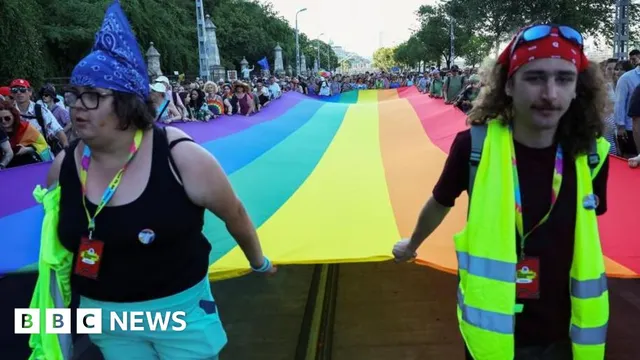
Hungary's anti-LGBTQ laws break EU values, court rules
Hungary's anti-LGBTQ laws break EU values, court rules
- The European Union's top court ruled that Hungary's anti-LGBTQ legislation breaches EU values and regulations.
- The ruling addresses laws implemented by Viktor Orbán's government, which sought to limit LGBTQ discussions among minors.
- This landmark decision emphasizes the need for Hungary to uphold EU principles of equality and minority rights.
Story
In a landmark ruling, the European Union's top court found that Hungary's anti-LGBTQ laws are in breach of EU values and regulations. This legal assessment stemmed from laws enacted by Viktor Orbán's government in 2021, which aimed to restrict the discussion of LGBTQ issues and gender change among minors under the guise of protecting children. The European Court of Justice determined that such laws undermined democracy and the core principles of the EU, particularly in relation to equality and minority rights. This unprecedented ruling arrives shortly after a shift in Hungary’s political landscape, where voters opted for new leadership. In their evaluation, the Court emphasized that the Hungarian legislation not only contravened explicit EU regulations but also contradicted the fundamental principles outlined in Article 2 of the EU treaty, which promotes values like pluralism and respect for individual rights. The Hungarian measures were considered to stigmatize and marginalize the LGBTQ community, associating them unjustly with serious criminal behaviors. The ruling also came at a critical moment when public sentiment was shifting, as indicated by the election results in which Viktor Orbán's party lost power for the first time in 16 years. Péter Magyar, leader of the newly elected Tisza party, has committed to a more pro-European approach and expressed a desire to foster an inclusive environment where diversity of thought and love is respected. Magyar's administration, having a two-thirds majority in the National Assembly, holds the legislative power needed to overturn Orbán's controversial laws. The European Commission is poised to engage with the new government regarding compliance with the Court's ruling and the potential to restore EU funding to Hungary, which had faced limitations due to rule-of-law violations. As the Tisza party prepares to take the reins, international observers are hopeful that Hungary will begin a more inclusive dialogue on LGBTQ rights, aligning its policies with EU standards. The overarching message from the ruling reaffirmed that the rights of marginalized groups cannot be compromised for political gain, highlighting the ongoing tension between national policies and supranational values in the EU. The court's decision has set a critical precedent in defending human rights within member states, underscoring the collective commitment of the EU to upholding equality and diversity.


