

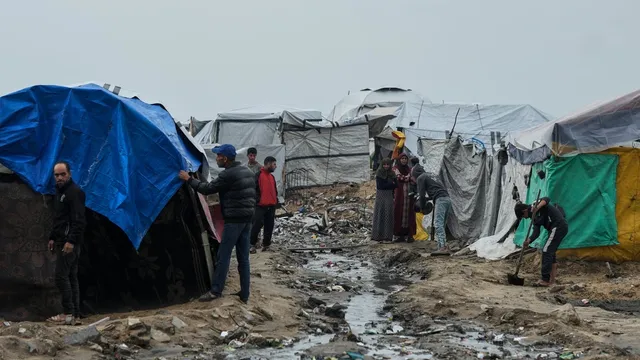
Aid deliveries into Gaza fail to meet ceasefire terms
Aid deliveries into Gaza fail to meet ceasefire terms
- Aid deliveries into Gaza are significantly below the agreed-upon daily amount under the ceasefire terms.
- Humanitarian agencies report serious consequences for residents, including malnutrition and inadequate shelter during winter.
- The ongoing conflict and hostages' situation complicate the implementation of aid and rebuilding efforts.
Story
In Gaza, a humanitarian crisis has intensified as the aid flow remains inadequate despite a U.S.-brokered ceasefire that began on October 12, 2025. The ceasefire stipulated that 600 trucks of aid would be allowed into Gaza daily. However, an analysis conducted by the Associated Press reveals that only an average of 459 trucks have entered daily until December 7, significantly below the requirement. Reports indicate that although 18,000 trucks of food aid have been approved by COGAT, the Israeli military coordinating the aid, the actual delivery remains under the target set under the terms of the ceasefire. Humanitarian organizations have highlighted the dire consequences of this insufficient aid, stating that many of Gaza's residents are suffering significantly, with reports of malnourished infants and families inadequately sheltered as winter rains began to affect those living in tents. UN figures show only 6,545 trucks were offloaded during the ceasefire period, which calculates to about 113 trucks per day, while some sources from Hamas suggested slightly higher figures. Meanwhile, conditions in camps are deteriorating, posing health threats to residents due to overcrowding and unsanitary environments. The need for aid and appropriate shelter has become urgent, as families report having insufficient supplies to deal with harsh weather. The Shelter Cluster, an international aid organization, emphasized that only a fraction of the temporary housing required has been delivered. The call has intensified not just for more aid but also for swift movement into the second phase of the ceasefire agreement to initiate reconstruction efforts in Gaza, which have been delayed. Amidst the ongoing strife, Israeli officials have stated that the return of hostages must be addressed prior to progressing in the ceasefire negotiations. The Secretary of Hamas and various humanitarian groups have called upon Israel for a more focus on facilitating aid and lifting restrictions for critical resources, stressing that the humanitarian needs in Gaza far exceed what is currently being provided. The situation illustrates a frustratingly complex landscape, where the political maneuvering around hostages and warfare continues to obstruct urgent humanitarian efforts, leading many residents of Gaza to live in increasingly perilous conditions as winter sets in.
Context
The international response to the ongoing humanitarian crisis in Gaza has been a focal point of global concern, particularly in light of the escalating violence and profound humanitarian challenges faced by the population. As of December 2025, the situation remains dire, with many civilians suffering from shortages of essential resources such as food, clean water, and medical supplies. Agencies like the United Nations, along with various non-governmental organizations (NGOs), have been mobilizing efforts to deliver aid; however, this effort has often been hindered by security concerns and the political complexities of the region. The effectiveness of these humanitarian efforts has depended heavily on navigating the intricate landscape of Middle Eastern geopolitics and securing the necessary approvals for aid delivery amidst ongoing hostilities. Countries around the world have voiced their concern over the humanitarian situation in Gaza, with numerous governments issuing statements calling for a ceasefire and urging an immediate halt to hostilities. Some nations have stepped forward to offer financial assistance or to facilitate the delivery of humanitarian aid, while others have taken a more diplomatic approach, proposing resolutions at international forums such as the United Nations to address the crisis. While these resolutions have garnered varying degrees of support, their implementation often faces challenges due to the entrenched positions of conflicting parties. Moreover, the geopolitical dynamics involving regional powers further complicate the global response, as different actors may have divergent interests affecting their willingness to provide aid or support humanitarian solutions. Humanitarian agencies have reported that access to affected areas in Gaza is often restricted, making it difficult to assess needs accurately and deliver timely assistance. The blockade imposed on the region continues to create significant barriers for aid workers, and the destruction of infrastructure further exacerbates the vulnerability of the civilian population. The international community has urged for the lifting of restrictions, yet there has been limited progress in achieving this objective. In response to the pressing needs, some countries have initiated direct aid shipments, while others have pledged funds aimed at supporting local and international humanitarian efforts. However, logistical challenges and security threats, such as attacks on aid convoys, remain critical barriers to effective aid delivery. In conclusion, the international response to the Gaza humanitarian crisis illustrates a complex interplay between humanitarian need and political realities. There is an urgent requirement for cohesive and concerted efforts that prioritize the well-being of civilians over political agendas. The international community must not only address the immediate humanitarian needs but also work towards sustainable solutions that can lead to lasting peace and stability in the region. Collaborative efforts involving various stakeholders, including local communities, international organizations, and state actors, are essential to alleviate suffering and restore hope in Gaza. As the situation continues to evolve, it remains crucial that global efforts remain focused and robust to respond effectively to one of the most pressing humanitarian crises of our time.


