

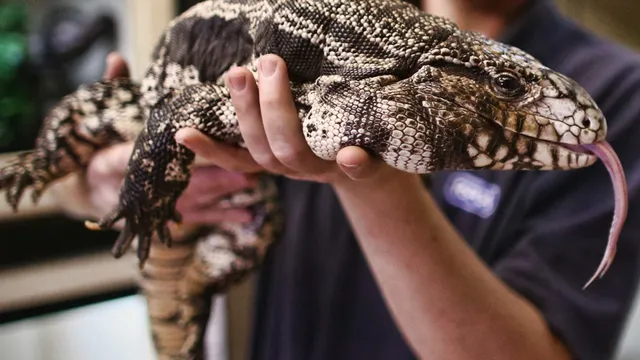
Georgia residents urged to kill invasive tegu lizards threatening wildlife
Georgia residents urged to kill invasive tegu lizards threatening wildlife
- Georgia wildlife officials are urging residents to report or kill invasive Argentine black and white tegu lizards.
- The lizards pose a threat to native wildlife by consuming eggs of ground-nesting birds and reptiles.
- Residents are encouraged to act quickly to help monitor and control the spread of this invasive species.
Story
In Georgia, wildlife officials have raised alarms about the increasing sightings of the Argentine black and white tegu, an invasive species of lizard that has established a wild population in the southeastern part of the state. This reptile, native to South America, has been reported in multiple counties, particularly Toombs and Tattnall, prompting the Georgia Department of Natural Resources (DNR) to take action. The DNR has documented over 20 sightings of these large lizards, which can grow up to 4 feet long and weigh more than 10 pounds. The presence of tegus poses a significant threat to native wildlife, as they are known to consume the eggs of ground-nesting birds and reptiles, including quail, turkeys, alligators, and gopher tortoises. Additionally, there are concerns that these lizards could introduce exotic parasites to local wildlife and contaminate crops, further endangering the ecosystem. The DNR has emphasized that tegus are not protected under Georgia wildlife laws, allowing residents to legally kill or trap them on private property with the landowner's permission. On certain public lands, they may be killed during the relevant hunting season using permitted firearms. Daniel Sollenberger, a senior wildlife biologist with the DNR, has encouraged residents to act quickly if they encounter a tegu, either by documenting the sighting with a photo or reporting it to authorities for further assistance. This proactive approach is crucial for monitoring the spread of this invasive species, which has expanded its range beyond the initial southeastern counties in recent years. While tegus are generally not aggressive towards humans, they can defend themselves if threatened, using their tails, claws, and jaws. The DNR has also warned that these reptiles may be mistaken for native species, such as juvenile alligators or smaller lizards, which underscores the importance of accurate reporting. As sightings continue to rise, the DNR is working to educate the public about the risks associated with this invasive species and the necessary steps to take when encountering one. The situation highlights the ongoing challenges faced by wildlife officials in managing invasive species and protecting native ecosystems in Georgia.


