

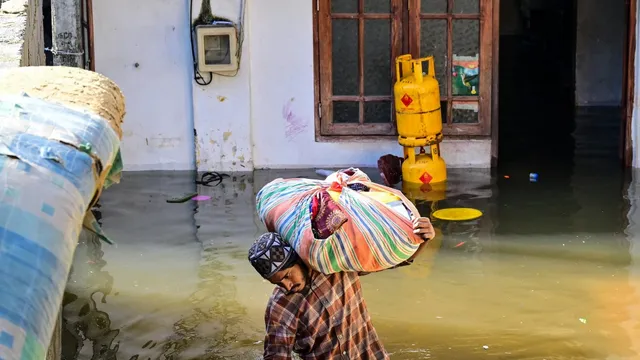
Floods and mudslides claim hundreds of lives in Sri Lanka and Indonesia
Floods and mudslides claim hundreds of lives in Sri Lanka and Indonesia
- The Indonesian island of Sumatra has reported a rising death toll of 303 due to floods and landslides, displacing thousands.
- Sri Lanka's severe floods and mudslides have resulted in 193 confirmed deaths, with many residents missing and around 148,000 displaced.
- Ongoing challenging conditions have hindered rescue efforts in both countries, prompting calls for urgent humanitarian aid.
Story
In recent days, Sri Lanka has faced catastrophic flooding and mudslides that have displaced nearly 148,000 residents, with severe weather conditions worsening the situation. Reports indicate that as of now, 193 individuals have lost their lives, and 228 others are still unaccounted for. The flooding not only inundated homes and agricultural fields but also triggered landslides, particularly affecting the tea-growing central hill country. Simultaneously, on the Indonesian island of Sumatra, floods struck nearly a week ago, resulting in the death toll climbing to 303. Thousands have been displaced, and the recovery operations have been severely hampered by challenging weather and a lack of heavy machinery. Videos circulating on social media show desperate residents foraging for food, water, and medical supplies, with reports of looting emerging as people attempted to secure basic necessities before aid arrived. Local authorities have indicated that the looting incidents were reported before substantial aid could reach affected areas, with residents fearing starvation. As such, regional police were deployed to restore order amidst the chaos. Meanwhile, logistical efforts have intensified with the deployment of eleven helicopters from Jakarta to distribute aid, particularly to locations where land access had been cut off due to the floods and landslides. Footage released by the Cabinet Secretariat shows military helicopters airdropping supplies into stricken areas, where survivors desperately wave for assistance. In light of this dual crisis, there is an urgent call for increased efforts in humanitarian aid and rescue operations. While authorities in both nations scramble to provide assistance, the scale of the devastation has raised concerns regarding infrastructure and communication disruptions that further complicate the response. The ongoing adverse weather conditions continue to pose significant challenges for relief efforts.
Context
The impact of flooding in Indonesia and Sri Lanka in 2025 has been profound, exacerbating existing vulnerabilities in both nations. Flooding has been a recurring challenge in Indonesia, primarily due to its geographic setting as an archipelago, combined with the effects of climate change, which have led to increased frequency and intensity of rainfall. The recent floods have resulted in significant damage to infrastructure, with roads, bridges, and homes being submerged, leading to displacement of thousands of residents. The agricultural sector has also been severely affected, as rice fields and plantations are inundated, threatening food security for the local populations. Efforts to respond to these disasters have been swift, with the government mobilizing resources for relief and recovery, yet the ongoing risks of flooding remain a pressing concern as climate patterns continue to evolve. In Sri Lanka, the situation mirrors that of Indonesia, with severe flooding impacting large areas of the country. The floods in 2025 have resulted from a combination of heavy monsoonal rains and poor land management practices, which have exacerbated the runoff and led to widespread flooding. Communities in the coastal regions have been particularly vulnerable, facing not only loss of property but also the threat of waterborne diseases as stagnant water remains for prolonged periods. The response from governmental and non-governmental organizations has been critical in providing immediate relief, though there is a growing need for long-term strategies that improve disaster preparedness and response capacity. Both nations have now recognized the importance of adopting sustainable practices in urban planning and land use to mitigate the effects of flooding. Indonesia is focusing on improving its drainage systems and promoting afforestation in catchment areas to absorb excess rainwater. Similarly, Sri Lanka is advancing its policies towards better water resource management and has introduced stricter regulations on construction in flood-prone areas. These measures are intended to build resilience against future flooding events, which are expected to become more common due to the ongoing impacts of climate change. The socio-economic repercussions of flooding are considerable in both countries, as livelihoods are disrupted and recovery can take years. Education is often interrupted, with schools being used as shelters or damaged by floodwaters. Economic losses from damaged infrastructure and agriculture contribute to a decline in the quality of life for affected populations. As Indonesia and Sri Lanka move forward in their recovery efforts, the collaboration between government bodies, non-profit organizations, and local communities will be essential in ensuring that these regions not only recover but also build a stronger foundation to withstand future flooding challenges.


