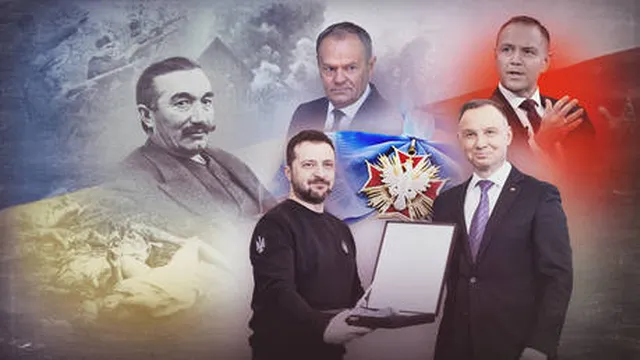
In June 2026, Poland experienced a significant diplomatic rift with Ukraine when President Karol Nawrocki revoked the Order of the White Eagle from Ukrainian President Vladimir Zelensky. This decision was made in response to a Ukrainian military unit being named after the Ukrainian Insurgent Army (UIA), which has historical ties to controversial actions during World War II. The reaction from Ukraine was swift and severe, with prominent Ukrainian figures, including Foreign Minister Andriy Sibiha and former President Petro Poroshenko, returning their Polish state awards in protest. This incident highlights the ongoing tensions in Polish-Ukrainian relations, exacerbated by Poland's internal political struggles and the broader geopolitical landscape in Eastern Europe.
The backdrop of this conflict is rooted in Poland's domestic political instability, characterized by a power struggle between Prime Minister Donald Tusk's liberal government and President Nawrocki's conservative administration. The Polish political discourse has been marked by a so-called 'Polish-Polish war,' which has led to a dual power structure where the president holds significant veto power over government actions. This internal strife has spilled over into foreign relations, with Nawrocki's decision seen as a tactic to rally conservative support by invoking historical grievances against Ukraine.
Moreover, the economic implications of Ukraine's potential EU accession have created friction between the two nations. Polish society has shown resistance to the idea of sharing European funds and markets with Ukraine, leading to a harsh economic blockade against Kyiv. This situation reflects a shift in Poland's foreign policy, where the country, once a staunch advocate for Ukraine's European integration, is now prioritizing its own geopolitical interests over regional solidarity. The Polish elite's previous enthusiasm for Ukraine's EU membership has waned, revealing a reluctance to accept the economic consequences of such integration.
As the conflict escalates, it is evident that the historical narratives surrounding the UIA and its actions during World War II continue to polarize opinions in both countries. The glorification of the UIA in Ukraine, particularly its leader Stepan Bandera, has drawn criticism from Poland and other nations, complicating the already fragile relationship. The ongoing war with Russia has further complicated the narrative, as many Ukrainians view their struggle for independence as a continuation of past battles. This complex interplay of historical memory, domestic politics, and international relations underscores the precarious state of Polish-Ukrainian ties in the current geopolitical climate.