

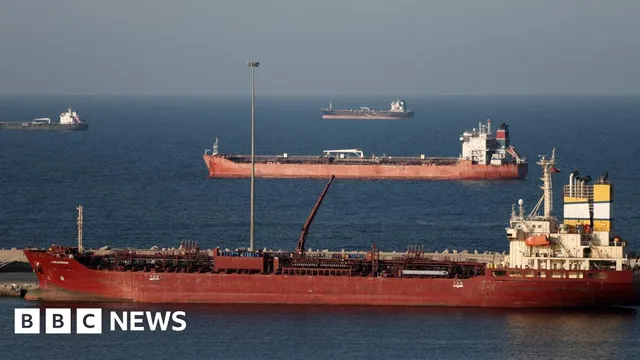
Starmer engages Trump on reopening the crucial Strait of Hormuz
Starmer engages Trump on reopening the crucial Strait of Hormuz
- Sir Keir Starmer discussed with Donald Trump the need to resume shipping through the Strait of Hormuz.
- The closure of the strait has resulted in significant disruptions to global supply chains and rising energy prices.
- The UK government is exploring options to assist in reopening the strait while also facing diverse political opinions on military involvement.
Story
In the context of escalating tensions in the Middle East, particularly related to Iran, the importance of reopening the Strait of Hormuz has become increasingly critical due to its significant role in global shipping and oil transport. As of now, about 20% of the world’s oil passes through this vital waterway, which has been largely closed since the beginning of the conflict between the US and Israel against Iran approximately two weeks ago. Reports indicate that several ships navigating this strait have faced attacks, and there are worries that Iran has even placed mines in the area to further hinder shipping activities. The UK Prime Minister, Sir Keir Starmer, had conversations with U.S. President Donald Trump regarding this pressing matter, emphasizing the urgent need to restore safe passage in order to mitigate disruptions to global supply chains and escalating energy costs. The impact of Iran's actions in this region has already resulted in a dramatic increase in oil prices—rising from around $71 to nearly $120 per barrel in just a short time. Energy Secretary Ed Miliband confirmed that the UK government is currently evaluating various options in partnership with the U.S. and other allies to ensure the reopening of the Strait. In the face of these developments, there has been a spectrum of responses from UK political leaders, with some arguing against military intervention and advocating for diplomatic resolutions to the crisis. For instance, Liberal Democrat leader Sir Ed Davey urged that the focus should rather be on de-escalating tensions instead of sending UK warships to the Gulf. These contrasting opinions reflect the complexity and repercussions surrounding any military actions that may be taken. Tragically, these escalating conflicts have not only affected military strategists but also the world economy and overall geopolitical stability, and continued military escalations could lead to unintended consequences that further complicate international relations. As the situation develops, British involvement remains cautious due to the historical lessons learned from prior conflicts, ensuring that the UK's military actions do not lead to deeper entanglements in wars that do not serve its national interest.
Context
The history of the Strait of Hormuz is a complex interplay of geography, politics, and economics that has shaped not only the surrounding nations but also global trade dynamics. The Strait, a narrow waterway connecting the Persian Gulf with the Gulf of Oman, is strategically significant because it serves as the gateway for a substantial portion of the world's oil shipments, making it a vital artery for international commerce. Historically, the Strait has been integral to the maritime trade routes that have existed since ancient times, facilitating the exchange of goods, culture, and ideas among civilizations. Its geographical position has made it a focal point for various empires, including the Persians, Portuguese, Ottomans, and British, each of whom has sought to control its access due to its economic value and strategic importance. As a result, the history of the Strait can be viewed as a series of power struggles, alliances, and conflicts that reflect broader regional and global trends. In the modern era, the significance of the Strait has increased dramatically, particularly because of the discovery and subsequent exploitation of oil reserves in the Persian Gulf during the 20th century. The establishment of oil transport routes through the Strait transformed it into a key geopolitical battleground. The 1979 Iranian Revolution introduced new dynamics, challenging existing power structures and prompting Western nations to become increasingly involved in the region to ensure the uninterrupted flow of oil. The ensuing eight-year Iran-Iraq War further destabilized the area, with both nations attempting to assert control over the Strait, leading to confrontations that underscored its strategic vulnerability. The U.S. and allied forces began to bolster their military presence in the region, particularly during the Gulf War in 1990-1991, reinforcing the critical nature of the Strait to global security interests. As we move into the 21st century, the Strait of Hormuz continues to be a flashpoint for geopolitical tensions, highlighted by recurring threats and incidents involving regional powers and international shipping. The ongoing rivalry between Iran and the United States, along with the increasing influence of non-state actors and regional conflicts, has further complicated the security landscape of the Strait. Incidents such as the seizure of foreign oil tankers and threats to block navigation in the Strait have drawn international condemnation and have led to the reinforcement of naval deployments by multiple nations in a bid to secure these vital passageways. The persistent threat to the free passage through the Strait also has significant implications for global oil prices and economic stability, thereby impacting economies worldwide, from developed countries to emerging markets. Looking to the future, the Strait of Hormuz's role as a crucial maritime corridor is unlikely to diminish. Nonetheless, the complex interplay of local and global dynamics means that the political landscape surrounding the Strait will continue to evolve. The potential emergence of alternative energy sources and shifts in global energy consumption patterns could also influence its significance. However, the historical importance of this narrow passage remains a testament to its enduring role as a nexus of economic power, regional contention, and international diplomacy. As nations navigate the challenges posed by their relationships to the Strait, it will likely continue to be central to discussions of security and economic strategy in the Middle East and beyond.


