

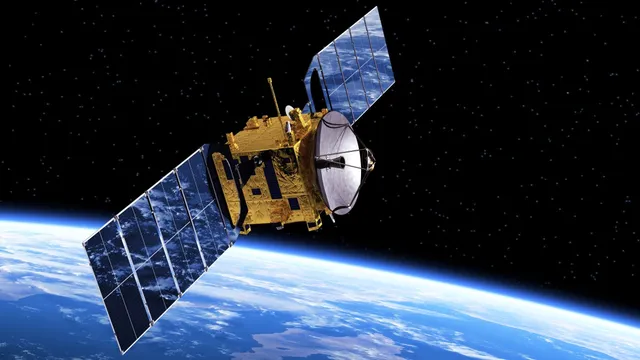
Astronomers warn against satellite plans that could ruin night sky
Astronomers warn against satellite plans that could ruin night sky
- The Royal Astronomical Society and the European Southern Observatory have opposed SpaceX and Reflect Orbital's satellite plans due to potential impacts on astronomy.
- The proposed satellite constellations could reduce astronomical data quality and increase night sky brightness significantly.
- The RAS calls for the Federal Communications Commission to reject these plans to protect both scientific research and public enjoyment of the night sky.
Story
The Royal Astronomical Society (RAS) has raised concerns regarding the proposed satellite projects by SpaceX and Reflect Orbital, which seek to deploy a massive number of satellites in Earth's orbit. These plans aim to use up to 1 million satellites to operate as data centers supporting artificial intelligence systems. However, the RAS argues that such a large-scale deployment could drastically alter the night sky due to their brightness. The society, along with the European Southern Observatory, has submitted formal opposition to these proposals to the Federal Communications Commission (FCC), the regulatory body overseeing satellite communications in the United States. Experts predict that the brightness from these satellites could overwhelm astronomical observations from Earth, with estimates showing that images captured by advanced telescopes such as the European Southern Observatory's Very Large Telescope could lose about 10 percent of their data due to satellite trails crossing their fields of view. This loss of data poses a risk to crucial astronomical research, including studies on distant galaxies and monitoring near-Earth objects, not to mention the impact on amateur stargazers who enjoy the natural beauty of the night sky. The RAS highlighted that the cumulative effect of the satellite constellations and reflective space mirrors might make the night sky three to four times brighter than it currently is. This significant increase in brightness could fundamentally change the viewing conditions for both professional astronomers and the general public. The society's experts have voiced their fears that without stricter regulatory safeguards, humanity's view of the cosmos could be permanently tarnished, undermining a fundamental right for all people to enjoy the wonders of the night sky. The FCC is now faced with the challenge of deciding on the approval of these satellite deployments, as the implications extend beyond scientific research to the general public's experience and enjoyment of stargazing. With the opposition formally filed, the RAS hopes that the commission will heed their concerns and reject the proposals, thereby safeguarding both the integrity of astronomical science and the natural night sky for future generations.
Context
The rapid proliferation of satellite constellations, particularly for applications in telecommunications and Earth observation, has emerged as a pivotal concern in contemporary astronomy. The advent of large networks of low Earth orbit (LEO) satellites presents unique challenges that threaten the integrity of astronomical observation. These constellations can introduce significant light pollution, obscuring the faint cosmic signals that astronomers rely on for studying distant celestial objects. The reflections and emissions from these satellites can outshine important astronomical features and interfere with sensitive instruments, thus jeopardizing scientific research and our understanding of the universe. As satellite constellations increase in number and brightness, their impact on the night sky becomes increasingly pronounced. Observational astronomy primarily relies on dark skies free from artificial light to detect and analyze faint objects billions of light years away. Astronomers have reported disruptions in observations and increased difficulty in conducting surveys that were once achievable under less contaminated conditions. This situation raises alarms about the long-term implications for studying critical cosmic phenomena, including the formation of galaxies, the distribution of dark matter, and exoplanet detection. To mitigate these impacts, there has been growing emphasis on guidelines and policies aimed at satellite design and operation. Researchers and space agencies are advocating for measures such as reducing satellite brightness, altering operational orbits, and even developing technology to limit reflective surfaces on satellites. Collaborative efforts between satellite operators and the astronomical community are essential to find a balance that accommodates both technological advancements in communication and the preservation of the night sky for scientific inquiry. Initiatives like the International Astronomical Union's Dark and Quiet Skies project seek to foster dialogue and establish best practices for satellite design that minimize their astronomical footprint. In conclusion, the impact of satellite constellations on astronomy is profound and multifaceted, calling for swift action from stakeholders across various fields. As space becomes increasingly crowded, these challenges present not only a threat to observational astronomy but also urge a reconsideration of how humanity engages with the night sky. By embracing innovation and collaboration, it is possible to safeguard the future of astronomical research while still harnessing the benefits of modern satellite technology.


