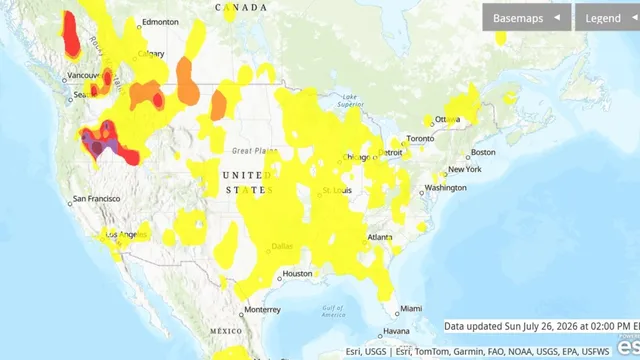
On July 26, 2026, air quality alerts were issued across large areas of the western United States due to unhealthy conditions caused by wildfire smoke and high ozone levels. States including Oregon, Idaho, Washington, Montana, Colorado, and California experienced significant air quality issues, with the Environmental Protection Agency's AirNow platform reporting widespread 'unhealthy' air quality levels. The primary health threat was identified as fine particulate matter, known as PM2.5, which can penetrate deep into lung tissue and pose serious health risks, particularly for vulnerable populations such as those with asthma or heart disease.
In Oregon, central and eastern regions were particularly affected, with some areas reaching the 'Hazardous' category on the Air Quality Index (AQI). This level indicates emergency conditions where everyone faces elevated health risks. The Oregon Department of Environmental Quality issued alerts urging residents to stay indoors, keep windows and doors closed, and limit outdoor activities. The advisory was in effect for Baker County, which has over 16,000 residents, and was expected to last through late Monday.
Idaho also faced air quality challenges, with the Department of Environmental Quality issuing advisories for several counties, including Ada, Boise, and Canyon. The advisories warned that air pollutants could cause breathing difficulties, especially for children, the elderly, and individuals with respiratory issues. Residents were advised to avoid strenuous outdoor activities and to refrain from open burning due to the air quality rules in place. The advisory was set to remain in effect through Tuesday afternoon.
Washington state grappled with similar issues, with AirNow reporting 'unhealthy' air in north-central regions and 'unhealthy for sensitive groups' in the northeast. The alert for Washington was scheduled to expire at 9 a.m. on Monday. In California, the South Coast Air Quality Management District warned of elevated smog levels persisting through Monday evening in parts of Los Angeles County, including the San Fernando, San Gabriel, and Santa Clarita valleys. Federal and state officials advised residents to monitor local AQI readings frequently, as weather conditions could rapidly change air quality levels. Forecasts indicated that heavy smoke impacts would shift further into Idaho and Washington, while air quality in Oregon was expected to improve soon.