
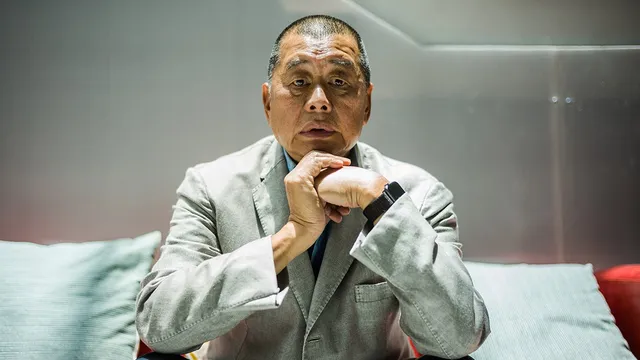
Jimmy Lai sentenced to 20 years in prison for advocating democracy
- Jimmy Lai was sentenced to 20 years in prison under a national security law imposed by Beijing.
- His conviction was seen as a significant case in the ongoing trend of suppressing dissent in Hong Kong.
- The ruling has sparked international condemnation and highlighted concerns about civil liberties in the region.
Story
In Hong Kong, Jimmy Lai, a prominent pro-democracy activist and former media tycoon, was sentenced to 20 years in prison. This sentencing occurred in the context of a national security law imposed by Beijing aimed at suppressing dissent in the city. The court ruled that Lai conspired with others to collude with foreign forces and endangered national security through his media efforts. Lai, who is 78 years old, had previously founded the now-defunct Apple Daily newspaper which was known for criticizing the Hong Kong and Beijing governments. His arrest in August 2020 marked a significant escalation in the crackdown on pro-democracy advocates. The court proceedings raised serious questions about the erosion of press freedom in Hong Kong and the implications for future journalism in the city. The sentence has drawn widespread criticism internationally, including from U.S. Secretary of State Marco Rubio, who labeled it as unjust and tragic. Lai's conviction has sparked concerns about the future of civil liberties and human rights in Hong Kong. Pro-democracy groups argue that the regime is using the legal system as a tool to silence opposition voices. Lai's family has expressed deep concerns regarding his health and the conditions of his imprisonment, describing the sentence as effectively a life sentence given his advanced age. The implications of this ruling extend beyond Lai, signaling a grim warning to others who might advocate for democracy or criticize the government in Hong Kong. As international pressures mount, the Hong Kong government continues to assert that these legal measures are not an affront to press freedoms but necessary for national security.
Context
The Hong Kong National Security Law (NSL), implemented on June 30, 2020, represents a significant shift in the governance structure of Hong Kong and its relationship with mainland China. This legal framework was introduced by the Chinese government following extensive protests in 2019 advocating for democratic reforms and greater autonomy within the Special Administrative Region (SAR). The NSL is seen by many as a direct response to these protests, aiming to restore stability while curtailing dissent and safeguarding national security as defined by Beijing. The law criminalizes acts of secession, subversion, terrorism, and collusion with foreign forces, carrying severe penalties, including life imprisonment for the most serious offenses. Critics argue that the law undermines the principles of 'one country, two systems' that were supposed to govern Hong Kong's autonomy, leading to a chilling effect on freedom of speech, assembly, and the press in the region. Implementation of the NSL has led to significant changes within Hong Kong's political landscape. Various pro-democracy organizations have disbanded, and many activists have been arrested, fleeing to exile, or silenced. The law has empowered authorities to target individuals both within and outside Hong Kong, illustrating a broad interpretation of security threats and jurisdiction. Courts in Hong Kong have also begun to align with the law, leading to trials conducted under conditions shrouded in secrecy and limiting defendants' rights. Moreover, this shift has raised concerns among international observers regarding human rights practices and the rule of law, resulting in a reevaluation of diplomatic and trade relations with China by Western nations. The global response to the NSL has been mixed, reflecting geopolitical complexities. Countries like the United States, the United Kingdom, and others have condemned the law, calling it a blatant violation of the Sino-British Joint Declaration and Hong Kong's Basic Law. In response, these nations have taken various measures, including sanctions against Chinese and Hong Kong officials deemed responsible for the crackdown on freedoms. Meanwhile, some countries have sought to strengthen economic ties with China, demonstrating a divide in international perspectives about how to engage with the Chinese government and Hong Kong's evolving political climate. These reactions underpin a larger narrative about the struggle between democratic values and authoritarian governance in an increasingly interconnected world. Looking ahead, the implications of the NSL on Hong Kong's future remain uncertain. Observers caution that the law's enforcement will likely continue to intensify, further narrowing the space for civil society and democratic expression. The impact on young people in Hong Kong's educational landscape is particularly concerning, as schools and universities are now compelled to align with the NSL's provisions. Furthermore, the law has prompted discussions about the potential for civil disobedience and resistance, with many noting that historical patterns of governance yield complex responses from local populations. As the situation evolves, the global community's focus on Hong Kong will persist, highlighting the ongoing tensions and the vital importance of maintaining dialogue about human rights and democracy against a backdrop of national security interests.
