

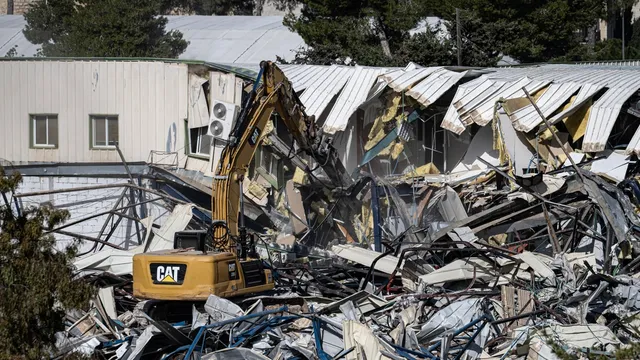
Israel demolishes UN agency headquarters in East Jerusalem amid international outcry
Israel demolishes UN agency headquarters in East Jerusalem amid international outcry
- Israeli forces began demolishing structures within the UNRWA compound in East Jerusalem on January 20, 2026, amid tensions surrounding allegations of collaboration with Hamas.
- The actions were condemned as a breach of international law by UN officials and have sparked international outcry regarding the treatment of Palestinian refugees.
- The demolition marks a significant escalation in Israel's efforts against UNRWA, which continues to provide vital services to millions despite increasing scrutiny and restrictions.
Story
In Israel, Israeli forces demolished various structures inside the compound of the United Nations Relief and Works Agency for Palestine Refugees in the Near East (UNRWA) on January 20, 2026. This demolition marked the culmination of a series of escalating actions against the agency, which Israel accuses of harboring connections to Hamas and undermining its security. These claims have been vehemently denied by UNRWA, which asserts that it provides crucial humanitarian assistance to millions of Palestinian refugees in Gaza, the West Bank, and surrounding regions. The demolition is described by UN officials as a severe breach of international law and the privileges of the United Nations, emphasizing the compound's historic function as a center for aid and support for refugees since 1951. The recent demolitions followed a law passed by the Israeli Knesset in 2024 that effectively banned UNRWA from operating in areas defined by Israel as its territory, including East Jerusalem. Prior to the demolition, Israeli authorities had intensified pressure on UNRWA by raiding their facilities and accusing staff members of being involved in terrorist activities, particularly in relation to a recent Hamas-led attack on October 7, 2023, which resulted in substantial fatalities on both sides. UNRWA's leadership has condemned these incidents, asserting that the organization's integrity is intact and that there is no substantiated evidence linking their staff to the allegations made by Israeli officials. Since the demolition of the headquarters, UN Secretary-General António Guterres has called for the return of the UN compound and restoration of its operations, indicating the U.N.'s determination to challenge Israel's actions at the international level. The Israeli government, however, has justified the demolition, claiming that UNRWA has ceased to function as a humanitarian body and has instead become a 'greenhouse for terrorism.' This ongoing conflict and the actions taken against UNRWA signal a significant shift in the Israeli government's stance toward Palestinian refugees and humanitarian organizations operating in the region, further complicating an already volatile situation where millions depend on UNRWA for basic services like education, health care, and social support. Palestinian leadership has also reacted strongly to the demolitions, considering them a dangerous escalation of hostilities that directly infringes on the rights and protections afforded to UN agencies under international law. As tensions rise, the fate of Palestinian refugees in the region hangs in the balance, with UNRWA's continued operations now under severe threat. The demolitions may also provoke further international scrutiny of Israel's policies regarding occupied territories and its approach to the longstanding refugee situation, with calls for broader discussions on the future of Palestinian rights and refugee resettlement gaining traction both regionally and internationally.
Context
The current state of humanitarian aid in Gaza and the West Bank remains a pressing concern, marked by complex socio-political dynamics and ongoing conflict that severely impacts the delivery of essential services and support. The humanitarian situation is exacerbated by a blockade in Gaza, which limits the flow of goods, including medical supplies, food, and other vital resources. The United Nations and various NGOs report alarming levels of poverty and food insecurity, with a significant percentage of the population relying on aid to meet their basic needs. Additionally, the health infrastructure in both regions is under significant strain, compounded by frequent interruptions in electricity and water supply that affect hospitals and clinics, making it challenging to provide adequate medical care and maintain public health standards. Children are especially vulnerable, facing high rates of malnutrition and limited access to education due to the instability in the region. In the West Bank, the humanitarian landscape is influenced by the presence of settlements and restrictions imposed by the Israeli authorities. Movement restrictions create obstacles for aid organizations, hindering their ability to reach those in need. Reports indicate that the majority of aid is provided through international organizations and local NGOs, which work tirelessly to navigate the complex regulatory environment. However, funding for humanitarian efforts is often inconsistent, and while international bodies pledge support, the actual disbursement and allocation of resources can lag due to bureaucratic challenges and changing political circumstances. The result is a precarious situation where the aid provided may not be sufficient to address the scale of the need, leaving many families in desperation. Efforts to coordinate humanitarian assistance between different entities have shown some success, with initiatives aimed at improving the transparency and effectiveness of aid distribution. However, the fragmented political landscape, characterized by the divide between Palestinian authorities in Gaza and the West Bank, complicates unified action and response strategies. Additionally, the fluctuating security situation often interrupts aid delivery, creating a cycle of dependency that undermines long-term solutions. Global awareness and advocacy for the Palestinian humanitarian crisis remain crucial, as they can prompt increased international engagement and support from donor nations. Nonetheless, without a concerted push for political resolutions addressing the root causes of the conflict, the humanitarian situation is unlikely to improve significantly. The call for increased humanitarian access and the protection of civilians is echoed by numerous international bodies and human rights organizations. It is essential to not only provide immediate relief but also to focus on building resilience within communities affected by prolonged conflict and instability. This includes investing in sustainable development strategies that empower individuals and foster economic independence. Collaboration between local and international actors, while navigating the complexities of the political landscape, is key to creating an environment where humanitarian aid can be delivered effectively and where communities can begin to rebuild their lives. A comprehensive approach that bridges immediate needs with long-term developmental goals is essential for fostering hope and stability in Gaza and the West Bank.


