

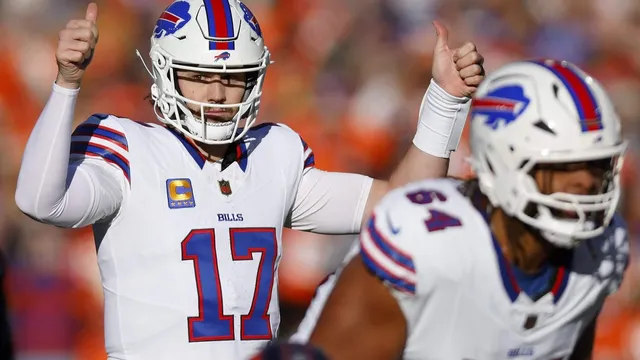
Buffalo Bills create $12 million cap space by restructuring Josh Allen's contract
Buffalo Bills create $12 million cap space by restructuring Josh Allen's contract
- The Buffalo Bills restructured quarterback Josh Allen's contract to open up $12 million in cap space.
- This strategic move allows the team more flexibility to strengthen their roster ahead of free agency.
- The Bills are focused on building a strong team to support Josh Allen's championship aspirations.
Story
On March 11, 2026, in the United States, the Buffalo Bills made a crucial move in anticipation of the NFL free agency by restructuring the contract of their star quarterback, Josh Allen. This procedural step was aimed at creating additional salary cap space for the team, allowing them to make key pickups and address roster needs more effectively ahead of the new league year that commenced that afternoon. The restructuring of Allen’s contract produced a cap relief of $12 million, a significant amount considering recent trends in free agency and the competitive nature of the league. Josh Allen, who has been with the Bills since signing a six-year, $330 million extension last March, had his cap hit scheduled at approximately $56.39 million in 2026. Allen’s performance the previous season was notable, completing 69.3% of his passes for 3,668 yards, throwing for 25 touchdowns and 10 interceptions, alongside rushing for 579 yards and 14 touchdowns. However, despite such impressive statistics, the Bills experienced disappointment at the end of the season, as they did not advance to the Super Bowl, even though formidable opponents were absent from the playoffs. In addition to the restructuring of Allen’s contract, the Bills made other strategic moves leading up to free agency. They traded for receiver DJ Moore from the Chicago Bears, a decision aimed at strengthening Allen's receiving corps. Alongside the trade, they also agreed to various contracts and extensions with other players, including cornerback Dee Alford and tight end Dawson Knox, while retaining center Connor McGovern and offensive lineman Alec Anderson. These decisions showcase the Bills' commitment to enhancing their roster as they aim for a successful season following a lackluster finish last year. The restructuring of Josh Allen's contract is crucial for the Bills, as it provides them with flexibility to continue reshaping their team in pursuit of a championship. With additional cap space created, they are expected to be active in addressing critical needs, particularly in their defensive line and secondary. This comes after the organization underwent significant changes, including the firing of head coach Sean McDermott and the hiring of Joe Brady as the new head coach, providing the team with fresh leadership as they embark on a new era in their pursuit of success.
Context
The salary cap in the National Football League (NFL) fundamentally influences team strategies, player acquisitions, and overall competitiveness within the league. Introduced in 1994, the salary cap is a limit on the total amount of money that an NFL team can spend on player salaries in a given season. This system aims to maintain competitive balance by preventing wealthier franchises from accumulating a disproportionately high number of star players, thereby fostering an environment where all teams have a fair chance to compete for success. Teams must carefully manage their rosters within these financial constraints, which adds a unique layer of strategy to team-building and player negotiations. The operational mechanics of the salary cap require teams to assess their player contracts, prioritize salary allocations, and make tough decisions regarding player retention or release. Over time, the salary cap has increased due to rising revenues generated by television deals, sponsorships, and merchandise sales. As teams' payrolls adjust with the cap, the financial landscape of the NFL has evolved, leading to more dynamic roster movements and the emergence of various approaches to team construction. Some teams focus on building through the draft and developing talent to mitigate salary cap pressures, while others may be more aggressive in free agency, seeking immediate improvement through high-profile signings. Additionally, the salary cap has significant implications for team performance and fan engagement. The ability of a franchise to effectively navigate the salary cap can determine its competitiveness on the field and its ability to attract and retain top talent. For fans, the salary cap creates a level of unpredictability, as team strategies can shift from one season to the next based on cap space and player performance. The cap also influences player movements, as athletes may have to consider financial factors when deciding on contracts, trades, or extensions. Consequently, the salary cap shapes not only team dynamics but also the overall narrative of the season as franchises are often battling for cap space while striving for a championship. In conclusion, the salary cap serves as a cornerstone of the NFL's operational framework, creating a structured environment for teams to innovate in how they build rosters and compete. While it presents challenges in terms of player retention and acquisition, it also levels the playing field, promoting enhanced competition across the league. As the industry continues to evolve with increased revenues and public interest, the ongoing impact of the salary cap remains a critical consideration for team management and league governance, as it influences not only the economic landscape of the NFL but also the excitement and engagement of its fan base.


