

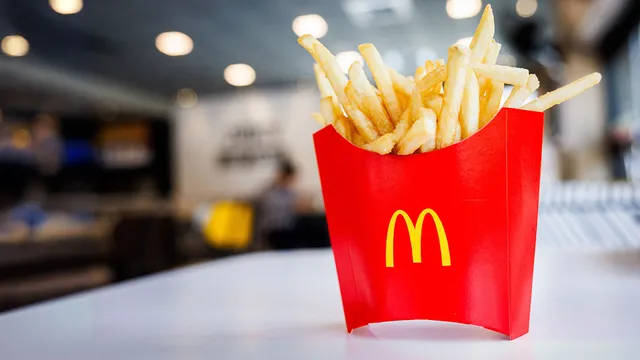
McDonald's boosts sales by offering value meals as diners return
McDonald's boosts sales by offering value meals as diners return
- Budget-conscious consumers have returned to McDonald's due to its emphasis on value meals and promotions.
- The company reported a notable 6.8% increase in U.S. sales in the fourth quarter, outperforming analyst expectations.
- McDonald's strategy of focusing on affordable dining options is proving effective amidst economic fluctuations.
Story
In the United States, McDonald's experienced a notable surge in sales, reporting a 6.8% increase in the fourth quarter of the fiscal year, marking the company’s largest jump in almost two years. This increase is attributed to the implementation of various value meals and promotions aimed at budget-conscious diners. As inflation affects consumer spending, McDonald's has strategically capitalized on this trend by introducing discounted bundles and limited-time offers, resonating particularly well with lower-income consumers who are increasingly selective regarding where they allocate their dining expenses. December saw a particularly successful promotional strategy when McDonald's unveiled a Grinch-themed meal which became one of the highest single sales days in the company's history. Additionally, the company reintroduced its Monopoly promotion after nearly a decade, coinciding with the launch of value offers beginning at $5. Analysts have noted that McDonald's success with these offers contrasts sharply with challenges faced by many other restaurant chains in the U.S., especially those with higher-price points. This is evidenced by the performance of competitors: Taco Bell achieved a 7% increase, while KFC reported a 3% growth. Conversely, Chipotle Mexican Grill faced a 1.7% decline in sales, demonstrating the ongoing trend of consumers opting for more affordable dining options. The positive financial results for McDonald's have underscored the effectiveness of their discount-driven approach, as evidenced by their global comparable sales growing 5.7% in the fourth quarter, exceeding market expectations. This trend extends internationally as well, with steady demand observed in markets such as Britain, Germany, and Australia. Furthermore, McDonald's plans to continue reinforcing its message of affordability while expanding its beverage offerings, including cold coffees, crafted sodas, and energy drinks, aimed particularly at attracting younger consumers. To support this initiative, a new McCafe-branded drink lineup is set to be launched in the U.S. and select international markets after a successful test in 500 stores. Overall, McDonald's strategy seems increasingly robust in attracting diners who are mindful of their budgets. The company is aware that in a fluctuating economic climate where many consumers are affected by inflation, price sensitivity is crucial. Analysts warn, however, that maintaining this momentum will require consistency and continued adaptation to the economic landscape. As other fast-food chains also post varying results, McDonald's adaptability and ongoing push towards affordable dining options are crucial in navigating a competitive market landscape.
Context
The impact of inflation on the fast food industry has been significant, especially as we look back at the trends leading up to 2025. Inflationary pressures, driven by various factors such as increased commodity prices, labor costs, and supply chain disruptions, have resulted in a surge in operational costs for fast food businesses. These costs are often passed on to consumers in the form of higher menu prices, ultimately leading to changes in consumer behavior. Research shows that as prices rise, customers tend to shift towards cheaper menu options, leading to a potential decrease in overall sales for higher-priced items. The challenge for fast food companies is to find the balance between maintaining profitability and ensuring customer retention amid rising prices. In response to inflation, many fast food chains have adopted strategies to mitigate cost impacts. These include optimizing supply chains to reduce delays and procure materials more efficiently, as well as investing in technology to automate processes and decrease labor reliance. Additionally, some companies have focused on menu engineering, identifying items that can be marketed as value-oriented while still maintaining quality. These strategies are crucial as companies strive to retain their customer bases without sacrificing margins. Moreover, the trend toward inflation could lead to a reevaluation of pricing strategies across the entire industry, influencing how fast food chains approach value meals and bundling offers. Moreover, the inflationary environment has prompted a deeper examination of customer loyalty. Fast food companies have been experimenting with loyalty programs and promotions to incentivize repeat business, expecting that consumers will become more price-sensitive in a high-inflation scenario. As consumers face tighter budgets, the appeal of loyalty programs that offer discounts or rewards could prove essential for retaining customer loyalty amidst fluctuating prices. Understanding the demographics of their customer base also becomes critical, as varying consumption behaviors across different segments may require targeted strategies to maximize customer engagement effectively. Ultimately, the impact of inflation on the fast food industry is multifaceted, requiring companies to navigate complex challenges and evolving consumer expectations. As we continue into the new year, observing how fast food chains adapt to these economic pressures will provide valuable insights. The agility with which they adjust their operational models, pricing strategies, and customer engagement tactics will significantly determine their success in a highly competitive and inflationary market. As 2025 progresses, the lessons learned during this inflationary period will likely shape the future strategies of the fast food industry, allowing companies to be more resilient in uncertain economic times.


