

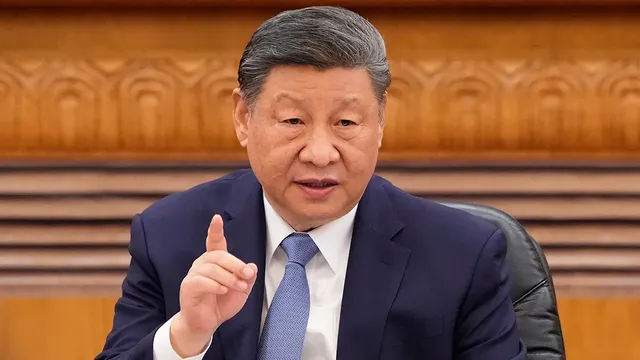
Trump greenlights over $10 billion arms deal with Taiwan
Trump greenlights over $10 billion arms deal with Taiwan
- The Trump administration has approved an arms sale package to Taiwan valued at over $10 billion.
- The deal includes advanced military systems like HIMARS and drones aimed at boosting Taiwan’s defenses.
- The arms sales are expected to escalate tensions with China, which claims Taiwan as part of its territory.
Story
In the United States, on December 18, 2025, the Trump administration approved an extensive arms sale package to Taiwan, valued at more than $10 billion. This deal is seen as a response to escalating military tensions with China, which has increasingly threatened Taiwan's independence. The arms included advanced systems such as 82 High Mobility Artillery Rocket Systems (HIMARS), medium-range missiles, and drones, designed to enhance Taiwan's coastal defense capabilities against possible Chinese aggression. U.S. officials stress that these sales are part of a commitment to assist Taiwan in maintaining its self-defense capabilities under the Taiwan Relations Act of 1979. The geopolitical context surrounding this arms sale is significant. China considers Taiwan a part of its territory and has not ruled out the use of military force to achieve unification. The Chinese government has condemned the arms sales, claiming they undermine China's sovereignty and disrupt peace in the region. Comments from Taiwan's leaders express gratitude towards the U.S. for its support, underscoring the importance of strengthening Taiwan's military capabilities amidst increasing pressure from China to assert its claims over the island. The deal follows a period of fluctuating U.S.-China relations, particularly regarding trade and military tension surrounding Taiwan. Earlier in Trump's term, there were concerns that Taiwan could be leveraged for trade negotiations with China. However, the recent arms package reflects a steadfast U.S. policy supporting Taiwan's defense needs. Taiwanese officials have noted that the new military assets will enhance deterrence capabilities, ensuring Taiwan remains a critical and stable part of the region's security framework. Looking ahead, the U.S. is emphasizing its commitment to Taiwan's security, with Taiwan planning to increase its defense spending significantly in the coming years. The Taiwanese government aims to allocate $40 billion over eight years to bolster its military infrastructure, including advanced air defense systems. Meanwhile, China continues to view these developments with apprehension, reinforcing the potential for further tension in the Taiwan Strait as both sides prepare for a future where military capabilities can influence regional dynamics.
Context
The Taiwan Relations Act (TRA) of 1979 is a pivotal piece of legislation that outlines the framework of U.S. relations with Taiwan following the establishment of diplomatic ties with the People’s Republic of China (PRC). Passed by the U.S. Congress and enacted in the wake of the shift in recognition from Taipei to Beijing, the TRA serves as a cornerstone for U.S. policy towards Taiwan, ensuring that the island maintains a robust self-defense capability and that peaceful resolutions to any cross-strait tensions are pursued. The act articulates that the U.S. will provide Taiwan with defensive arms and support its self-defense efforts, reinforcing the commitment to Taiwan’s security and stability in the region. Additionally, it affirms that any attempt to determine Taiwan's future by non-peaceful means, including military coercion, would be of grave concern to the United States. In practical terms, the TRA makes a significant distinction between formal diplomatic recognition and the commitment of the U.S. to support Taiwan. The act does not promise military intervention in case of conflict, but it emphasizes the importance of a stable and peaceful cross-strait relationship. The law expresses the U.S. intent to maintain the capacity to resist coercion against Taiwan and lays out that the U.S. will conduct its relationship based on the expectation that both sides of the Taiwan Strait can reach an agreement peacefully. Furthermore, the TRA has facilitated the development of unofficial relations, allowing for cultural and commercial exchanges through non-governmental organizations and private sector engagements. The TRA has been a significant factor in American foreign policy and has had lasting implications on security dynamics in East Asia. By asserting the U.S. commitment to Taiwan's defense without official recognition, the act has provided a sense of assurance to Taiwan while also maintaining a delicate balance in U.S.-China relations. Over the years, the U.S. has continued to enhance its security cooperation with Taiwan through arms sales and joint military exercises, often provokatively received by the PRC. This ongoing relationship underscores the importance of the TRA as a stabilizing element amid the shifting geopolitical landscape in the Asia-Pacific region and as a deterrent against possible aggression from China. In conclusion, the Taiwan Relations Act has shaped not only U.S.-Taiwan relations but also the broader international framework concerning Taiwan's status and security. By codifying U.S. support for Taiwan in legal terms, the TRA has solidified the U.S. strategic posture in East Asia, influencing both Taipei's defense policies and Beijing's approach to Taiwan. Given the current geopolitical tensions and the evolving nature of cross-strait relations, the TRA remains a crucial document in understanding the diplomatic and military commitments of the United States towards Taiwan and the implications of these commitments in the context of U.S.-China relations.


