

Warren Jeffs’ cult towns undergo historic change after abuse convictions
Warren Jeffs’ cult towns undergo historic change after abuse convictions
- The Fundamentalist Church of Jesus Christ of Latter-Day Saints was established in the 1930s, leading to a long history of control over Hildale and Colorado City.
- Warren Jeffs was convicted in 2011 for sexually assaulting minors, which led to federal intervention and the segregation of church influence from local governments.
- Since the loss of Jeffs's control, the towns have undergone significant changes, with a notable shift toward inclusivity and re-connection among former sect members.
Story
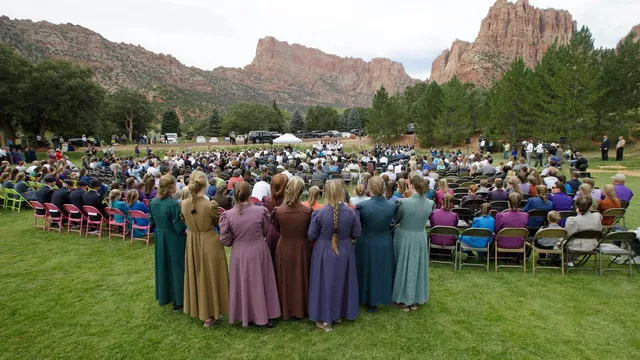
The Fundamentalist Church of Jesus Christ of Latter-Day Saints established its presence along the Arizona-Utah border in the 1930s, forming a tightly controlled community in the towns of Hildale, Utah, and Colorado City, Arizona. This community operated under a theocratic structure for many decades, particularly under the leadership of Warren Jeffs, who took control of the sect in 2002. His controversial leadership culminated in numerous legal issues, including accusations of child abuse, forced marriages, and widespread discrimination against non-believers. In 2011, Jeffs was convicted of sexually assaulting two underage girls and received a life sentence. This conviction sparked judicial scrutiny over the sect's governance and precipitated federal intervention in the towns. In 2017, following years of allegations regarding the denial of basic services to non-FLDS residents, a court placed Hildale and Colorado City under supervision. This court ruling mandated a complete overhaul of the municipal governments, which had been heavily influenced by the sect, and resulted in significant changes within the towns. As the court intervened, many FLDS members began to leave the community, seeking new lives outside of the oppressive environment that Jeffs had fostered. The transformations in these towns have been described as a move towards a more normal and inclusive community. Residents have started breaking down barriers that were previously imposed by the church's strict rules. Many former members have reconnected with estranged family and friends, and there’s a growing realization that life outside of the church can be fulfilling. Former members have recounted their experiences of growing up under intense scrutiny, where activities like attending public schools or basic social interactions were tightly controlled, ultimately leading to emotional and physical harm for some. Today, life in these towns is markedly different as they move past their dark history with the FLDS. The remnants of the polygamous sect are fading, even though some still practice polygamy in secrecy. The community has witnessed a significant change in societal norms, as residents express relief and optimism about their future, alongside a desire to reclaim their towns’ identities as places of normalcy, free from the shadow of Warren Jeffs and the abuses that occurred under his leadership.
Context
The Fundamentalist Church of Jesus Christ of Latter-Day Saints (FLDS) has its roots in the early Mormon movement, which advocated for polygamy. After the mainstream LDS Church officially discontinued the practice of polygamy in 1890, a faction of believers continued to uphold these principles, leading to the establishment of the FLDS. The community found a stronghold in the areas surrounding Arizona and Utah, particularly in the twin towns of Colorado City, Arizona, and Hildale, Utah. These towns became the official centers of the FLDS community, fostering a distinct culture and a tight-knit, insular society that adhered strictly to their interpretation of Mormon beliefs, particularly those concerning plural marriage and strict adherence to religious leadership. Throughout the late 20th century, the FLDS community expanded significantly, with its membership growing primarily through family birthrates and conversions. Under the leadership of figures such as Warren Jeffs, who took control in 2002, the community became more secretive and authoritarian. Jeffs dictated numerous aspects of daily life, including marriages, community services, and social interactions. His leadership style, marked by increasing paranoia and control, led to significant tensions both within the community and with external authorities. In 2006, the FLDS's practices drew national scrutiny due to allegations of child labor, sexual abuse, and the arranged marriages of underage girls, issues which highlighted the impacts of their insular culture. The turning point for the FLDS came in 2008 when a raid on the Yearning for Zion Ranch in Texas resulted in the seizure of over 400 children amid accusations of sexual abuse and neglect. The state's actions against the FLDS spurred legal battles and brought public attention to the group's controversial practices. In 2011, Warren Jeffs was convicted of sexual assault and is currently serving a life sentence; his imprisonment led to further fragmentation of the FLDS community. Members have faced increased scrutiny from law enforcement and have been alleged to have adopted more covert operations, with many members attempting to distance themselves from the polygamous practices of their leaders. As of today, the FLDS community in Arizona and Utah continues to exist but has been significantly altered by legal challenges, leadership changes, and external pressures. Many individuals have left the FLDS, seeking greater personal freedoms and civil rights outside the confines of their strict religious doctrines. While some factions may still persist in polygamous practices, the community is now characterized by divisions and declining membership. The legacy of the FLDS community in Arizona and Utah serves as a complex narrative of faith, governance, and the ongoing struggles surrounding religious freedom, community autonomy, and the law.


