
society
controversial
tragic

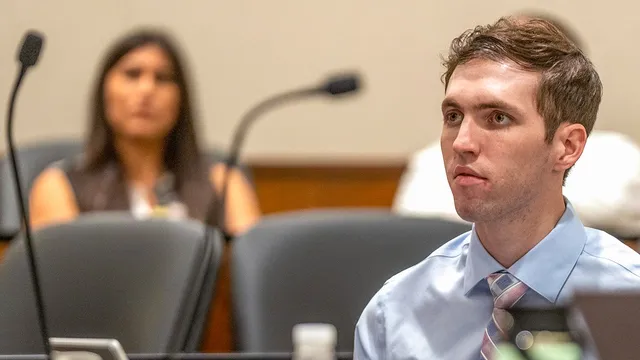
Tyler Robinson faces charges for killing Charlie Kirk at political event

Dec 29, 2025, 1:00 AM110
(Update: Dec 30, 2025, 11:57 PM)
American political activist and radio talk show host
American conservative nonprofit organization
Ph.D., Astronomy, University of Washington

Tyler Robinson faces charges for killing Charlie Kirk at political event

  • Tyler Robinson is charged with the murder of Charlie Kirk during a Turning Point USA event at Utah Valley University.
  • A Utah judge ordered the release of a redacted transcript and audio from closed hearings on the case.
  • The case highlights complex issues of media access and public transparency within the judicial system.
Share opinion
Tip: Add insight, not just a reaction
11

Story

In the United States, a prominent case has emerged involving Tyler Robinson, a 22-year-old man accused of the aggravated murder of conservative activist Charlie Kirk. The incident occurred on September 10, 2025, at a Turning Point USA event held at Utah Valley University in Provo. During the event, Kirk was speaking to a crowd when a single shot was fired from a rooftop, striking him in the neck and resulting in his immediate death. The shooting prompted a significant response from law enforcement as the campus went into lockdown, and a broad search began to find the assailant. Following the shooting, police identified Tyler Robinson as the suspect. Authorities stated that Robinson confessed to his roommate and parents about the crime after fleeing to southern Utah. His family reportedly convinced him to turn himself into the police. In the ensuing investigations, it was revealed that Robinson had been struggling with issues surrounding LGBTQ rights and had expressed hostility towards Kirk's political views in their communications. This connection to the motive makes the case particularly significant within the socio-political context. As the judicial process evolved, the case has gained intense media coverage, bringing forth discussions about transparency and access to court proceedings. A significant hearing on December 29, 2025, led by Fourth District Judge Tony Graf Jr., resulted in the decision to release redacted transcripts and audio from sealed hearings regarding Robinson's proceedings. The coverage included disputes over the presence of cameras in the courtroom, with Robinson's defense arguing this could prejudice potential jurors, while media outlets pressed for transparency regarding the trial. As of now, Tyler Robinson is facing multiple charges, including aggravated murder, with prosecutors indicating their intention to pursue the death penalty. The next court date is scheduled for January 16, 2026, when several motions will be discussed, including a request for one of the prosecutors to be recused due to a familial connection to the case. This high-profile case continues to unfold, driving national attention due to the charged political climate surrounding the circumstances of Kirk's murder.

Context

The murder of Charlie Kirk has had a profound impact on political discourse in the United States, reverberating across social and media landscapes. Kirk, a prominent conservative figure and founder of Turning Point USA, was not only a vocal advocate for right-leaning ideologies but also a polarizing presence that sometimes incited strong reactions from both supporters and opponents. His assassination marked a watershed moment, escalating tensions within an already divided political climate. The tragic event catalyzed discussions on the limits of political rhetoric, the role of violence in protests, and the repercussions of extremist views on both sides of the political spectrum. In the immediate aftermath of Kirk's murder, there was a surge of commentary on social media platforms, where his supporters expressed outrage and heartbreak, while detractors debated the implications of his heightened visibility and rhetoric prior to his death. The incident led to an increased focus on concerns surrounding political violence and its normalization in public discourse. The exchange often reflected an urgency among political leaders and commentators to reassess how inflammatory language—especially in mainstream political circles—could foster an environment conducive to violence. The discourse expanded beyond Kirk's murder, sparking debates on how political figures can responsibly express their views without inciting hatred or violence against those with opposing perspectives. Over the following months, numerous think pieces, policy discussions, and public forums centered around the implications of rising political violence. Some commentators argued that Kirk's murder should serve as a warning about the escalation of political polarization and the dangers it poses not only to individuals but also to democratic norms. However, the event also became a rallying point for some segments of the conservative community, who viewed it as evidence of a broader conspiracy against right-wing figures and ideologies. This narrative contributed to a further entrenchment of partisan divides, as individuals retreated into echo chambers that reinforced their existing beliefs and demonized the 'other.' As society continues to grapple with the implications of Charlie Kirk's murder, it is evident that the incident has catalyzed a re-examination of political discourse across the spectrum. As discussions on civility, accountability, and responsibility in political rhetoric abound, it remains to be seen how these conversations will shape future political landscapes. The long-term effects of Kirk's assassination may alter not only how political figures communicate but also how citizens engage with one another across political lines. A thoughtful approach to dialogue, aimed at bridging divides rather than deepening them, will be crucial in steering national conversations toward a more constructive and less volatile future.

2026 All rights reserved
