

Ukrainian town fights for survival as Russian forces encircle it
Ukrainian town fights for survival as Russian forces encircle it
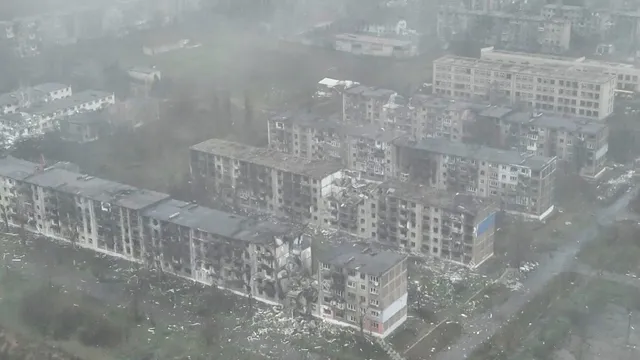
- Drone footage reveals the ruins of Myrnohrad, a town in Ukraine's eastern Donetsk region, due to bombardment by Russian forces.
- Supplies are crucially reaching the remaining troops in the town through ground-drones, reflecting ongoing military efforts amidst logistical challenges.
- The desperate situation emphasizes the need for continued military support from international allies to Ukraine.
Story
In recent days, exclusive drone footage has captured the devastation in Myrnohrad, a Ukrainian town located in the eastern Donetsk region. This area, critical due to its proximity to the logistics hub of Pokrovsk, was reported to be nearly encircled by Russian forces, who have claimed control over the nearby city. The destruction seen in the footage was described as profound, with smoke still rising from fresh ruins, showcasing the relentless assaults carried out by the Russian military using heavy artillery and airstrikes. Military officials indicated that conditions in Myrnohrad had become dire, with the suffering population reduced as many residents had evacuated due to the intense conflict. Those remaining faced dire shortages of supplies with limited access to humanitarian assistance. The Ukrainian military, specifically the 38th Marine Brigade, maintained a presence in the town, emphasizing their commitment to hold the remaining ground despite overwhelming odds. They utilized ground-robot drones to transport essential supplies like food and water to troops still inside the besieged town. However, logistics for personnel rotations had become increasingly challenging, illustrated by the statement from the press officer of the drone battalion, Oleksii Hodzenko, who noted that soldiers were often stationed for weeks without proper rotation. This pattern of containment and encirclement mirrors the broader strategy observed in various towns across Ukraine's eastern and southern regions. Oleksii Hodzenko also called upon Western allies to sustain military support for Ukraine to bolster their defense against ongoing Russian aggression. Meanwhile, Kremlin presidential aide Yurii Ushakov remarked that Russia's recent advancements on the battlefield were influencing negotiations with the United States concerning a proposed plan to address the conflict, underlining how battlefield dynamics could affect diplomatic efforts. As the situation in Myrnohrad deteriorates, the resilience of Ukrainian forces in defense of their territory is tested, highlighting the urgent need for international support.
Context
The humanitarian situation in the Donetsk region of Ukraine continues to be critical and is characterized by a complex interplay of conflict, displacement, and limited access to essential services. Since the onset of conflict in 2014, the area has been devastated by violence, leading to significant loss of life, injuries, and trauma among the civilian population. The ongoing hostilities have resulted in the destruction of infrastructure, including hospitals, schools, and water supply systems, exacerbating the humanitarian crisis on the ground. Residents face daily challenges due to active conflict, which hinders their ability to seek safety and access humanitarian assistance. Many live in constant fear of shelling, leading to a pervasive environment of uncertainty and anxiety. As a result, the psychological impact on the community is profound, with many individuals experiencing severe stress and mental health issues that require urgent attention. Furthermore, humanitarian organizations struggle to provide adequate support due to security concerns, limitations in funding, and restrictions imposed by the conflict parties. Displacement remains a pressing issue in the Donetsk region, with thousands of people forced to leave their homes in search of safety and stability. Internally displaced persons (IDPs) often find themselves in precarious living conditions, lacking access to basic necessities such as food, clean water, and healthcare. The situation is dire, particularly in areas like Eastern Ukraine, where the winter months exacerbate the challenges faced by IDPs. Humanitarian actors strive to deliver aid, yet access is frequently obstructed by the ongoing security situation and bureaucratic hurdles. Many families are unable to return to their homes due to the destruction and fear of renewed violence, perpetuating a cycle of displacement and vulnerability. Support for the displaced population is critical, as they require not only immediate relief but also long-term solutions to rebuild their lives and regain a sense of normalcy. Additionally, the economic situation in the Donetsk region contributes to the humanitarian crisis. Many individuals have lost their livelihoods due to the conflict, and those who remain often struggle to find stable employment. Economic hardship has stretched family resources thin, forcing many to make difficult choices regarding their basic needs. The continued impact of the conflict on local economies has led to increased poverty and dependency on humanitarian aid, which is not always reliable or sufficient to meet the growing demands. Vulnerable groups, including children, the elderly, and persons with disabilities, are disproportionately affected by these economic challenges, requiring targeted assistance to ensure they can survive and thrive in this hostile environment. Overall, the humanitarian situation in the Donetsk region remains precarious, demanding urgent international attention and response. The need for humanitarian access, increased funding, and long-term recovery programs is crucial to alleviate the suffering of the affected population. It is essential that coordinated efforts are made to address both immediate needs and the underlying issues fueling the conflict. Enhanced collaboration among humanitarian organizations, local authorities, and international bodies is necessary to create a sustainable solution to improve the living conditions of those impacted by the ongoing crisis.


