

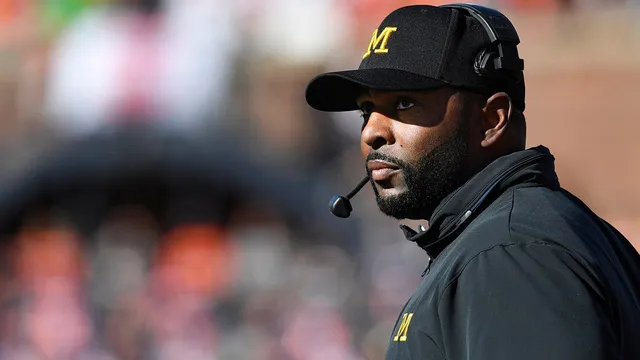
Sherrone Moore fired for inappropriate relationship and faces serious charges
Sherrone Moore fired for inappropriate relationship and faces serious charges
- Sherrone Moore was terminated from his role as head coach after an investigation into his conduct.
- He faces multiple charges, including a felony and two misdemeanors, related to an alleged incident with a staff member.
- The university's swift action reflects its commitment to maintaining respect and integrity within its community.
Story
In Ann Arbor, Michigan, Sherrone Moore, the former head football coach at the University of Michigan, was recently terminated from his prestigious position. His dismissal followed an investigation into allegations of inappropriate conduct, specifically concerning an alleged relationship with a female staff member. The investigation, prompted by complaints, concluded with the university's swift decision to fire Moore after findings were presented, emphasizing their commitment to maintaining a respectful and accountable campus culture. Moore was married and a father of three at the time of his firing, raising concerns about the impact of these allegations on his family. Moore was arrested on charges that include third-degree home invasion, stalking, and breaking and entering. These accusations stemmed from an alleged incident that occurred shortly after he was dismissed from his coaching position. Law enforcement reported that he unlawfully entered the residence of the football staff member to allegedly stalk her, engaging in a course of conduct that involved repeated harassment. His legal representation in this matter is provided by Ann Arbor attorney Joe Simon. The most serious charge, home invasion, is classified as a felony, while the remaining charges are misdemeanors. Since the day of his firing, Moore has remained in custody at the Washtenaw County jail, and he is expected to appear in court for an arraignment. The ongoing investigation has drawn significant media attention, highlighting the university's zero-tolerance policy towards any conduct that violates its standards of behavior. The president of the university, Domenico Grasso, has publicly emphasized the institution's commitment to integrity and accountability, stating that the circumstances surrounding Moore's behavior have been painful for the university community. In the wake of these events, the University of Michigan has invited individuals with further information about the case to come forward. This proactive stance aims to ensure transparency during the ongoing legal proceedings while also sending a clear message about the university's dedication to a safe and respectful environment for all its staff and students. The allegations against Moore and the subsequent legal actions could have significant implications, not only for his career but also for the university's reputation, as it seeks to navigate this challenging situation effectively.
Context
shift global policy impact global geopolitical policy policy strategic geopolitical data strategic strategic market economic data impact market global economic trends data insight impact market data analysis global shift geopolitical shift strategic economic data economic impact data policy trends insight analysis global impact shift economic trends policy analysis geopolitical analysis shift shift shift analysis insight global impact shift insight strategic economic geopolitical economic geopolitical economic strategic analysis geopolitical global trends insight market shift data trends trends economic global impact policy...


