Israeli settlers launch violent attacks in West Bank after Tal killings
military conflicts
tragic
controversial

Israeli settlers launch violent attacks in West Bank after Tal killings

11
(Update: )
city in the Palestinian National Authority
  • Israeli settlers attacked Palestinian homes in Tal, leading to a violent backlash from Israeli forces.
  • The West Bank has seen increased military presence and operations, with numerous arrests and searches.
  • The ongoing violence and settlement expansion have exacerbated the humanitarian crisis in the region.
Share opinion
1

Story

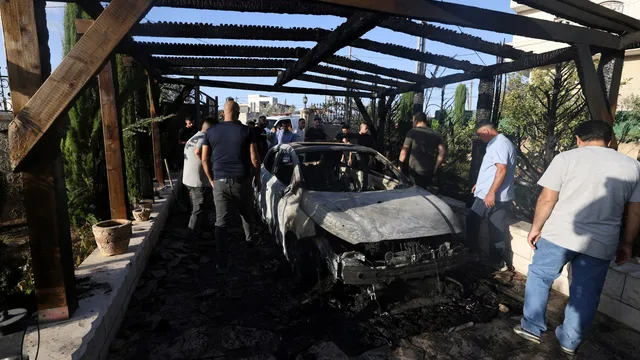
In the occupied West Bank, a series of violent incidents erupted following an attack by Israeli settlers on Palestinian homes in Tal on July 24, 2026. More than 20 settlers from the illegal Havat Gilad settlement targeted the eastern edge of Tal, southwest of Nablus, resulting in significant retaliation from Israeli forces and settlers. Over the following days, the West Bank experienced a surge in armed attacks, raids, demolitions, road closures, and arson, with Israeli public radio reporting the deployment of 26 army battalions across the region. The Israeli military conducted nightly raids in Tal, arresting approximately 30 to 50 residents and searching around 70 homes, while similar operations were carried out in Jenin, Tubas, Ramallah, Hebron, Bethlehem, Tulkarem, and occupied East Jerusalem. The violence was further exacerbated by the emergence of four new Israeli settlement outposts near Tal and surrounding villages, contributing to the ongoing expansion of illegal settlements in the West Bank. According to reports, 42 new illegal outposts were established in the first half of 2026, primarily in the Hebron, Ramallah, and Nablus governorates. The situation escalated dramatically as the killings in Tal ignited settler violence, which spread to numerous villages across the West Bank. A particularly harrowing incident involved a Palestinian infant who survived an arson attack in Urif, thanks to her grandfather's quick actions as over 150 settlers set their home ablaze. In addition to the violence in the West Bank, Israeli authorities issued new orders to uproot olive trees and seize land in various areas, including Jaba, Ajjah, and al-Yamoun in the Jenin governorate, as well as additional land in Tubas. The United Nations humanitarian agency reported that deaths linked to settler attacks had already reached 18 by July 20, 2026, surpassing the total for the entire year of 2025. This count was further increased by the killings of two Palestinians in Beit Furik on July 23, who were attempting to extinguish fires set by settlers on Palestinian farmland. The violence in the region has raised significant concerns about the humanitarian situation, particularly in Gaza, where the Israeli army has been advancing its control beyond previously agreed lines. The Israeli military has been constructing barriers and conducting operations that have forced families to flee their homes. The ongoing conflict and violence in the West Bank and Gaza have created a dire humanitarian crisis, with the situation continuing to deteriorate as tensions remain high.

Context

The impact of Israeli settlements on Palestinian communities is a complex and multifaceted issue that has significant implications for the socio-economic and political landscape of the region. Israeli settlements, which are residential areas built on land that is considered occupied under international law, have been a source of tension and conflict between Israelis and Palestinians for decades. These settlements often lead to the displacement of Palestinian communities, restrict their access to resources, and contribute to a climate of insecurity and instability. The expansion of settlements has been linked to the fragmentation of Palestinian territories, making it increasingly difficult for communities to maintain their livelihoods and cultural identity. The establishment and expansion of Israeli settlements have resulted in the appropriation of land that is traditionally owned or used by Palestinians. This land confiscation not only disrupts agricultural practices but also limits access to essential services such as water, education, and healthcare. As settlements grow, they often encroach upon Palestinian neighborhoods, leading to increased tensions and violence. The presence of settlements can also exacerbate economic disparities, as they are typically well-resourced and supported by the Israeli government, while Palestinian communities face restrictions that hinder their economic development. Moreover, the legal and political frameworks surrounding Israeli settlements contribute to the marginalization of Palestinian voices. The Israeli government has implemented policies that favor settlement expansion, often at the expense of Palestinian rights and aspirations for statehood. This dynamic creates a power imbalance that undermines the prospects for peace and reconciliation. The international community has expressed concern over the legality of these settlements, with many countries and organizations calling for a halt to their expansion as a means to facilitate a two-state solution. However, the ongoing settlement activity continues to complicate the peace process and diminishes the viability of a contiguous Palestinian state. In conclusion, the impact of Israeli settlements on Palestinian communities is profound and far-reaching. The settlements not only disrupt the social fabric of Palestinian life but also pose significant challenges to achieving a lasting peace in the region. Addressing the issues surrounding settlements is crucial for any meaningful dialogue aimed at resolving the Israeli-Palestinian conflict. A comprehensive approach that considers the rights and needs of both communities is essential for fostering understanding and cooperation, ultimately leading to a sustainable resolution.