

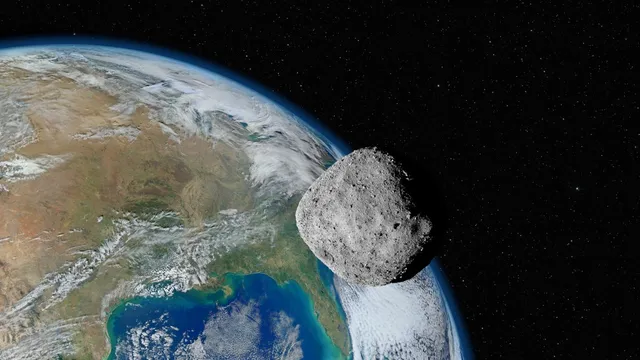
NASA confirms multiple meteor sightings spark widespread concern
NASA confirms multiple meteor sightings spark widespread concern
- On March 21, 2026, a meteor approximately one ton in weight streaked across Texas, creating a loud boom and fireball.
- This event follows another notable meteor sighting near Cleveland, Ohio, days earlier, and comes amidst increased reports of meteor activity across the nation.
- NASA is investigating the occurrences, highlighting public interest and the overall safety regarding meteoric events.
Story
On Saturday, March 21, 2026, a meteor weighing approximately one ton and traveling near 35,000 mph entered the Earth's atmosphere, creating a stunning fireball and generating a loud boom over Texas, particularly noticeable north of Houston. Reports from eyewitnesses indicated that the meteor began to break apart at an altitude of about 49 miles above Stagecoach, resulting in a pressure wave that caused sonic booms across the region. The meteoroid, initially about three feet in diameter, fragmented and released energy equivalent to 26 tons of TNT as it collided with the atmosphere. NASA's Astromaterials Research and Exploration Science division began receiving reports around 4:40 p.m., with some witnesses claiming fragments may have penetrated structures, including a house in Cypress Station, just 27 miles north of Houston. Fortunately, no injuries were reported as the event unfolded. Just five days earlier, on March 16, a larger meteor measuring about six feet in diameter and weighing around seven tons caused a similar spectacle near Cleveland, Ohio. This previous meteoroid also produced a loud boom as it disintegrated approximately 50 miles above Lake Erie while traveling at approximately 39,200 mph. It seems that these occurrences contributed to a heightened level of public interest and concern regarding meteoric activity. In fact, on the night following the Texas event, reports surfaced of a third meteor visible across California and parts of neighboring states. This sighting attracted over 200 eyewitnesses, confirming a dramatic increase in meteoric activity across the country. The meteor seen in California was also noted to travel at a similar speed of 35,000 mph before breaking apart above Colfax, California. This surge in meteor sightings across the U.S. over such a short period raises questions regarding the frequency and visibility of these celestial objects. NASA is actively investigating the recent events, emphasizing that while meteors are not uncommon, the visibility and reports from multiple states within a week suggest a spike in activity. Additionally, the agency mentions that most meteorites result in very few pieces surviving the atmospheric entry; generally, less than a few percent of the mass reaches the ground. The determination of whether pieces from the recent meteorite events have reached the ground will require further exploration and investigation. The public's response reflects a mix of fascination and concern, inspiring discussions about the risks and phenomena related to meteors and space debris. However, experts affirm that while sightings may be dramatic, the corresponding risks to life and property remain minimal. As research continues, attention will likely focus on evolving understanding and monitoring of these meteor events as well as their implications for atmospheric studies. In summary, reports of several meteors streaking across the sky, including significant instances in Texas, Ohio, and California, demonstrate an unusual flare in meteoric visibility this March. This unprecedented series of events marks a unique moment for meteor observations in the U.S. and offers valuable opportunities for NASA's continued research and public engagement regarding celestial events.
Context
Meteors, also referred to as shooting stars, are visible from the ground due to the interaction between meteoroids and the Earth's atmosphere. A meteoroid is a small particle from a comet or asteroid that travels through space. When these meteoroids enter the Earth's atmosphere, they are typically traveling at extremely high velocities, often exceeding 30,000 miles per hour. The rapid descent into the atmosphere leads to immense friction between the meteoroid and the air molecules, causing the meteoroid to heat up and glow brightly. This phenomenon is what we observe as a meteor trail in the night sky. The visibility of meteors can be significantly influenced by several factors, including the size and composition of the meteoroid, the angle of entry, and the density of the atmosphere. Smaller meteoroids often burn up entirely in the atmosphere and do not reach the ground, creating brief and bright flashes of light. Larger objects may produce longer-lasting trails or even survive the descent, leading to meteorite falls. The composition of the meteoroid also plays a crucial role in its brightness, with metallic meteoroids often producing more spectacular sightings due to their higher melting points and the type of light emitted as they vaporize. Additionally, the time of year and specific celestial events can impact meteor visibility. Meteor showers occur when the Earth passes through trails of debris left by comets. During these events, numerous meteoroids enter the atmosphere simultaneously, resulting in increased frequency of visible meteors. Notable meteor showers, such as the Perseids or the Geminids, can yield dozens or even hundreds of visible meteors per hour under optimal viewing conditions, such as clear, dark skies away from urban light pollution. In summary, the visibility of meteors from the ground is a result of the complex interaction between meteoroids and the Earth's atmosphere, influenced by physical characteristics of the meteoroids, environmental conditions, and celestial events. Observing these beautiful displays in the night sky provides valuable insights into the composition of our solar system and the dynamic processes at play within it.


