

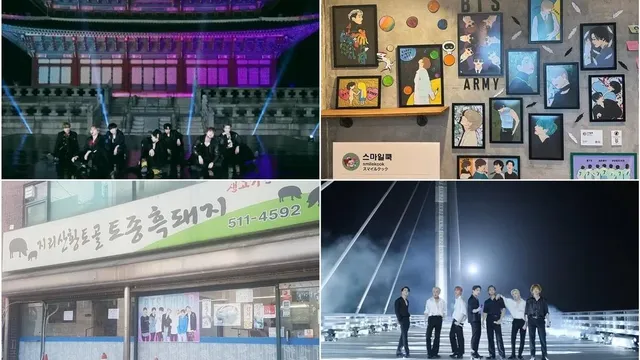
BTS returns to the stage with historic concert at Gwanghwamun Square
BTS returns to the stage with historic concert at Gwanghwamun Square
- BTS will perform at Gwanghwamun Square on March 21, marking their return to full-group activities after three years.
- The concert coincides with the release of their new album 'ARIRANG', aimed at showcasing Korean culture.
- The event highlights BTS's global influence while raising significant safety and logistical issues for local authorities and residents.
Story
In South Korea, the anticipation is palpable as BTS prepares for their comeback concert at Gwanghwamun Square on March 21, 2026, which marks the band's return to full-group activities after a three-year hiatus due to military service obligations. This concert, occurring at one of the nation's most iconic landmarks, is expected to attract tens of thousands of fans. BTS will perform songs from their newly released album, 'ARIRANG,' which signifies the group's identity rooted in Korean culture. Additionally, this concert will be live-streamed globally by Netflix, making it significant not just for fans in attendance but also for those watching from around the world. Gwanghwamun Square, a symbol of Korea's rich royal heritage and vibrant political life, hosts significant monuments that honor influential historical figures such as King Sejong and Admiral Yi Sun-shin. The concert will not only showcase BTS's music but will also highlight the importance of cultural heritage in contemporary South Korea. The venue was strategically chosen to underline that BTS's music is both a local and global phenomenon, bridging traditional Korean culture with modern pop music. Preparations for the concert have raised safety and logistical concerns among local residents, as authorities work to manage the expected crowds of over 250,000 fans. The free nature of the concert has sparked debates, with some voicing concerns that it may disadvantage devoted fans competing for limited tickets. Nonetheless, the event is seen as an opportunity for the South Korean government to promote Korean culture on the global stage and is expected to bolster tourism and local businesses significantly. As BTS gears up for their extensive world tour in the coming months, with 82 concerts across 34 cities, their return is a testament to their enduring popularity. This ambitious tour and the accompanying album 'ARIRANG' highlight their willingness to evolve musically while staying connected to their cultural roots. With tickets in high demand and an estimated substantial economic impact, this concert marks not just a band’s comeback but also the continued growth and international influence of K-pop on the global music scene.
Context
The global influence of K-pop, a genre of South Korean pop music, has witnessed unprecedented growth over the past decade, making significant inroads into international markets and reshaping the dynamics of global music consumption. This rise can be attributed to various factors, including the innovative use of social media, strategic marketing approaches, and the genre's unique blend of catchy melodies, stunning visuals, and high-energy performances. Today, K-pop groups like BTS, BLACKPINK, and EXO not only dominate charts in Asia but also have established substantial fanbases in North America, Europe, and beyond. The accessibility of platforms like YouTube and Spotify has allowed K-pop artists to reach a global audience, transcending language barriers and cultural differences. As a result, the genre's reach extends beyond music, influencing fashion, beauty trends, and even language learning, as millions of fans strive to understand the lyrics and culture behind the songs they love. Moreover, the meteoric rise of K-pop is intertwined with the strategic efforts of South Korean entertainment companies. These organizations invest heavily in training and nurturing talent, often subjecting idols to rigorous preparation processes that ensure their performances are of the highest quality. This attention to detail is reflected in the production of music videos that are not only visually stunning but also rich in storytelling. Companies like SM Entertainment, YG Entertainment, and JYP Entertainment have successfully created a unique framework for promoting K-pop artists that combines meticulous training, diverse music styles, and the use of cutting-edge technology. As a result, this industry has not only created superstars but has also laid the groundwork for a blossoming Hallyu (Korean Wave) that encompasses dramas, films, and cuisine, further establishing Korea's cultural influence worldwide. The socio-cultural impact of K-pop cannot be overlooked, as it has become a vehicle for the promotion of South Korean culture and language. K-pop fandoms, often called "ARMY" for BTS fans or "Blinks" for BLACKPINK fans, foster strong communal bonds, facilitating cross-cultural exchanges and networking among people from various backgrounds. The influence of K-pop extends into educational sectors as well, with many fans enrolling in language courses to learn Korean, highlighting the genre's role in sparking interest in Korean culture and societal values. The spread of K-pop has encouraged a greater appreciation of diversity in music and art, and has paved the way for non-Korean artists to explore and incorporate elements of the genre into their own work, resulting in collaborations that celebrate multiculturalism. Moving forward, the sustainability of K-pop's global influence will depend on how well it continues to adapt to changing trends and consumer preferences within a rapidly evolving digital landscape. As the genre faces increasing competition from various music genres and artists, the ability to innovate while maintaining authenticity will be crucial. Additionally, understanding the preferences of global audiences, the impact of streaming platforms, and the use of analytics in music consumption will shape the strategies of K-pop artists and their management. The K-pop phenomenon illustrates a remarkable case study of cultural globalization in the 21st century, demonstrating how a localized music genre can attain worldwide resonance, influencing and inspiring countless individuals around the globe.


