

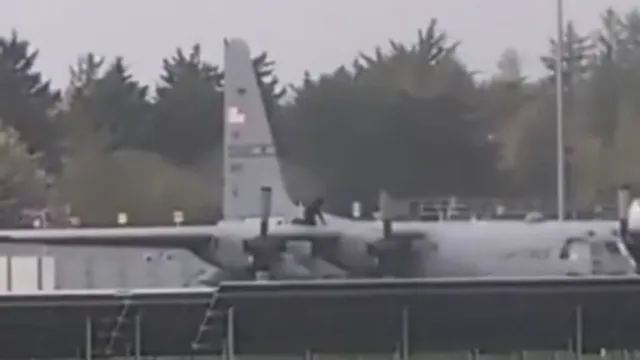
Fire erupts at RAF Fairford base used by US bombers
Fire erupts at RAF Fairford base used by US bombers
- A large fire broke out at RAF Fairford, an important US military base in England, on April 26, 2026.
- The fire was contained safely with no casualties reported, as confirmed by the Gloucestershire Fire and Rescue Service.
- The incident raises concerns and highlights the rising anti-war sentiment against US military operations in the region.
Story
On April 26, 2026, a significant fire occurred at the Royal Air Force (RAF) Fairford base in west England, which houses B52 and B1 bombers. The blaze was reported shortly after midnight, prompting immediate response from the Gloucestershire Fire and Rescue Service. Fire crews were able to bring the situation under control without any casualties. The facility, which has been central to US military operations in recent months, specifically concerning the war in Iran, has also been a focal point for anti-war protests. Just a day prior, hundreds of demonstrators rallied outside the base advocating for its closure and an end to military actions against Iran. Initial investigations into the fire suggest it was an accident, despite the recent rise in tensions surrounding military facilities in the region. A separate incident involved a deliberate attack on a US military plane at Shannon Airport in Ireland just a week before, drawing attention to the escalating hostility towards US military operations in Europe. The combination of these events highlights the increasing scrutiny and dissent against the US's military presence and actions abroad, particularly in relation to the ongoing conflicts in the Middle East. This incident at RAF Fairford not only underscores the risks inherent to military installations but also raises questions about the broader impact of US foreign policy in relation to anti-war sentiments within the UK and beyond.
Context
Anti-war protests in the UK have played a significant role in shaping public discourse around conflicts and military interventions throughout history. These protests are often rooted in a desire for peace, ethical opposition to violence, and advocacy for the rights of those affected by war. One of the earliest significant anti-war movements in the UK emerged during World War I, with the emergence of groups like the No Conscription Fellowship, which opposed military conscription and advocated for conscientious objection. As the war progressed, more citizens began to voice their disapproval of government policies and the human cost of warfare, setting a precedent for future movements. The interwar period saw continued anti-war sentiment, particularly as citizens grappled with the aftermath of the First World War and the rise of fascist regimes across Europe. Although the Second World War initially garnered widespread support, dissent grew as the brutality of the conflict became evident. Post-war, the Cold War era saw an escalation in anti-war protests, notably against nuclear weapons and military interventions, with movements gaining substantial visibility during the 1960s. The Vietnam War catalyzed a major wave of protests, with participants advocating for an end to the conflict, often employing tactics such as marches, sit-ins, and public demonstrations to express their opposition. The emergence of groups like the Campaign for Nuclear Disarmament (CND) in the 1950s significantly influenced public opinion and mobilized citizens across the UK. Protests against nuclear weapons often drew thousands of participants, highlighting a strategic focus on peace and disarmament. The protests of the late 20th century shifted towards addressing issues of imperialism and interventionist policies, particularly towards the Balkans in the 1990s. The events of September 11, 2001, and subsequent military engagements in Afghanistan and Iraq reignited anti-war activism, culminating in mass protests across the UK in 2003 against the Iraq War. These demonstrations, often involving diverse coalitions of groups, represented a widespread consensus that questioned the legitimacy of military action and highlighted the humanitarian consequences of war. The landscape of anti-war protests in the UK today continues to evolve, adapting to contemporary conflicts and global political dynamics. The rise of digital activism and social media has expanded the methods through which protests are organized and publicized, allowing for greater community engagement and outreach. Issues such as climate change and militarization have also come to the forefront of discussions within anti-war movements. The enduring legacy of anti-war protests in the UK remains a testament to the collective efforts of citizens advocating for peace, and their impact reverberates through the broader societal understanding of conflict and its repercussions. As such, these movements not only serve as platforms for dissent but also promote a broader awareness of the implications of warfare in a modern context.


