

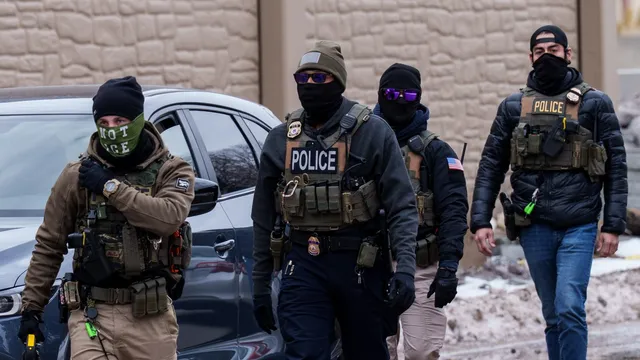
Judge blocks Trump from detaining Minnesota refugees
Judge blocks Trump from detaining Minnesota refugees
- A US federal judge issued a temporary injunction against the Trump administration's detainment of refugees in Minnesota.
- The ruling emphasized that refugees have the legal right to reside in the US without fear of unwarranted arrests.
- This order reflects the ongoing conflict between immigration enforcement and the protection of rights for vulnerable populations.
Story
In Minnesota, a US District Judge named John Tunheim issued a temporary ruling on January 28, 2026, preventing the Trump administration from detaining refugees who are waiting for permanent resident status. This order was a response to heightened immigration enforcement in the state, which has seen an influx of federal immigration agents as part of a crackdown by the Trump administration. In his ruling, Judge Tunheim emphasized that refugees have a legal right to remain in the United States, be free from unwarranted detainment, and live without fear. He ordered the immediate release of any detained refugees involved in this status review process, known as Operation PARRIS. The judge made it clear that while the administration could enforce immigration laws, it must do so without arresting refugees in their homes or during everyday activities such as shopping or attending religious services. The decision sparked an immediate retort from White House deputy chief of staff Stephen Miller, a key figure in the administration's hardline immigration stance, who referred to the judicial ruling as an act of "judicial sabotage." Furthermore, Judge Patrick Schiltz, who also has ties to legal advocacy groups, faced scrutiny regarding his impartiality in immigration-related cases due to donations made to organizations opposing Trump’s policies. The contrasting opinions on immigration enforcement and the legal rights of refugees highlight the contentious political atmosphere surrounding immigration policy in the United States. Judge Tunheim’s order underscores the continuing debate over the balance between immigration law enforcement and the protection of individual rights, particularly for refugees.
Context
The immigration policy in the United States has historically been shaped by various legal frameworks and social considerations, particularly concerning the rights of refugees. Refugees are individuals who are forced to flee their home countries due to persecution based on race, religion, nationality, political opinion, or membership in a particular social group. The 1980 Refugee Act established a systematic process for refugee admissions into the U.S. and aligned American standards with international obligations under the 1967 Protocol relating to the Status of Refugees. This legislation provides a foundation for refugees to seek asylum and offers them legal rights during their resettlement process. Under U.S. law, once an individual is granted refugee status, they are entitled to specific protections, including the right to work, access to public benefits, and a path to permanent residency after one year of arrival in the country. Legal rights for refugees also include the right to due process. This ensures that refugees have access to fair hearings and are protected from arbitrary deportation. The U.S. Citizenship and Immigration Services (USCIS) is responsible for processing asylum claims and ensuring that interviews are conducted in a manner that respects the human rights of applicants. Moreover, the legal framework supports the possibility for refugees to seek family reunification, which is critical for many individuals who have been separated from their loved ones due to conflict or persecution. It is essential to highlight that recent changes in immigration policy can significantly affect the pathways available to refugees, with fluctuations in acceptance rates and procedural requirements being particularly impactful. In recent years, there has been an uptick in challenges faced by refugees seeking admission into the U.S., primarily owing to shifting political attitudes towards immigration. For instance, executive orders and policy changes have led to increased scrutiny of refugee claims and stricter vetting processes. Such developments have drawn criticism from human rights advocates who argue that they undermine America's long-standing commitment to humanitarian response efforts. Additionally, the complexity of navigating the legal system can pose significant obstacles for refugees, who often lack access to adequate legal representation. Community organizations play a crucial role in providing support and resources to assist refugees in understanding their rights and the application processes. The ongoing debate around U.S. immigration policy emphasizes the need for a robust legal framework that not only addresses national security concerns but also upholds the rights and dignity of refugees. It is vital for policymakers to carefully consider the implications of their decisions on the vulnerable populations seeking safety within American borders. As the global landscape continues to evolve, the United States has a moral responsibility to maintain its pledge to protect refugees, ensuring that they are treated fairly and granted the rights they are entitled to under both domestic and international law. In conclusion, the intersection of immigration policy and the legal rights of refugees remains a critical area requiring ongoing attention, dialogue, and reform to align with humanitarian values and obligations.


